Препод. Георгий, родом с острова Кипра, от юности возлюбив Бога, отрёкся мира и подвизался в пощении, молитвах и трудах в обители Богородицы, в урочище Хозва, между Иерусалимом и Иерихоном. Скончался в начале седьмого века.
The Venerable George, a native of the island of Cyprus, from his youth loved God, renounced the world, and struggled in fasting, prayers, and labors in the monastery of the Theotokos, in the place called Choziba, between Jerusalem and Jericho. He reposed at the beginning of the seventh century.
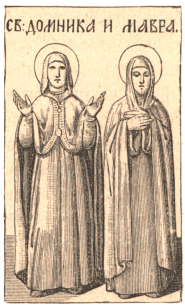
Добрые девы знаменитого рода прибыли ещё язычницами в Константинополь из Карфагена, при п. Нектарии († 397 г.); с ними пришли ещё три девушки-язычницы, служанки их. Пламенное желание их было принять христианство, с тем, чтобы жить по правилам чистой небесной веры. Патр. Нектарий имел о них особенное извещение небесное46. Потому не только совершил над ними крещение, но Домнику и Мавру посвятил в диакониссы47, а император Феодосий подарил им земли за чертой города. Домника основала монастырь в честь препод. Захарии, а Мавра построила обитель с храмом в честь мученицы Мавры. К той и другой собралось много девственниц и преимущественно их единоплеменниц, из африканского Карфагена, бывшего тогда во власти римской империи. Император Феодосий обращал власть свою на ослабление язычества в дальних углах империи, и обители Домники и Мавры были училищами для юных христианок48.
The good maidens of a renowned family arrived still as pagans in Constantinople from Carthage, under Patriarch Nectarius († 397 A.D.); with them came three other pagan maidens, their servants. Their ardent desire was to receive Christianity, so as to live according to the rules of the pure heavenly faith. Patriarch Nectarius had a special heavenly revelation concerning them46. Therefore he not only performed Baptism over them, but consecrated Dominica and Maura as deaconesses47, and the Emperor Theodosius granted them lands outside the city walls. Dominica founded a monastery in honor of the Venerable Zacharias, and Maura built a convent with a church in honor of the Martyr Maura. Many virgins gathered to each of them, chiefly their fellow countrywomen from African Carthage, which was then under the dominion of the Roman Empire. The Emperor Theodosius used his authority to weaken paganism in the far corners of the empire, and the convents of Dominica and Maura were schools for young Christian women48.
Блаженная Домника с пламенной ревностью предалась подвигам христианским; не щадя грешного тела своего, изнуряла себя постами и трудом, мужественно боролась с природой испорченной, чтобы творить волю Божью полной душой49.
Blessed Dominica with fervent zeal gave herself over to Christian struggles; sparing not her sinful body, she exhausted herself with fasts and labor, courageously wrestling with corrupted nature, so as to do the will of God with her whole soul49.
Сердечное желание являющи слезами, умилением славная землю омочилаecuи власы отерлаecuХристово подножие50. Уклониласяecu*милования плотского. Украшена* была еси добродетельми51.
Showing forth the desire of thy heart with tears, O glorious one, thou didst moisten the earth with compunction and with thy hair didst wipe the footstool of Christ50. Thou didst turn away from fleshly compassion. Thou wast adorned with virtues51.
Твёрдыми и долгими подвигами взошла она на дивную степень духовного совершенства. По милосердию Божьему исцеляла она больных. Явила силу над стихиями, прорекала будущее, чем обращала к заботам о вечности и беззаботных жителей весёлой столицы. «Обогащённая даром пророчества, предсказывала об императорах, патриархах и о многом другом»52. Плаватели в море обуреваемые, поёт Церковь, спаслаecu*, елей со благословением пустивши в море, и преложивши в тишину обуревание*53. «Явилась ты потоком исцелений, погашающим огонь страстей и подающим исцеление спасительное, Богоименная невеста Божия»54. Святая жизнь Домники была очень продолжительна: она дожила до времени императора Льва II († 474 г.)55. Ей известен был наперёд и день смерти её. «По вседетельному мановению Божьему предвидев разрешение тела своего, чистой душой возносила она благодарную песнь Виновнику всего и предала чистый дух свой Богу»56.
By steadfast and long struggles she ascended to a wondrous degree of spiritual perfection. By the mercy of God she healed the sick. She showed power over the elements, and foretold the future, thereby turning even the carefree inhabitants of the joyful capital to concern for eternity. "Enriched with the gift of prophecy, she foretold concerning emperors, patriarchs, and many other things"52. Sailors storm-tossed on the sea, the Church sings, thou didst save, having poured oil with a blessing into the sea, and changed the tempest into calm53. "Thou didst appear as a stream of healings, quenching the fire of passions and granting saving healing, O God-named Bride of God"54. The holy life of Dominica was very long: she lived until the time of the Emperor Leo II († 474 A.D.)55. The day of her death was also known to her beforehand. "By the all-effective nod of God, having foreseen the dissolution of her body, with a pure soul she offered up a hymn of thanksgiving to the Cause of all, and surrendered her pure spirit to God"56.
Блаженная Мавра предварила кончину её переселением в счастливую для неё вечность. Обитель её прославилась впоследствии тем, что поднимала против себя самую позорную лютость Копронима. Свирепый против иночества, он обращал обитель св. Мавры в место самых гнусных оргий, храм мученицы сравнял с землёй, инокинь, не успевших скрыться, отдавал насилиям мерзавцев слуг своих и место чистых молитв было у него бойней людей. Само по себе понятно, что обитель после того была восстановлена, как памятник мученичества чистых душ57.
Blessed Maura preceded her end by departing into the blessed eternity. Her convent later became renowned because it aroused against itself the most shameful cruelty of Copronymus. Fierce against monasticism, he turned the convent of St. Maura into a place of the most vile orgies, razed the church of the Martyr to the ground, and handed over the nuns who had not managed to flee to the violence of his scoundrel servants, and the place of pure prayers became a slaughterhouse of people. It is self-evident that the convent was afterwards restored, as a monument to the martyrdom of pure souls57.
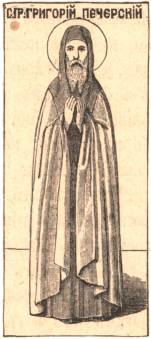
Преподобный Григорий был принят в Печерскую обитель преподобным Феодосием. Под его руководством он обучил себя смирению, послушанию и нестяжательности; особенно же любил он молитву. Он столько успел в духовной жизни, что мог творить чудеса и видеть будущее. Нечистые духи убегали из людей при одной встрече с Григорием.
The Venerable Gregory was received into the Monastery of the Caves by the Venerable Theodosius. Under his guidance he trained himself in humility, obedience, and non-acquisitiveness; above all he loved prayer. He advanced so far in the spiritual life that he could work miracles and see the future. Unclean spirits fled from people at the mere sight of Gregory.
Всего изумительнее в нём борьба его с хищниками. Это было особенным подвигом его. В этой борьбе он побеждал злость хищников своей добротой и вместе возвышался более и более до полного бесстрастия к земному.
Most astonishing in him was his struggle with thieves. This was his special feat. In this struggle he overcame the malice of thieves by his kindness, and at the same time rose more and more to complete detachment from earthly things.
В келье пр. Григория было одно сокровище – книги. Надобно представить себе, что в то время приобрести и одну книгу стоило многого труда, или дорогой цены, а у преп. Григория было много книг; он любил книги, как источники духовной мудрости. О том, что у строгого подвижника дорогое было собрание книг, знали и на стороне, узнали и такие люди, которые любят пользоваться чужим. Эти-то последние захотели воспользоваться любимой собственностью преподобного. Ночью, подойдя к келье его, воры притаились в удобном месте и ждали, пока выйдет он в церковь к утрене. Проводивши ночи в молитве, Григорий услышал приход их и к обычной молитве присовокупил такую молитву: Господи! пошли сон на этих людей, которые так неполезно трудятся. Молитва была услышана: воры проспали пять суток, пока братия увидала их; сам подвижник разбудил их, и так как они от голода очень ослабели, то он же и накормил их и затем отпустил.
In the cell of the Venerable Gregory there was one treasure—books. One must imagine that at that time acquiring even one book cost much labor or a high price, but the Venerable Gregory had many books; he loved books as sources of spiritual wisdom. That the strict ascetic had a valuable collection of books was known also outside the monastery, and was also known to those people who like to use what belongs to others. These latter wished to make use of the Venerable One's beloved property. At night, approaching his cell, the thieves hid in a convenient place and waited for him to go to church for Matins. Having spent the nights in prayer, Gregory heard their approach and added to his usual prayer this prayer: "Lord! send sleep upon these people, who labor so unprofitably." The prayer was heard: the thieves slept for five days, until the brethren saw them; the ascetic himself woke them, and since they were very weak from hunger, he also fed them and then let them go.
Городской судия, узнав о поступке их, подверг их строгому ответу. Жаль было блаженному бедных людей. Он решился расстаться с частью своего сокровища: отнёс судье часть книг своих, чтобы выпросить свободу виновным. Мало и того ему было. Несколько других книг он продал и деньги роздал нищим, в той мысли, чтобы ещё не впал кто в беду, искушаемый желанием украсть их у него. Воры, тронутые такими поступками преподобного, поступили по своей воле на служение Печерской обители.
The city judge, learning of their deed, subjected them to a strict accounting. The Blessed One felt sorry for the poor people. He decided to part with a portion of his treasure: he took some of his books to the judge to beg freedom for the guilty. Even that was not enough for him. He sold several other books and distributed the money to the poor, thinking that no one else might fall into trouble, tempted by the desire to steal them from him. The thieves, moved by such actions of the Venerable One, voluntarily entered the service of the Monastery of the Caves.
Был ещё у него сад с плодовыми деревьями. Другие воры взошли в сад, нарвали яблок в мешки и хотели удалиться, но не могли сойти с места. Наконец они стали кричать: святой отец Григорий, отпусти нас, не будем более делать подобного. Черноризцы, услышав голос их, пошли и схватили их, но также не могли стащить их с места. Пришёл Григорий и сказал: «так как вы любите жить без дела и, не работая, живёте чужими трудами, то можете оставаться здесь до смерти». Они со слезами умоляли пустить их, обещаясь более не красть чужого. – Старец сжалился и сказал: «если станете трудиться и трудом кормить себя и других, то отпущу вас». Воры с клятвой обещались никогда не преступать заповеди старца. «Благословен Бог, – сказал Григорий, – с сего времени вы будете работать на святую братию и таким образом будете полезны себе и другим». Воры до смерти своей работали в Печерском монастыре.
He also had a garden with fruit trees. Other thieves entered the garden, picked apples into sacks, and wished to leave, but could not move from the spot. Finally they began to cry out: "Holy Father Gregory, let us go; we will do such things no more." The monks, hearing their voices, went and seized them, but also could not drag them from the spot. Gregory came and said: "Since you love to live without work and, not laboring, live by others' labors, you may remain here until death." They tearfully begged him to let them go, promising no longer to steal what belonged to others. The Elder took pity and said: "If you will labor and support yourselves and others by labor, then I will let you go." The thieves swore an oath never to transgress the Elder's commandment. "Blessed is God," said Gregory, "from this time you will work for the holy brethren and thus will be useful to yourselves and others." The thieves worked in the Kiev Caves Monastery until their death.
Три иные вора напали на преподобного особым способом. Два из них, подойдя к нему, жалобно говорили: отче! товарищ наш приговорён к смерти, дай что-нибудь для его выкупа. Блаженный со слезами сказал: «бедный он, пришла смерть его».
Three other thieves attacked the Venerable One in a special way. Two of them, approaching him, said plaintively: "Father! our comrade has been sentenced to death; give something for his ransom." The Blessed One said with tears: "Wretched man, his death has come."
Святой сказал: «завтра же исполнится это». Затем пошёл в свою пещеру, вынес из неё оставшиеся книги и дал со словами: «возьмите, а если не понадобятся, возвратите мне».
The Saint said: "Tomorrow this will be fulfilled." Then he went into his cave, brought out the remaining books, and gave them, saying: "Take them, and if they are not needed, return them to me."
Они пошли и, смеясь, говорили: продадим и деньги разделим. Увидав же у старца плодовые деревья, сказали: в эту же ночь оберём.
They went away, laughing, and said: "We will sell them and divide the money." Seeing the Elder's fruit trees, they said: "This very night we will strip them."
Ночью они точно все трое пришли, завалили снаружи двери пещерной кельи святого, и один полез рвать яблоки. Сук, на котором стоял он, с треском обломился; испуганные тем товарищи убежали, а он, упав, повис на ветвях и удавился.
At night all three indeed came, blocked the door of the Saint's cave cell from the outside, and one climbed to pick apples. The branch on which he stood broke with a crash; his frightened comrades fled, and he, falling, caught on the branches and strangled.
Григорий, быв заперт, не мог быть у утрени. Братия, заметив, что его нет в церкви, пошли узнать о причине и видят: висит мёртвый человек, а Григория нашли запертым в пещере. Когда вышел он из пещеры, то велел снять несчастного, потом, увидав товарищей его, пришедших вместе с другими посмотреть на товарища, сказал им: «смотрите, ложь ваша обратилась в правду: Бог поругаем не бывает; если бы вы не заперли меня, я помог бы вашему брату».
Gregory, being shut in, could not be at Matins. The brethren, noticing that he was not in church, went to find out the reason, and saw: a dead man hanging, and they found Gregory shut in his cave. When he came out of the cave, he ordered the unfortunate man to be taken down; then, seeing his comrades, who had come with others to look at their comrade, he said to them: "See, your lie has turned into truth: God is not mocked; if you had not shut me in, I would have helped your brother."
Они пали к ногам его и просили простить их. Григорий осудил их на монастырские работы, чтобы в поте лица снискивали хлеб и служили другим. И эти также до гроба работали на обитель.
They fell at his feet and asked him to forgive them. Gregory sentenced them to monastic labors, so that in the sweat of their brow they might earn bread and serve others. And these also worked for the monastery until the grave.
Смерть преподобного была особенная. Блаженный вышел на Днепр за водой. Князь Ростислав Всеволодович в то же время прибыл туда же, имея намерение посетить Печерский монастырь, для молитв и принятия благословения. Вместе с братом своим Владимиром Мономахом отправлялся он тогда на войну с Половцами. Слуги Ростислава, увидав старца, начали смеяться над ним и осыпали его неприличными словами. Старец сказал им: «дети, тогда, как вам надлежало бы сокрушаться и просить у всех молитв, вы делаете худое и неугодное Богу. Знаете ли, что над вами решён суд Божий? Вы все и с князем вашим найдёте смерть в воде». Князь Ростислав, услышав это, представил себе, что ему говорят укоризну, а не пророчество, и сильно раздражился.
The repose of the Venerable One was extraordinary. The Blessed One went out to the Dnieper for water. Prince Rostislav Vsevolodovich at the same time arrived there, intending to visit the Monastery of the Caves for prayers and to receive a blessing. Together with his brother Vladimir Monomakh he was then setting out to war against the Polovtsy. Rostislav's servants, seeing the Elder, began to mock him and showered him with improper words. The Elder said to them: "Children, when you ought to be contrite and ask for prayers from everyone, you do evil and what is displeasing to God. Do you know that the judgment of God is decreed against you? You all, together with your prince, will find death in the water." Prince Rostislav, hearing this, imagined that he was being spoken to in reproach, not prophecy, and became greatly angered.
«Обо мне ли ты говоришь, что умру в воде? – сказал он; – я хорошо умею плавать; умирай сам». И тотчас велел связать ему руки и ноги и бросить с камнем в воду. Блаженный был утоплен.
"Are you speaking about me, that I will die in the water?" he said; "I know how to swim well; die yourself." And he immediately ordered his hands and feet to be bound and thrown into the water with a stone. The Blessed One was drowned.
Братия искали его два дня и не нашли. На третий день пришли в келью его, чтобы взять, что осталось после святого. Преподобный лежал в келье, связанный по рукам и ногам, с камнем на шее; одежда на нём была ещё мокрая, а лицо светлое и всё тело как живое.
The brethren sought him for two days and did not find him. On the third day they came to his cell to take what remained after the Saint. The Venerable One lay in his cell, bound hand and foot, with a stone around his neck; his clothing was still wet, but his face was bright and his whole body as if alive.
Когда были они у Триполя и сошлись полки, то наши князья побежали от врагов. Владимир переехал реку, по молитвам и благословению святых, а Ростислав со своими воинами, согласно со словами блаженного Григория, утонул.
When they were at Tripol and the armies had met, our princes fled from the enemy. Vladimir crossed the river, through the prayers and blessing of the saints, but Rostislav, with his soldiers, according to the words of the blessed Gregory, drowned.
Так пишет Поликарп в послании к архим. Акиндину58. По древней летописи, несчастное сражение с Половцами под Триполем было в 1093 году; разбитые многочисленным неприятелем, войска Русские искали спасения в бегстве: Владимир переплыл р. Стугну, а Ростислав погиб. Половцы бросились к Киеву и опустошили окрестности его; вышедший навстречу им Святополк был разбит; сдался и гор. Торческ, после долгой осады; дикие язычники предавали огню храмы Божьи и сёла и нахватывали множество пленных. «Праздники наши, – говорит современник, – обратились в слёзы: в день Вознесения, на Стугне у Триполя, в новый Русский праздник Бориса и Глеба на Желне (близ Киева), навёл на нас Бог сетование...
Thus writes Polycarp in his epistle to Archimandrite Akindinus58. According to the ancient chronicle, the ill-fated battle with the Polovtsy at Tripol took place in the year 1093; defeated by the numerous enemy, the Russian troops sought salvation in flight: Vladimir crossed the River Stugna, while Rostislav perished. The Polovtsy rushed toward Kiev and laid waste its environs; Sviatopolk, who went out to meet them, was defeated; the town of Torchesk also surrendered after a long siege; the wild pagans set fire to the churches of God and the villages and seized a multitude of captives. "Our feasts," says a contemporary, "were turned into tears: on the day of the Ascension, on the Stugna at Tripol, on the new Russian feast of Boris and Gleb at Zhelnia (near Kiev), God brought mourning upon us..."
Братий наших Половцы повели в плен к своим друзьям и сродникам; бедные пленники, истомлённые голодом и жаждой, с осунувшимися лицами, с почерневшим телом, нагие, босые, исколотые терновником, идут по степи, со слезами рассказывая друг другу, откуда кто родом, и со вздохами поднимая очи к Всеведущему»59. Так исполнились слова праведника, над которым люди смеялись и, в слепоте гордости, мстили за правду неприятную! По ркп. святцам, «преподобномученик Григорий чудотворец утоплен бысть от князя в Днепре, в лето 6601 месяца генваря в 8 день». Показание времени согласное с показанием летописи. Мощи св. Григория покоятся в пещере препод. Антония, как покоились и в начале 17 века60.
Our brethren the Polovtsy led into captivity to their friends and kinsmen; the wretched captives, exhausted by hunger and thirst, with sunken faces, with blackened bodies, naked, barefoot, pierced by thorns, go across the steppe, with tears telling one another from what place each is descended, and with sighs lifting up their eyes to the All-Knowing One"59. Thus were fulfilled the words of the righteous man, at whom people mocked and, in the blindness of pride, took vengeance for truth that was displeasing! According to the manuscript menologia, "the Venerable Martyr Gregory the Wonderworker was drowned by the prince in the Dnieper, in the year 6601, on the 8th day of January." The indication of time agrees with the indication of the chronicle. The relics of St. Gregory rest in the cave of the Venerable Anthony, as they also rested at the beginning of the 17th century60.
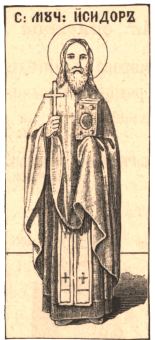
Блаженный Исидор был священником в городе Дерпте при храме св. Николая, тогда как другой священник Иоанн благоговейно служил там же при другом храме св. Георгия. Та и другая церковь издавна существовали в Дерпте, в Русском конце. Так видны они по описанию путешествия м. Исидора на запад61. По договору с Московским великим князем Иоанном III Ливонские Немцы в 1463 г. обязались оказывать особенное покровительство православным в Дерпте «и то держати по старине и по старинным граматам»62. Но Немцы, тогда усердные слуги папы, нипочём считали свои клятвы; они вздумали принуждать Русских к унии, то ласками, то угрозами. Когда же то и другое оказалось бесполезным, они стали употреблять насилия.
The blessed Isidore was a priest in the city of Dorpat at the church of St. Nicholas, while another priest, John, reverently served there at another church of St. George. Both churches had long existed in Dorpat, in the Russian Quarter. Thus they are seen in the description of the journey of Metropolitan Isidore to the West61. By treaty with the Grand Prince of Moscow, John III, the Livonian Germans in 1463 obligated themselves to show special protection to the Orthodox in Dorpat, "and to hold that according to the old custom and according to the old charters"62. But the Germans, then zealous servants of the Pope, held their oaths as nothing; they conceived the idea of compelling the Russians to accept the Union, now with flattery, now with threats. When both proved useless, they began to use violence.
Священник Иоанн удалился в Псков. Исидор остался беречь паству и смело говорил о преимуществах православия. Дерптский бургомистр злобно восстал на праведного священника и его паству. Сделав донос бискупу и городскому начальству, что Исидор и его прихожане хулят папу и его веру, он разжёг в бискупе фанатическую злобу против православных. В праздник Богоявления, Исидор с прихожанами вышел на р. Амовжу для освящения воды святым крестом. Посланные бискупом представили Исидора и бывших с ним к бискупу и городскому начальству. Паписты потребовали повиновения папе. Исидор дал отчёт, почему он осуждает папу Евгения с его учением.
The priest John withdrew to Pskov. Isidore remained to guard the flock and boldly spoke of the advantages of Orthodoxy. The burgomaster of Dorpat rose up maliciously against the righteous priest and his flock. Having made a denunciation to the bishop and the city authorities that Isidore and his parishioners blasphemed the Pope and his faith, he inflamed in the bishop a fanatical malice against the Orthodox. On the feast of Theophany, Isidore with his parishioners went out to the River Amovzha for the blessing of the water with the holy cross. Those sent by the bishop brought Isidore and those with him before the bishop and the city authorities. The Papists demanded obedience to the Pope. Isidore gave an account of why he condemned Pope Eugenius and his teaching.
Бискуп велел бросить Исидора и бывших с ним и тюрьму. Затем рыцари и старшины города приглашены были бискупом на общий совет. Блажен. Исидор убеждал духовных детей своих быть твёрдыми в святой отеческой вере: «если умрём за св. истину, – говорил он, – Бог причтёт нас к мученикам». Совершив молитвенные пения, Исидор причастился св. таин запасными дарами и причастил всех бывших с ним. Затем, пропели они песнь мученикам: «святии мученицы, иже добре страдавше и венчавшеся, молитеся ко Господу спастися душам нашим». Их привели в ратушу. Бискуп говорил Исидору и его дружине: «послушайтесь, примите опресночную службу; вера у нас одна; по крайней мере теперь, пред судом таких важных лиц, скажите, что вы ошибались, порицая служение наше». Твёрдые исповедники отвечали: «мы те же, что были и прежде; делай с нами, что тебе угодно». Бискуп и его почтенный совет приказали бросить всех в Амовжу, в устроенный Иордан. Так Исидор в священнической одежде и с ним 72 человека утоплены были в Иордане. В числе их была молодая мать с трёхлетним ребёнком. Ребёнка Немцы вырвали из рук матери, но он, видя утопающую мать, с криком рвался к ней; его положили вблизи проруби, и он, перекрестившись трижды, упал в прорубь. Это было 8 января 1472 года. Когда открылась весна и пошла вода, на берегу Амовжи, в 3 вёрстах от Дерпта, тела страдальцев найдены все в одном месте, лицом к востоку, ничем невредимые; посредине их лежал блаженный Исидор в священнической одежде. Православные приезжие купцы похоронили иных на том же месте, а других перевезли в Дерпт и положили у церкви, в земле63.
The bishop ordered Isidore and those with him to be thrown into prison. Then the knights and the elders of the city were summoned by the bishop to a general council. The blessed Isidore exhorted his spiritual children to be firm in the holy paternal faith: "If we die for the holy truth," he said, "God will number us among the martyrs." Having performed the prayerful hymns, Isidore received communion of the Holy Mysteries from the reserved Gifts and gave communion to all those with him. Then they sang the hymn to the martyrs: "Holy martyrs, who have suffered well and been crowned, pray to the Lord for the salvation of our souls." They were led to the town hall. The bishop said to Isidore and his company: "Obey, accept the unleavened bread service; the faith is one with us; at least now, before the judgment of such important persons, say that you were mistaken in censuring our service." The firm confessors answered: "We are the same as we were before; do with us what you please." The bishop and his honorable council ordered all to be thrown into the Amovzha, into the prepared Jordan. Thus Isidore in his priestly vestments and with him seventy-two persons were drowned in the Jordan. Among them was a young mother with a three-year-old child. The Germans snatched the child from the mother's hands, but he, seeing his mother drowning, with a cry struggled toward her; they placed him near the ice-hole, and he, having crossed himself three times, fell into the ice-hole. This occurred on January 8, 1472. When spring came and the ice broke up, on the bank of the Amovzha, three versts from Dorpat, the bodies of the sufferers were found all in one place, facing the east, unharmed in any way; in their midst lay the blessed Isidore in his priestly vestments. Orthodox visiting merchants buried some on that same spot, and others they transported to Dorpat and laid to rest at the church, in the earth63.
В Охриде, бывшей Болгарской архиепископии, на огромной полуразвалившейся церкви св. Софии, построенной Болгарским архиепископом Львом (1042–1053 г.) найдена из кирпича сделанная, но не вполне уцелевшая надпись: Γρηγοριου... σκηνην εγειρας... Τεονϑεογραφεον νομιον εϑνη τα Μυσων εδιδασκει... ςφκ, т. е. Григория... сень воздвигнул... Богописанным законом, – премудро поучает народы Мисийские, в 1012 г.64.
In Ohrid, the former Bulgarian archbishopric, on the enormous half-ruined church of St. Sophia, built by the Bulgarian Archbishop Leo (1042–1053), an inscription made of brick, but not fully preserved, was found: Γρηγοριου... σκηνην εγειρας... Τεονϑεογραφεον νομιον εϑνη τα Μυσων εδιδασκει... ςφκ, i.e., "Of Gregory... having raised up a tabernacle... by the God-written law he wisely teaches the nations of the Mysians, in the year 1012"64.
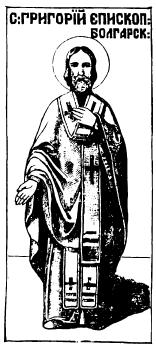
Так как храм воздвигнут после блаженного Григория, скончавшегося 1012 года, и главный престол храма посвящён был св. Софии, то об участии Григория в построении храма не могла говорить надпись; а она означает, без сомнения, то, что имени блаж. Григория, славного учителя Славян, посвящён был придел храма. Кто же этот Григорий? Известен «Григорий пресвитер и мних всех церковних Болгарских церквей», т. е. старший иеромонах, судия над всеми церковными людьми Болгарии, который повелением книголюбца князя Симеона, «истиннее же рещи Боголюбца» (888–937 г.), перевёл на Славянский язык хронику Иоанна Малалы, дополнив её выписками из библейских книг и из разных исторических памятников. Ему же приписывают перевод хроники Георгия Амартола65. Недавний путешественник нашёл ещё в монастыре Трескавце близ Прилепа «Григория епископа Пелагонии и Прилепа» перевод из Метафраста66. При современности и видном иерархическом значении Григория, Болгарского учителя, не можем сомневаться, что это одно и то же лицо с упоминаемым в надписи епископом и с Григорием, епископом Прилепским. Благочестивый учитель Болгарский, после судейской должности, облечён был саном епископа Пелагонии и Прилепа и почил в 1012 году.
Since the church was erected after the blessed Gregory, who reposed in the year 1012, and the main altar of the church was dedicated to St. Sophia, the inscription could not speak of Gregory's participation in the building of the church; rather, it undoubtedly signifies that a side-chapel of the church was dedicated to the name of the blessed Gregory, the glorious teacher of the Slavs. Who, then, is this Gregory? There is known "Gregory the presbyter and monk of all the Bulgarian churches," i.e., the senior hieromonk, judge over all the church people of Bulgaria, who, by the command of the book-loving Prince Simeon, "or rather, God-loving" (888–937), translated into the Slavonic language the chronicle of John Malalas, supplementing it with extracts from the biblical books and from various historical monuments. To him is also attributed the translation of the chronicle of George Hamartolus65. A recent traveler also found in the monastery of Treskavac near Prilep a translation from Metaphrastes by "Gregory, Bishop of Pelagonia and Prilep"66. Given the contemporaneity and the prominent hierarchical significance of Gregory, the Bulgarian teacher, we cannot doubt that this is the same person as the bishop mentioned in the inscription and as Gregory, Bishop of Prilep. The pious Bulgarian teacher, after his judicial office, was invested with the rank of Bishop of Pelagonia and Prilep and reposed in the year 1012.
Св. Иулиан, родом из Антиноя Египетского, против воли своей, но по желанию родителей, вступил в брак с избранной для него родителями девицей Василисой, так же как и он происходившей из богатого и знатного рода. Он встретил в ней истинного друга, способного понять и сочувствовать его образу мыслей и расположению сохранить девство в супружестве и предаться всецело служению Единому Богу. По кончине родителей они согласились вступить в иночество. Иулиан основал мужскую обитель, где собралось до десяти тысяч иноков, а Василиса сделалась настоятельницей женского монастыря, в котором было до тысячи инокинь, проводивших жизнь истинно Богоугодную.
St. Julian, a native of Antinoë in Egypt, against his own will, but by the desire of his parents, entered into marriage with a maiden chosen for him by his parents, Basilissa, who, like him, came from a wealthy and noble family. He found in her a true friend, capable of understanding and sympathizing with his way of thinking and his inclination to preserve virginity in marriage and to devote himself entirely to the service of the One God. After the death of his parents, they agreed to enter the monastic life. Julian founded a men's monastery, where up to ten thousand monks gathered, while Basilissa became the abbess of a women's monastery, in which there were up to a thousand nuns, leading a life truly pleasing to God.
Между тем началось гонение на христиан, воздвигнутое в 313-м году Диоклетианом и Максимианом. Иулиан и Василиса усердно просили Бога утвердить верующих, собравшихся у них, и Господь открыл в сонном видении св. Василисе, что скоро перейдёт она в вечный покой, и что инокини её скончаются ещё прежде неё. Действительно, в продолжение нескольких месяцев все они кончили жизнь и, явившись во сне св. Василисе, призывали её предстать вместе с ними перед Господом, Которому служить научила она их.
Meanwhile, the persecution of Christians began, raised in the year 313 by Diocletian and Maximian. Julian and Basilissa earnestly prayed to God to strengthen the believers who had gathered with them, and the Lord revealed in a dream to St. Basilissa that she would soon pass over into eternal rest, and that her nuns would die even before her. Indeed, in the course of several months, they all ended their lives and, appearing to St. Basilissa in a dream, called her to stand together with them before the Lord, Whom she had taught them to serve.
С радостью передала св. Василиса другу своему об этом сновидении; через несколько дней после того она скончалась, и св. Иулиан предал земле её честные останки.
With joy, St. Basilissa told her friend about this dream; a few days after that she reposed, and St. Julian committed her honorable remains to the earth.
Вслед за тем прибыл сюда игемон Маркиан, и тогда начались страдания находившихся в обители св. Иулиана: 10.100 иноков и сверх того несколько епископов и клириков, прибывших сюда для исповедания святой веры, были сожжены с обителью; все прочие после мук обезглавлены, а св. Иулиан, о знаменитом роде которого стало известно игемону, был связан и отведён в темницу. На другой день он был представлен Маркиану, который, видя его непреклонность в исповедания себя христианином, велел предать его жесточайшим истязаниям. Тогда проявилось над мучеником всё могущество Божественной помощи. В чудесах, сотворённых в это время св. Иулианом, истинно оправдались слова Иисуса Христа: «веруяй в Мя, дела, яже Аз творю, и той сотворит, и больша сих сотворит» (Ин.14:12).
After this, the hegemon Marcian arrived here, and then began the sufferings of those who were in the monastery of St. Julian: 10,100 monks and, besides them, several bishops and clerics who had come there for the confession of the holy faith, were burned together with the monastery; all the rest, after tortures, were beheaded, while St. Julian, whose illustrious lineage became known to the hegemon, was bound and led away to prison. On the next day he was brought before Marcian, who, seeing his steadfastness in confessing himself a Christian, ordered him to be subjected to the most cruel torments. Then the full power of Divine help was manifested over the martyr. In the miracles wrought at this time by St. Julian, the words of Jesus Christ were truly fulfilled: "He that believeth in Me, the works that I do shall he do also, and greater works than these shall he do" (Jn. 14:12).
– Истинно велик Бог христианский! – воскликнул поражённый этим чудом исцелившийся, и во всеуслышание исповедал своё обращение. Игемон велел отсечь ему голову, и таким образом новый мученик принял святое крещение в крови своей. Ещё с большей яростью обратился тогда Маркиан к св. Иулиану и приказал надеть на него железные вериги и с поруганием водить его по городу. В это время Господь прославил Своего угодника новым чудом. Сын игемона, отрок Кельсий, присутствуя на зрелище вместе со своими товарищами, вдруг воскликнул: – что это странное видится мне! Вижу я много светлых юношей вокруг того христианина, которого ведут воины – связанного веригами; одни – служат ему, а другие надевают на него венец, и тот венец сияет светлее солнца. И я хочу веровать в Того Бога, Который даёт такую славу верующим в Него... – и, бросившись к ногам Иулиана, отрок сказал ему: – я желаю, чтобы ты был отцом моим, я не хочу быть сыном мучителя... я пойду за тобою и хочу, так же как и ты, пострадать за Христа твоего, Которого я не знал до сих пор...
– Truly great is the Christian God! – exclaimed the healed man, struck by this miracle, and he openly confessed his conversion. The hegemon ordered his head to be cut off, and thus the new martyr received holy baptism in his own blood. With even greater fury Marcian then turned to St. Julian and commanded that iron fetters be placed on him and that he be led through the city with mockery. At that time the Lord glorified His saint with a new miracle. The hegemon’s son, the youth Celsus, who was present at the spectacle together with his companions, suddenly cried out: – What is this strange thing that I see! I see many bright youths around that Christian whom the soldiers are leading – bound in chains; some serve him, while others place a crown upon him, and that crown shines brighter than the sun. And I want to believe in that God Who gives such glory to those who believe in Him... – and, throwing himself at Julian’s feet, the youth said to him: – I desire that you be my father; I do not want to be the son of a tormentor... I will follow you, and I want, just as you do, to suffer for your Christ, Whom I did not know until now...
Велико было удивление отца и матери Кельсия, когда они увидели его с Иулианом. Велика была ярость Маркиана, когда он увидел, что никакими мольбами, никакими угрозами не мог он отлучить сына своего от мученика. Все же, кто прикасался к отроку, чтобы взять его, чувствовали нестерпимую боль в руках. Маркиан приказал отвести их обоих в темницу. Но на каждом шагу угодника Своего Бог расточал для него чудеса Свои... Тёмная и смрадная темница оказалась светлой и благоуханной; двадцать воинов, бывших при этом, уверовали в Бога и остались в темнице. Св. Иулиан скорбел о том, что некому было совершить над ними крещение, но Господь не лишил его этого утешения. Священник Антоний, находившийся при семи сыновьях одного умершего знатного и заслуженного гражданина, семейству которого разрешено было исповедовать христианскую веру, пришёл с ними навестить заключённых в темнице и окрестил Кельсия и 20 воинов; семеро же братьев остались в темнице, желая вместе с мучениками пострадать за Христа.
Great was the astonishment of Celsus’ father and mother when they saw him with Julian. Great was the fury of Marcian when he saw that neither by any entreaties nor by any threats could he separate his son from the martyr. Moreover, all who touched the youth to take him felt unbearable pain in their hands. Marcian ordered them both to be taken to prison. But at every step of His saint, God poured forth His wonders... The dark and foul prison became bright and fragrant; twenty soldiers who were present believed in God and remained in the prison. St. Julian grieved that there was no one to perform baptism over them, but the Lord did not deprive him of this consolation. The priest Anthony, who was with the seven sons of a certain deceased noble and deserving citizen, whose family was permitted to profess the Christian faith, came with them to visit those imprisoned and baptized Celsus and the twenty soldiers; the seven brothers remained in the prison, desiring together with the martyrs to suffer for Christ.
Во время суда над ними всеми св. Иулиан – в проявление славы Божией – поразил гонителей новыми чудотворениями. Он воскресил мертвеца, которого проносили мимо по улице, и мертвец засвидетельствовал о себе, что слышал голос Божий: пусть возвратится эта душа в тело своё ради возлюбленного раба Моего Иулиана...
During the trial of them all, St. Julian – in manifestation of the glory of God – struck the persecutors with new miracles. He raised a dead man who was being carried past on the street, and the dead man testified of himself that he had heard the voice of God: let this soul return to its body for the sake of My beloved servant Julian...
Игемон смутился и, опасаясь народного волнения, приказал снова отвести в темницу всех подсудимых. В темнице священник Антоний окрестил воскресшего и дал ему имя Анастасия.
The hegemon was troubled and, fearing popular unrest, ordered all the accused to be taken back to prison. In the prison, the priest Anthony baptized the resurrected man and gave him the name Anastasius.
На другой день решено было сжечь мучеников в кадках с серой и смолой, но кадки с горючими веществами сгорали, а они остались невредимыми. Народ был до крайности взволнован происходившими на его глазах поразительными чудесами, но очерствевший сердцем Маркиан приписывал их только волшебству христиан и снова отослал их в темницу. Жена же игемона, Марионилла, узнав, что сын её остался невредимым, поспешила увидать его в темнице и уверовала во Христа, и немедленно приняла св. крещение. Доведённый до ярости Маркиан заключил и жену свою в темницу. Долго содержались здесь мученики; наконец, выведены они были на последнее испытание. Игемон всё ещё надеялся принудить их принести жертву идолам, но когда они приблизились к языческому храму, то земля потряслась, храм сокрушился и обломками его было убито множество жрецов и народа...
The next day it was decided to burn the martyrs in vats of sulfur and pitch, but the vats with the combustible substances burned up, while they remained unharmed. The people were extremely agitated by the astonishing miracles taking place before their eyes, but Marcian, hardened in heart, attributed them only to the sorcery of Christians and again sent them back to prison. The hegemon’s wife, Marionilla, learning that her son had remained unharmed, hastened to see him in prison and believed in Christ, and immediately received holy baptism. Driven to fury, Marcian also confined his wife in prison. The martyrs were held here for a long time; finally, they were brought out for the final ordeal. The hegemon still hoped to force them to offer sacrifice to idols, but when they approached the pagan temple, the earth shook, the temple collapsed, and its ruins killed a multitude of priests and people...
После бесчисленных новых истязаний, среди которых мученики оставались невредимыми, Маркиан велел их казнить, не пощадив ни сына, ни жены своей. Когда казнь совершилась, то снова произошло землетрясение; третья часть всего города разрушилась, все идолы сокрушились, и множество язычников были убиты молнией.
After countless new tortures, during which the martyrs remained unharmed, Marcian ordered them to be executed, sparing neither his son nor his wife. When the execution was carried out, an earthquake occurred again; a third part of the entire city was destroyed, all the idols were shattered, and a multitude of pagans were killed by lightning.
Такими великими страданиями и такими великими чудесами распространялась в мире христианская вера. Когда они были нужны для поддержания возникающей на земле Церкви Божией, то Бог изобильно расточал их волей и силой Своей. Теперь окрепшая Церковь вмещает в себе самой несокрушимую силу, заменяющую всякую другую чудодейственную поддержку, но всё Тот же Он, «Бог велий, творяй чудеса»67.
By such great sufferings and such great miracles was the Christian faith spread in the world. When they were needed to support the emerging Church of God on earth, God abundantly bestowed them by His will and power. Now the strengthened Church contains within itself an indestructible power, replacing every other miraculous support, but He is the same, “the great God, Who doeth wonders”67.
О св. Домнике стихира 8 января: «Тому (Христу) последовала еси отвергшися тленныя славы». Другая стихира: «от западов возсияла еси к востоку». Песнь 3-я: «Ангел световиден возвести иерарху пришедшую к царскому граду». О язычестве и прибытии из Карфагена Синаксарь. Менолог на 10 января о Домнике: «принята П. Нектарием Конст. по откровению». Полное житие св. Домники и Мавры ныне неизвестно, но Иосиф песнописец имел его в руках. Канон преподобной на 8 янв. по акростиху 9 песни – творение Иосифа. Обзор песнопевцев, стр. 367. Черн., 1864 г.
Concerning St. Domnica, a sticheron for January 8: “Thou didst follow Him (Christ), having renounced corruptible glory.” Another sticheron: “From the west thou didst shine forth to the east.” Ode 3: “A radiant angel announced to the hierarch the one who had come to the imperial city.” Concerning paganism and the arrival from Carthage, the Synaxarion. The Menologion for January 10 concerning Domnica: “She was received by Patriarch Nectarius of Constantinople by revelation.” The full life of Sts. Domnica and Maura is now unknown, but Joseph the Hymnographer had it in his hands. The canon for the Venerable One for January 8, according to the acrostic of Ode 9, is the work of Joseph. Survey of Hymnographers, p. 367. Chernigov, 1864.
Менолог Василия на 10 янв.: «Он (П. Нектарий) не только ввёл её в монастырь св. пророка Захарии, но и рукоположил её в диакониссу».
Menologion of Basil for January 10: “He (Patriarch Nectarius) not only brought her into the monastery of the holy prophet Zacharias, but also ordained her a deaconess.”
Кодин, о зданиях Константинополя: «два монастыря, один св. Домники, прозываемый Александров, другой – св. Мавры. Они построены при императоре Феодосии Великом. Тогда пришли из Рима (из западной половины империи) те святые жёны и, получив от императора необитаемые тогда приморские места, построили на них монастыри». Codinus, ed. Beckeri. Bon. 1843 p. 322. Песнь 6-я о св. Домнике: «священное пророчество воздвигла еси Божественного Захария пророка Богомудрого». В монастыре пр. Захарии почивали мощи св. Петра знаменоносца, праздновавшегося янв. 3. Пролог Румянцева, стр. 448. Du-Cangii Const. Chr. р. 105, 185.
Codinus, concerning the buildings of Constantinople: “Two monasteries, one of St. Dominica, called Alexander’s, the other of St. Maura. They were built under the Emperor Theodosius the Great. At that time those holy women came from Rome (from the western half of the empire) and, having received from the emperor the then uninhabited seaside places, built monasteries upon them.” Codinus, ed. Beckeri. Bon. 1843 p. 322. Ode 6 concerning St. Dominica: “Thou didst raise up a sacred prophecy of the divine prophet Zacharias, the God-wise.” In the monastery of the prophet Zacharias reposed the relics of St. Peter the Standard-bearer, celebrated on January 3. Prologue of Rumyantsev, p. 448. Du-Cangii Const. Chr. p. 105, 185.
Синаксарь: «избрав уединённую жизнь, предалась мужественным трудам и, дойдя до верха подвижничества, удостоилась дара чудес и многим предсказывала будущее».
Synaxarion: “Having chosen a solitary life, she gave herself to manly labors and, having reached the height of asceticism, was vouchsafed the gift of miracles and foretold the future to many.”
Слова Менолога Васильева. Песнь 5: «сияние Духа показует дальняя яко близ (сущая) и будущих предглаголет сбытие».
Words of the Menologion of Basil. Ode 5: “The radiance of the Spirit shows distant things as near (to be) and foretells the fulfillment of future things.”
Песнь 8. В 7 песни: «будучи храмом Св. Духа, ты в святом храме слышала голос, научающий тебя тайнам и честному отшествию из тела».
Ode 8. In Ode 7: “Being a temple of the Holy Spirit, thou didst hear in the holy temple a voice teaching thee mysteries and the honorable departure from the body.”
Повесть о Псков. печер. мон., стр. 2. М. 1831 г. Русск. времен. 2, 67. 68. У Царского, № 136, страдание св. Исидора, описанное Варлаамом, иначе известным Василем, по обыкновению его, многоречиво и с жалкой скудостью мыслей. По ркп. святцам, страдальцы скончались 9 января 1472 г. Мы следуем печатной повести о Печер. монастыре и Русск. временнику.
Tale of the Pskov Caves Monastery, p. 2. Moscow, 1831. Russian Chronographer 2, 67. 68. At Tsarsky’s, No. 136, the passion of St. Isidore, described by Barlaam, otherwise known as Basil, in his usual manner, verbose and with a pitiful poverty of thought. According to manuscript saints’ calendars, the sufferers reposed on January 9, 1472. We follow the printed tale of the Caves Monastery and the Russian Chronographer.
Страдания мучеников Иулиана и Василисы описаны очевидцем; ибо в предисловии говорится: мы описали деяния святых, которые видели своими очами. И в самом описании их нет ничего такого, что показывало бы позднейшее происхождение их. Пространное и замечательное исследование о муч. Иулиане находится у Шастеляна (Not. sur. le mart.). «Говорят, что мощи св. Иулиана и Кельсия в Риме, в церкви Апостола Павла Остийскоп» (Полн. месяцеслов Востока, том II. Архимандрита Сергия, часть II. – Заметки, стр. 11).
The sufferings of the martyrs Julian and Basilissa were described by an eyewitness; for in the preface it is said: we have described the deeds of the saints, which we saw with our own eyes. And in the description itself there is nothing that would indicate a later origin. A lengthy and remarkable study of the martyr Julian is found in Chastelain (Not. sur. le mart.). “It is said that the relics of Sts. Julian and Celsus are in Rome, in the Church of the Apostle Paul at Ostia” (Complete Menology of the East, Volume II. By Archimandrite Sergius, Part II. – Notes, p. 11).