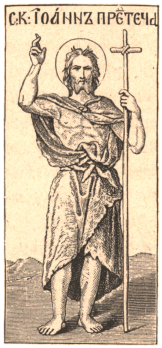
В следующий день после праздника Крещения Господа Церковь прославляет св. славного Его Предтечу и Крестителя. Ибо достойно почтить празднеством того, который послужил таинству Божественного Крещения и Богоявления, возложив десницу свою на главу Владычню и погрузил Господа в водах Иордана, а по крещении Спасителя всенародно исповедал Его Сыном Божьим и на другой день после сего паки узрев Его и указуя на Него, возвестил ученикам своим: се Агнец Божий (Ин.1:34–36). Итак в наутрие праздника Крещения Господня Церковь собирается для празднования Крестителю, называя это празднование собором Предтечи, т. е. собранием верующих в храме на славословие Божие, в честь и похвалу великого Иоанна Предтечи и Крестителя.
On the day following the feast of the Baptism of the Lord, the Church glorifies His holy, glorious Forerunner and Baptist. For it is worthy to honor with a feast him who served the mystery of the Divine Baptism and Theophany, laying his right hand upon the head of the Master and immersing the Lord in the waters of the Jordan, and who, after the baptism of the Savior, confessed Him publicly as the Son of God, and on the next day, again beholding Him and pointing to Him, declared to his disciples: Behold the Lamb of God (Jn. 1:34–36). Therefore, on the morrow of the feast of the Baptism of the Lord, the Church gathers for the celebration of the Baptist, calling this celebration the Synaxis of the Forerunner, that is, the assembly of the faithful in the church for the glorification of God, in honor and praise of the great John the Forerunner and Baptist.
Православная Церковь совершает Собор в честь Предтечи с древних времён. В IV веке на день этого Собора можно находить указание в поучении Иоанна Златоустого, произнесённом в похвалу Крестителя. В этом поучении святитель говорит: «прославим Крестителя. Но увенчаем ли его по усердию? Ибо не восстал в рождённых жёнами более Иоанна Крестителя, по слову Самого Господа».
The Orthodox Church has celebrated the Synaxis in honor of the Forerunner from ancient times. In the fourth century, an indication of the day of this Synaxis may be found in a homily of John Chrysostom, delivered in praise of the Baptist. In this homily the Hierarch says: "Let us glorify the Baptist. But shall we crown him according to our zeal? For among those born of women there has not arisen a greater than John the Baptist, according to the word of the Lord Himself."
В день Собора Церковь прославляет Иоанна, как пророков честнейшего, «яко и в струях сподобился крестити Проповеданного. Темже за истину пострадав радуяся, благовестил и сущим во аде Бога явльшегося плотию, вземлющего грех мира и подающего нам велию милость». Церковь призывает Предтечу, да молит он Владыку Христа, чтобы нам по смерти своей быть в Церкви торжествующих, во храме нерукотворном, вечном, на небеси, и там слышать глас Святых и им сопраздновать Богоявление вечное, в небесной славе и блаженстве.
On the day of the Synaxis, the Church glorifies John as the most honorable of prophets, "for he was counted worthy to baptize in the streams Him who was proclaimed. Therefore, having suffered for the truth with joy, he preached even to those in Hades God who had appeared in the flesh, taking away the sin of the world and granting us great mercy." The Church calls upon the Forerunner to pray to the Master Christ, that after our death we may be in the Church of the triumphant, in the temple not made with hands, eternal, in heaven, and there hear the voice of the Saints and celebrate with them the eternal Theophany, in heavenly glory and blessedness.
В Апостоле на литургии в день Собора в честь Предтечи Церковь упоминает о крещении Иоанновом: Иоанн крести крещением покаяния, людем глоголя, да во Грядущего по нем веруют, сиречь во Христа Иисуса (Деян.16:1–8); в Евангелии – об исповедании Иисуса Христа от Иоанна Агнцем Божьим, Который вземлет на Себя грехи мира, Который первее Иоанна был, и о свидетельстве Иоанна, что он видел Духа сходяща, яко голубя с небесе, и пребысть на Нем. Той есть Крестяй Духом Святым: Сей есть Сын Божий (Ин.1:29–34).
In the Epistle at the Liturgy on the day of the Synaxis in honor of the Forerunner, the Church makes mention of the baptism of John: John baptized with the baptism of repentance, saying to the people that they should believe on Him who should come after him, that is, on Christ Jesus (Acts 16:1–8); in the Gospel, of the confession of Jesus Christ by John as the Lamb of God, Who takes upon Himself the sins of the world, Who was before John, and of John's testimony that he saw the Spirit descending from heaven like a dove, and it abode upon Him. He it is who baptizeth with the Holy Spirit: This is the Son of God (Jn. 1:29–34).