Святое Богоявление Господа Бога и Спаса Иисуса Христа
The Holy Theophany of the Lord God and our Savior Jesus Christ
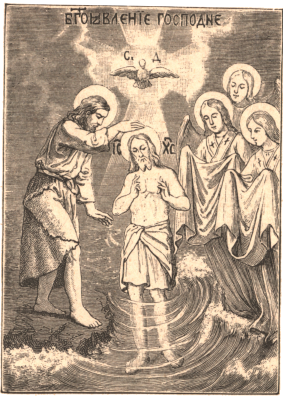
До тридцатилетнего Своего возраста Богочеловек не начинал всенародной проповеди Евангелия, потому что у иудеев ранее этого возраста не принимали звания учителя народного или священника. Когда настало для Него время спасительной проповеди, Иоанн Предтеча, в 15-е лето владычества Тиверия, по глаголу Божию, предвозвещает во всей окрестности Иорданской (Лк.3:1–3), что приблизилось Царство Небесное и грядёт чаемый Мессия; проповедует покаяние, необходимое для достойного вступления в Царство Его, и исповедующих грехи свои крестит в Иордане (Мф.3:2). Крещение, давшее Иоанну наименование Крестителя, было, по словам Златоуста, только приготовлением к св. таинству, а не самым ещё таинством. Желая освятить воды прикосновением к ним пречистого естества Своего и установить таинство крещения, долженствовавшее служить дверью в новый вечный завет с Богом, Иисус Христос перед вступлением Своим в открытое, всенародное служение спасению мира, пришёл также на Иордан к Иоанну креститься. Предтеча никогда не видал Спасителя, но Бог открыл Крестителю, что это Мессия; тогда Иоанн в благоговейном изумлении возопил: аз требую Тобою креститися, и Ты ли грядеши ко мне. Остави ныне, отвечал Господь,тако бо подобает нам исполнити всякую правду (Мф.3:14–15). Иоанн возлагает руку на главу Господа и погружает Его; по выражению церковных песнопений Господь, взявший на Себя грехи мира, покрывается водами Иордана. Как скоро Иисус Христос, крестившись, вышел из воды: над Ним отверзлись небеса, и Иоанн увидел Духа Божия, Который сходил как голубь, ниспускаясь на Него, и слышан был глас Бога Отца: Сей есть Сын Мой возлюбленный, о Немже благоволих (Мф.3:17). Таким образом, Иисус Христос, в день крещения, сошествием на Него св. Духа помазан по Своему человечеству паче причастник своих (Евр.1:9; Деян.10:37–38), и с этого времени Спасителю, как человеку, принадлежит имя Христос, предсказанное пророками.
Until His thirtieth year, the God-Man did not begin His public preaching of the Gospel, because among the Jews the rank of a teacher of the people or a priest was not accepted before that age. When the time of His saving preaching had come for Him, John the Forerunner, in the fifteenth year of the reign of Tiberius, by the word of God, proclaimed throughout all the region round about the Jordan (Lk. 3:1–3) that the Kingdom of Heaven was at hand and that the expected Messiah was coming; he preached repentance, necessary for a worthy entrance into His Kingdom, and baptized those who confessed their sins in the Jordan (Mt. 3:2). The baptism, which gave John the name Baptist, was, according to the words of Chrysostom, only a preparation for the holy mystery, and not yet the mystery itself. Desiring to sanctify the waters by the touch of His most pure nature and to establish the mystery of baptism, which was to serve as the door into the new eternal covenant with God, Jesus Christ, before entering upon His open, public ministry for the salvation of the world, also came to the Jordan to John to be baptized. The Forerunner had never seen the Savior, but God revealed to the Baptist that this was the Messiah; then John, in reverent amazement, cried out: I have need to be baptized of Thee, and comest Thou to me? Suffer it to be so now, the Lord answered, for thus it becometh us to fulfil all righteousness (Mt. 3:14–15). John laid his hand on the head of the Lord and immersed Him; in the words of the Church’s hymns, the Lord, Who took upon Himself the sins of the world, was covered by the waters of the Jordan. As soon as Jesus Christ, having been baptized, came up out of the water, the heavens were opened over Him, and John saw the Spirit of God descending like a dove and lighting upon Him, and a voice from God the Father was heard: This is My beloved Son, in Whom I am well pleased (Mt. 3:17). Thus, Jesus Christ, on the day of His baptism, by the descent of the Holy Spirit upon Him, was anointed in His humanity above His fellows (Heb. 1:9; Acts 10:37–38), and from this time the Savior, as man, bears the name Christ, foretold by the prophets.
В воспоминание события на Иордане установлен Церковью праздник в 6-й день января, согласно с преданием, по сказанию коего именно в этот день совершилось празднуемое событие, а также – и со свидетельством Евангелия, благовествующего, что Иисус Христос, в день Своего крещения бе яко лет тридесять (Лк.3:23); следовательно, крестился около дня Своего рождества.
In remembrance of the event on the Jordan, the Church established the feast on the 6th day of January, in accordance with tradition, according to which this very day was the one on which the celebrated event took place, and also with the testimony of the Gospel, which announces that Jesus Christ, on the day of His baptism, was about thirty years of age (Lk. 3:23); consequently, He was baptized near the day of His nativity.
Праздник в 6-й день января называется праздником Крещения Господня и Богоявления. Ибо при крещении Христа Спасителя было явление Пресвятой Троицы и особенно торжественное явление Божества Спасителя, всенародно вступившего в Своё открытое служение для искупления мира. Бог Отец явился, из отверстых небес гласом свидетельствуя о Христе крестившемся: Сей есть Сын Мой возлюбленный, о Немже благоволих. Дух Святой явился из отверстых небес в виде голубя, подтверждая глас Отчий, или, как говорит Церковь, «извествоваше словесе утверждение». Таким образом явление Бога Отца и Св. Духа свидетельствовало о явлении Сына Божия человекам в лице Крещаемого, как говорит Предтеча о Спасителе: да явится Израилеви, сего ради приидох аз, водою крестя (Ин.1:31); а св. Златоуст пишет: целью сошествия Св. Духа было указать Христа. И действительно, Божество Спасителя явлено было при крещении Его и народу и Крестителю. Креститель свидетельствовал о Христе: аз не видех Его: но Пославый мя крестити водою. Той мне рече: над Негоже узриши Духа сходяща и пребывающа на Нем, Той есть Крестяй Духом Святым. И аз видех и свидетельствовах, яко Сей есть Сын Божий (Ин.1:33–34). На другой день по крещении Спасителя, узревши Его, Креститель и сам торжественно исповедал Его Сыном Божьим и другим указал на Него, яко на Агнца Божия, взявшего на Себя грехи мира (Ин.1:32–37). Согласно со словами Евангелия объясняется наименование Богоявления в Постановлениях Апостольских и у Отцов церкви. В Постановлениях сказано: «да будет у вас в великом уважении день явления, в который Господь явил вам Божество, да будет они в 6 день месяца». По словам св. Амвросия Медиоланского, день крещения Господня назван Богоявлением преимущественно потому, что в этот день Господь явился не столько взору, сколько спасению людей. Св. Златоуст говорит: «не тот день, в который родился Спаситель, до́лжно назвать явлением, но тот, когда Он крестился. Чрез рождение Своё Он не всем сделался известен, но чрез крещение; до дня крещения Он был не известен народу. Почему Богоявлением называется не тот день, в который (Христос) родился, а тот, в который крестился. А что народ познал Его и не понимал, кто Он, послушай, что говорит Иоанн Креститель: отвеща Иоанн глаголя: аз крещаю водою: посреди же вас стоит, егоже вы не весте (Ин.1:26). И что удивительного, если другие не знали, когда и сам Креститель не знал Его до того дня» (Ин.1:33). Блаженный Иероним говорит: «в рождении Своём Сын Божий явился миру сокровенно, но в крещении Он явился совершенно». Согласно с Писанием и преданием Прав. Церковь объясняет наименование Богоявления, возглашая в день крещения Спасителя: «явился еси днесь вселенней, и свет Твой, Господи, знаменася на нас: пришел еси и явился еси свет неприступный». Итак, крещение Господне было событием явления Бога Триединого, для явления миру Сына Божия, обещанного Спасителя человеков.
The feast on the 6th day of January is called the feast of the Baptism of the Lord and of Theophany. For at the baptism of Christ the Savior there was a manifestation of the Most Holy Trinity and a particularly solemn manifestation of the Divinity of the Savior, Who publicly entered upon His open ministry for the redemption of the world. God the Father appeared, from the opened heavens, bearing witness by a voice concerning the baptized Christ: This is My beloved Son, in Whom I am well pleased. The Holy Spirit appeared from the opened heavens in the form of a dove, confirming the voice of the Father, or, as the Church says, “giving assurance of the confirmation of the word.” Thus the manifestation of God the Father and of the Holy Spirit bore witness to the manifestation of the Son of God to men in the person of the One being baptized, as the Forerunner says of the Savior: that He should be made manifest to Israel, therefore am I come baptizing with water (Jn. 1:31); and St. Chrysostom writes: the purpose of the descent of the Holy Spirit was to point out Christ. And indeed, the Divinity of the Savior was manifested at His baptism both to the people and to the Baptist. The Baptist testified concerning Christ: I knew Him not: but He that sent me to baptize with water, the same said unto me, Upon whom thou shalt see the Spirit descending, and remaining on Him, the same is He which baptizeth with the Holy Ghost. And I saw, and bare record that this is the Son of God (Jn. 1:33–34). On the next day after the Savior’s baptism, having seen Him, the Baptist himself solemnly confessed Him as the Son of God and pointed others to Him as the Lamb of God, Who taketh away the sin of the world (Jn. 1:32–37). In accordance with the words of the Gospel, the name Theophany is explained in the Apostolic Constitutions and by the Fathers of the Church. In the Constitutions it is said: “Let the day of the manifestation, on which the Lord revealed to you His Divinity, be held in great honor among you; let it be on the 6th day of the month.” According to the words of St. Ambrose of Milan, the day of the Lord’s baptism was called Theophany chiefly because on this day the Lord appeared not so much to the sight as to the salvation of men. St. Chrysostom says: “Not the day on which the Savior was born should be called the manifestation, but the day on which He was baptized. Through His birth He did not become known to all, but through His baptism; until the day of His baptism He was not known to the people. Therefore Theophany is called not the day on which (Christ) was born, but the day on which He was baptized. And that the people knew Him and did not understand who He was, listen to what John the Baptist says: John answered them, saying, I baptize with water: but there standeth one among you, whom ye know not (Jn. 1:26). And what wonder if others did not know Him, when even the Baptist Himself did not know Him until that day” (Jn. 1:33). Blessed Jerome says: “In His birth the Son of God appeared to the world hiddenly, but in His baptism He appeared fully.” In accordance with Scripture and tradition, the Orthodox Church explains the name Theophany, proclaiming on the day of the Savior’s baptism: “Thou hast appeared today to the universe, and Thy light, O Lord, hath been signed upon us; Thou hast come and appeared, O Light unapproachable.” Thus, the Baptism of the Lord was an event of the manifestation of the Triune God, for the revelation to the world of the Son of God, the promised Savior of men.