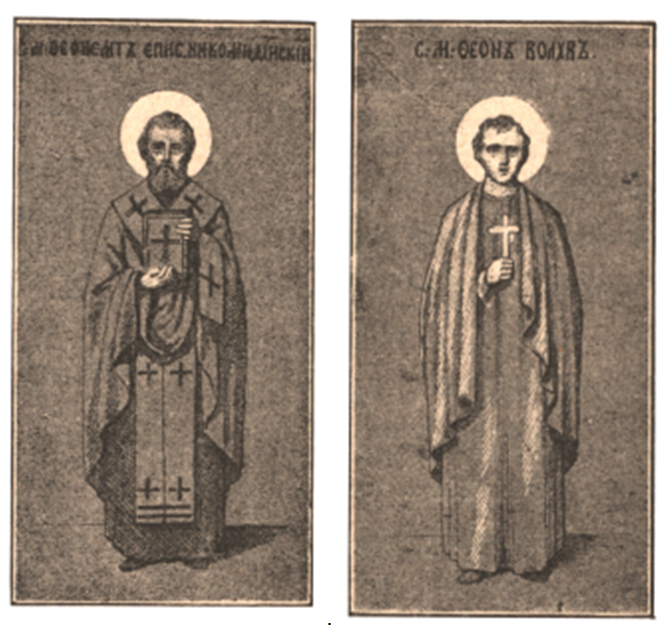
Во время мучений, принятых за исповедание христианской веры епископом Феопемптом, Богу угодно было проявить над ним великую силу чудес Своих. Брошенный в разожжённую печь, томимый 22 дня в темнице, напоенный ядом, повешенный на дереве с камнем на шее, он остался невредимым.
During the torments endured by Bishop Theopemptus for his confession of the Christian faith, God was pleased to manifest upon him the great power of His wonders. Cast into a heated furnace, tormented for twenty-two days in prison, given poison to drink, hung upon a tree with a stone about his neck, he remained unharmed.
Поражённый этим, но не вразумлённый силой Божией, мучитель приписывал совершившиеся в глазах его чудеса искусству волхвования, и пожелал найти подобного же волхва из язычников, который мог бы победить и затмить все проявления этой таинственной для него силы, казавшейся ему не более как волшебством. Через несколько времени явился волхв Феона и обещал совершить ещё бо́льшие чудеса. Но когда ядовитый состав, в смертоносной силе которого он не мог сомневаться, остался безвредным для мученика, то он сам был так поражён этим чудом, что сказал: если и ещё одно, – несомненно, убийственное средство не окажет испытанного действия, то я сочту себя побеждённым и уверую в Бога Феопемптова, – и предложил Феопемпту выпить настой одного ядовитейшего растения.
Struck by this, but not instructed by the power of God, the tormentor attributed the miracles that had taken place before his eyes to the art of sorcery, and desired to find a similar sorcerer from among the pagans who might overcome and eclipse all manifestations of this power, which seemed to him to be nothing more than magic. After some time, the sorcerer Theonas appeared and promised to perform even greater wonders. But when the poisonous compound, in whose deadly power he could not doubt, remained harmless to the martyr, he himself was so amazed by this miracle that he said: if yet one more—undoubtedly deadly—means should prove ineffective, then I will consider myself vanquished and will believe in the God of Theopemptus—and he offered Theopemptus a draught of a most poisonous plant.
Но в исполнение слов Иисуса Христа: «даю вам власть на змей и скорпионов, и на всю силу вражию, и ничто не повредит вам» (Лк.10:19), епископ выпил и этот настой без вреда. Побеждённый волхв пал к ногам его и воскликнул: «нет другого Бога, кроме Иисуса, в Которого до́лжно веровать», – и, обратившись к мучителю, исповедал себя христианином.
But in fulfillment of the words of Jesus Christ: "Behold, I give you power to tread on serpents and scorpions, and over all the power of the enemy, and nothing shall by any means hurt you" (Lk. 10:19), the bishop drank this draught also without harm. The vanquished sorcerer fell at his feet and cried out: "There is no other God besides Jesus, in Whom one must believe," and, turning to the tormentor, confessed himself a Christian.
– Велико знание волшебства у христиан, – решил мучитель, даже и при этом случае не признавший высшей, не человеческой силы, творящей чудеса, и приказал обоих исповедников отвести в темницу. Здесь святитель просветил истинами веры язычника Феону и, совершив над ним крещение, назвал его Синесием, т. е. исполненным разума. На другой же день оба исповедника были преданы истязаниям, но ничто не могло их заставить отречься от Христа. Св. Феопемпт был осуждён погибнуть от меча, а св. Феона, обращением своим навлёкший на себя усиленный гнев мучителя, был брошен в глубокий ров и засыпан землёй.
"Great is the knowledge of magic among the Christians," decided the tormentor, even on this occasion not recognizing the higher, non-human power that works miracles, and he ordered both confessors to be taken to prison. There the Hierarch enlightened the pagan Theonas with the truths of the faith and, having performed baptism over him, named him Synesius, that is, filled with understanding. On the next day both confessors were subjected to tortures, but nothing could compel them to deny Christ. St. Theopemptus was condemned to perish by the sword, while St. Theonas, who by his conversion had drawn upon himself the intensified wrath of the tormentor, was cast into a deep pit and buried with earth.
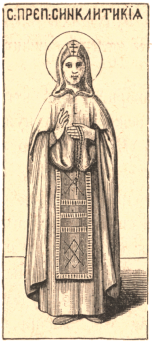
Язычество не любило девства; оно даже наказывало бездетных; но первый христианский император «едва не благоговел пред святейшим сонмом девственниц Божьих, будучи убеждён, что в душах их живёт Сам Бог, Которому посвятили они себя»12. Если св. Апостол так одобрял жизнь девственную (1Кор.7:32–34), то естественно, что ещё со времён апостольских являлись в церкви Божией чистые девственницы, проводившие жизнь в молитве и воздержали. Ученик апостольский св. Игнатий Богоносец писал даже предостережение одному пастырю: «не возлагай ни на кого ига девства: ибо не безопасно сие стяжание и не легко сохранить его, когда бывает сие по принуждению»13. В Александрии, по известию св. Кассиана, основателем девственной жизни был св. Евангелист Марк14. Чистые девы, пламенея любовью к Небесному Жениху своему, обыкновенно бывали первыми мученицами в гонениях за веру15, и жизнь девственная в бурные времена не получала определённого устройства. Как великий Антоний явился основателем пустынной отшельнической жизни, так св. Синклитикия была начальницей пустынного общежития для дев и жён16.
Paganism did not love virginity; it even punished the childless; but the first Christian emperor "almost revered the most holy assembly of God's virgins, being convinced that in their souls dwelt God Himself, to Whom they had dedicated themselves"12. If the holy Apostle so approved of the virginal life (1 Cor. 7:32–34), then it is natural that even from apostolic times there appeared in the Church of God pure virgins who spent their lives in prayer and abstinence. The apostolic disciple, St. Ignatius the God-bearer, even wrote a warning to a certain pastor: "Do not lay the yoke of virginity upon anyone; for this possession is not safe, nor is it easy to preserve it when it is by compulsion"13. In Alexandria, according to the account of St. Cassian, the founder of the virginal life was the holy Evangelist Mark14. Pure virgins, burning with love for their Heavenly Bridegroom, were usually the first martyrs in persecutions for the faith15, and the virginal life in turbulent times did not receive a definite structure. Just as the great Anthony appeared as the founder of the solitary desert life, so St. Syncletica was the foundress of the desert cenobitic life for virgins and women16.
Она родилась в Александрии от родителей, вышедших из Македонии, богатых и благочестивых. У неё были сестра и два брата, и все дети воспитывались добрыми родителями в христианском благочестии. Младший брат умер рано; другого, когда был он 25 лет, приготовлялись женить, но молодой человек вырвался как птица из тенет, ушёл в пустыню. Дочь богатых родителей и прекрасная лицом, Синклитикия рано увидала женихов, домогавшихся руки её; родители желали выдать её замуж. Но она отклонила от себя предложения о супружестве. У неё были желания другой жизни. Не тешили зрения её ни наряды, ни дорогие каменья, и музыка не увлекала собой души её. Она молилась, и в молитве находила для себя лучшие утешения. Убеждённая в том, что самый опасный враг для неё – молодое тело её, она любила поститься и смиряла плоть воздержанием и трудами. Она так приучила себя к жизни умеренной, что если случалось ей принимать пищу не в определённое время: это томило её, лицо становилось бледным и тело слабело.
She was born in Alexandria to parents who had come from Macedonia, wealthy and pious. She had a sister and two brothers, and all the children were raised by their good parents in Christian piety. The younger brother died early; the other, when he was twenty-five years old, was being prepared for marriage, but the young man escaped like a bird from a snare and went into the desert. The daughter of wealthy parents and beautiful of face, Syncletica early saw suitors seeking her hand; her parents wished to give her in marriage. But she declined the proposals of marriage. She had desires for another life. Neither finery nor precious stones delighted her sight, and music did not captivate her soul. She prayed, and in prayer she found the best consolations for herself. Convinced that her most dangerous enemy was her young body, she loved to fast and subdued the flesh by abstinence and labors. She so accustomed herself to a moderate life that if it happened that she took food not at the appointed time, this tormented her, her face became pale, and her body grew weak.
Смерть родителей доставила ей свободу вполне предаться той жизни, которую давно избрала она душой. Она продала имущество, раздала деньги бедным, взяла с собой слепую сестру свою, полюбившую уединение, и удалилась в одну из близких к городу гробниц, принадлежавшую родственнику её. Тамошние гробницы были довольно обширны, чтобы быть жилищем для двух, хотя и не просторны17.
The death of her parents gave her the freedom to fully devote herself to that life which she had long chosen in her soul. She sold her property, distributed the money to the poor, took with her her blind sister, who loved solitude, and withdrew to one of the tombs near the city, belonging to a relative of hers. The tombs there were spacious enough to be a dwelling for two, though not roomy17.
За этим шагом великой девственницы следовал другой на пути отречения её от мира. Женщины того времени считали волосы свои лучшим украшением своего пола. Синклитикия пригласила пресвитера, и он, по её желанию, обрезал волосы её. Это значило, что она совершила полное отречение от мира и его радостей. Современный св. архипастырь Александр писал деве: «одежды твои не должны быть из дорогой материи. Верхняя одежда должна быть чёрной, некрашеной; головное покрывало такого же цвета без бахромы; рукава должны быть шерстяные, покрывающие руки до перстов; волосы на голове подрезаны кругом; головная повязка шерстяная; кукуль и наплечник – без бахромы. Если встретишься с мужчиной, покрой лицо твоё и не смотри на человека, а только на Бога»18.
This step of the great virgin was followed by another on her path of renunciation of the world. The women of that time considered their hair the best adornment of their sex. Syncletica summoned a presbyter, and he, according to her desire, cut her hair. This signified that she had made a complete renunciation of the world and its joys. The contemporary holy archpastor Alexander wrote to a virgin: "Your garments should not be of costly material. The outer garment should be black, undyed; the head covering of the same color without fringe; the sleeves should be woolen, covering the hands to the fingers; the hair on the head cut round; the headband woolen; the cowl and shoulder-piece without fringe. If you meet a man, cover your face and look not at a person, but only at God"18.
Благочестивая жизнь дома родительского приготовила Синклитикию к строгой жизни, какую стала она вести в новом жилье своём. Впрочем, она соразмеряла строгость подвижничества с состояниями души и тела своего. Когда чувствовала она сильное восстание плотской брани, – она ела только хлеб из отрубей, не пила воды, ложилась на голой земле. Когда ослабевало искушение, смягчалась и строгость её к себе. Она вела жизнь с духовным рассуждением, опасалась доводить тело до расстройства. Мы видели, говорит биограф её, таких, которые неумеренным и безрассудным пощением нанесли себе вреда более, чем мог бы нанести дух злобы.
The pious life in her parental home prepared Syncletica for the strict life she began to lead in her new dwelling. However, she measured the strictness of her asceticism according to the states of her soul and body. When she felt a strong uprising of the fleshly warfare, she ate only bread made from bran, drank no water, and lay down on the bare ground. When the temptation weakened, her strictness toward herself also softened. She led a life with spiritual discernment, fearing to bring the body to disorder. We have seen, says her biographer, those who by immoderate and senseless fasting brought upon themselves more harm than the spirit of malice could have inflicted.
В духовной брани Синклитикия поступала так, как поступают на море. Во время жестокой бури не думают ни о пище, ни о питье, а обращают всё внимание на спасение корабля от гибели. Когда пройдёт буря, напряжение сил ослабляется, и люди принимают пищу и покой. На корабле знают и то, что находятся на изменчивой и коварной стихии. Потому не предаются беззаботной лени и неге, а содержат в готовности снасти на случай новой бури. Так должно быть и в духовной жизни. Так вела жизнь свою Синклитикия!
In spiritual warfare, Syncletica acted as one acts at sea. During a fierce storm, one thinks neither of food nor drink, but turns all attention to saving the ship from destruction. When the storm passes, the tension of strength relaxes, and people take food and rest. On a ship, one also knows that one is on a changeable and treacherous element. Therefore, one does not give oneself over to carefree laziness and indulgence, but keeps the tackle ready for a new storm. So it should be in the spiritual life. So Syncletica led her life!
Великая подвижница желала быть безвестной для всех в своём уединении. Но Господь восхотел употребить её на освящение многих других дев и жён. К ней стали приходить для выслушивания советов её; другие желали жить с нею, чтобы пользоваться если не словесными наставлениями, то примером жизни её. Синклитикия долго отказывалась предлагать советы и отвечала на просьбы одними вздохами. Но, наконец, уступила настойчивым желаниям ревнующих о душевном спасении. Так образовалось при ней общежитие девственниц, и она была матерью-наставницей многих.
The great ascetic desired to be unknown to all in her solitude. But the Lord willed to use her for the sanctification of many other virgins and women. They began to come to her to hear her counsels; others desired to live with her, so as to benefit, if not from verbal instructions, then from the example of her life. For a long time Syncletica refused to offer advice and answered requests only with sighs. But at last she yielded to the persistent desires of those zealous for the salvation of their souls. Thus a community of virgins was formed around her, and she became a mother and instructress to many.
Образ жизни девственниц предписан был тогда св. Афанасием. «Да будет, – писал он деве, – всегдашним занятием твоим упражнение в священном писании. Имей псалтирь и учи псалмы. Восходящее солнце да видит в руках твоих книгу и по третьему часу посещай церковное собрание, в шестом часу совершай молитву с псалмами, плачем и прошением, ибо в сей час Сын Божий был повешен на кресте: в девятом часу в пениях и славословии умоляй Бога, ибо в сей час Господь, вися на кресте, предал дух Свой Богу. Вставай в полночь и воспевай Господа Бога твоего, ибо в оный час Господь наш восстал из мёртвых и воспел Отца. Вставши, сначала прочти стих: полунощи востах исповедатися Тебе о судьбах правды Твоея (Пс.118:69). Потом молись и читай 50-й псалом. Поутру читай сей псалом: Боже, Боже мой, к Тебе утреннюю (Пс.62). Также: слава в вышних Богу и на земли мир, в человецех благоволение; хвалим Тя, благословим Тя и проч. Если будут с тобою девы, то и они должны петь псалмы, и одна после другой совершайте молитву; пред трапезой так благодари Господа: „благословен Бог, милующий и питающий нас от нашей юности и дающий пищу всякой плоти; исполни радостью и веселием сердца наши, дабы мы, имея всякое довольство, богаты были для всякого дела благого, во Иисусе Христе, Господе нашем, с Которым Тебе подобает слава, честь и поклонение, со Святым Духом, во веки веков, аминь“. Когда, раздробив хлеб, положишь его на стол, прочти молитву всю: Отче наш. Когда встаёшь из-за стола, опять читай: „благословен Бог“, и трижды повтори: „щедр и милостив Господь, пищу даде боящимся Его; слава Отцу и Сыну и Святому Духу, ныне и присно и во веки веков“. Если сидишь за трапезой с девами, то вкушай с ними всё предложенное. Ибо когда ты не будешь есть, то будут думать, что ты осуждаешь их»19.
The manner of life for virgins was then prescribed by St. Athanasius. "Let your constant occupation," he wrote to a virgin, "be the exercise in the Holy Scriptures. Have a Psalter and learn the psalms. Let the rising sun see a book in your hands, and after the third hour attend the church assembly; at the sixth hour perform prayer with psalms, lamentation, and supplication, for at this hour the Son of God was suspended on the Cross; at the ninth hour in hymns and doxology entreat God, for at this hour the Lord, hanging on the Cross, commended His spirit to God. Rise at midnight and sing praises to the Lord your God, for at that hour our Lord rose from the dead and sang praise to the Father. Having risen, first read the verse: At midnight I arose to give thanks unto Thee for the judgments of Thy righteousness (Ps. 118:69). Then pray and read the fiftieth psalm. In the morning read this psalm: O God, my God, I seek Thee early (Ps. 62). Also: Glory to God in the highest, and on earth peace, good will toward men; we praise Thee, we bless Thee and so forth. If virgins are with you, they also should sing psalms, and one after another perform prayer; before the table give thanks to the Lord thus: 'Blessed is God, Who has mercy on us and nourishes us from our youth and gives food to all flesh; fill our hearts with joy and gladness, that we, having all sufficiency, may be rich unto every good work, in Jesus Christ our Lord, with Whom to Thee be glory, honor, and worship, with the Holy Spirit, unto the ages of ages. Amen.' When, having broken the bread, you place it on the table, recite the entire prayer: Our Father. When you rise from the table, again recite: 'Blessed is God,' and repeat three times: 'The Lord is bountiful and merciful, He hath given food to them that fear Him; glory to the Father and to the Son and to the Holy Spirit, both now and ever and unto the ages of ages.' If you sit at table with virgins, partake with them of all that is set before you. For if you do not eat, they will think that you are condemning them"19.
Когда св. Синклитикия, уступив желаниям других, стала преподавать советы искавшим их, то опытная мудрость советов её оказалась такой, что не только руководимые ею девственницы глубоко запечатлевали советы её в сердце своём, но их записывали для будущих времён, и они потом изучаемы были наряду с советами великих духовных наставников.
When St. Syncletica, yielding to the desires of others, began to give counsel to those who sought it, the experienced wisdom of her counsels proved such that not only did the virgins guided by her deeply imprint her counsels in their hearts, but they were recorded for future times, and were later studied alongside the counsels of the great spiritual teachers.
«Мы все знаем, – говорила она, – как спастись; но не спасаемся по нерадению. Прежде всего нужно сохранить сию заповедь: возлюби Господа Бога твоего всею душою твоею, и ближнего твоего, как самого себя (Мф.22:37, 39)».
"We all know," she said, "how to be saved; but we are not saved because of negligence. Above all, it is necessary to keep this commandment: Thou shalt love the Lord thy God with all thy soul, and thy neighbor as thyself (Mt. 22:37, 39)."
«Много трудов и подвигов предстоит приходящим к Богу, но потом ожидает их радость. Желающие развести огонь сперва задыхаются от дыма и плачут, а потом достигают, чего ищут; так и мы должны воспламенять в себе божественный огонь со слезами и трудами. Наше звание есть не что иное, как отречение от жизни и помышление о смерти. Как мирские вельможи поручают слугам различные должности: иных отсылают в деревни для возделывания земли, и те там плодятся, а детей, если найдут хорошими, берут в дома свои для услуг; так и Господь лучших детей поставляет на служение Себе. Они свободны от всех мирских занятий и питаются от стола Господня. Если мирские жёны, сочетаваясь с мужем, много заботятся о умовениях, о благовонных мазях и различном убранстве, чтобы быть прелестными, то тем более мы, обречённые Небесному Жениху, должны превосходить их в старании, должны омыть скверны грехов подвижничеством».
"Many labors and struggles await those who come to God, but afterwards joy awaits them. Those who wish to kindle a fire first choke from the smoke and weep, but afterwards they attain what they seek; so we also must kindle the divine fire within us with tears and labors. Our calling is nothing other than renunciation of life and meditation on death. Just as worldly nobles entrust various duties to servants: some they send to the countryside for tilling the soil, and those there multiply, while children, if they find them good, they take into their houses for service; so also the Lord appoints the best children to serve Him. They are free from all worldly occupations and are fed from the Lord's table. If worldly women, when united with a husband, take great care about washings, fragrant ointments, and various adornments, in order to be attractive, then how much more should we, betrothed to the Heavenly Bridegroom, surpass them in diligence; we must wash away the filth of sins through asceticism."
«Если ты живёшь в общежитии (киновии), то не переменяй места: иначе выйдет из того большой вред для тебя. Если птица слетает с яиц, они делаются болтнями и бесплодными, – так и монах или дева, если переходит с места на место, охладевает и умирает для веры»20.
"If you live in a coenobium, do not change your place; otherwise great harm will come to you from it. If a bird leaves its eggs, they become addled and barren—so also a monk or a virgin, if they move from place to place, grows cold and dies to the faith"20.
«Живя в киновии, мы должны предпочитать послушание подвижничеству. Последнее располагает к высокомерию, а первое к смирению. Мы должны с рассуждением управлять своей душой. Так как живём мы в киновии, то не надобно нам приобретать собственность и не надобно служить своей воле; мы, как бы ссылая себя, предали всё по вере духовному отцу, отреклись от всего мирского, не должны искать того, откуда вышли»21.
"Living in a coenobium, we ought to prefer obedience to asceticism. The latter disposes one to pride, but the former to humility. We must govern our soul with discernment. Since we live in a coenobium, we need not acquire property, nor need we serve our own will; we, as if exiling ourselves, have entrusted everything by faith to the spiritual father, have renounced all worldly things, and should not seek that from which we came out"21.
«В чувства наши, – говорила она, – хотя бы мы и не хотели, влезают воры. Как может не зачерняться внутренность дома, когда окружён он дымом, а окна отворены?22 Не предосудительно ли смотреть на улице обнажённых до непристойности и произносящих слова нескромные? От сего рождаются мысли тревожные и вредные»23.
"Into our senses," she said, "even if we do not wish it, thieves creep in. How can the interior of a house not become blackened when it is surrounded by smoke and the windows are open?22 Is it not reprehensible to look in the street at those indecently exposed and uttering immodest words? From this arise troubled and harmful thoughts"23.
«Если ты победила любодеяние грубое, – старайся, чтобы враг не вложил любодеяния в ощущения твои. Он часто воздвигает внутреннюю брань, припоминает отшельницам красивые лица, нескромные разговоры. Не до́лжно сдружаться с такими представлениями: они пролагают путь ко греху. Если явится в твоей мысли образ красивого лица, гони его вон, – представь всё тело любимого предмета в смердящих ранах и гное, представь мёртвым трупом и – порочное желание оставить душу. Мы, принявшие на себя обет чистоты, должны сохранять целомудрие совершеннейшее. И у Мирян, по-видимому, есть целомудрие, – но у них много неразумия, потому что они грешат всеми чувствами, – они и смотрят нескромно и смеются бесчинно»24.
"If you have overcome coarse fornication, strive that the enemy not implant fornication in your sensations. He often stirs up an inner warfare, recalling to hermits beautiful faces, immodest conversations. One must not become friendly with such representations: they pave the way to sin. If the image of a beautiful face appears in your thought, drive it out—present the entire body of the beloved object in stinking wounds and pus, present it as a dead corpse—and the depraved desire will leave the soul. We who have taken upon ourselves the vow of purity must preserve most perfect chastity. Even among the laity there is, apparently, chastity—but they have much folly, because they sin with all their senses—they both look immodestly and laugh disorderly"24.
«В море есть более опасные места, есть и покойные. Мы плывём в покойной стороне моря, a мирские – в местах опасных. Мы плывём при свете солнца правды, а они несутся в ночи неведения. Впрочем, бывает, что мирские, плывя в темноте и опасности, от страха крепко кричат пред Богом, бодрствуют и так спасают корабль; а мы по нерадению тонем, оставляя управление правды»25.
"In the sea there are more dangerous places, and there are also calm ones. We sail in a calm region of the sea, but the worldly sail in dangerous places. We sail by the light of the sun of righteousness, but they rush about in the night of ignorance. However, it happens that the worldly, sailing in darkness and danger, from fear cry out strongly before God, keep watch, and thus save the ship; while we, through negligence, sink, abandoning the helm of righteousness"25.
«Хорошо не гневаться. Но, если случится предаться гневу, то не позволено тебе и дня оставаться в этой болезни. Солнце да не заходит в гневе вашем (Еф.4:26). Зачем ты ненавидишь оскорбляющего тебя человека? Гневайся за болезнь его, если можешь, а не на больного. Гнев ещё меньшее зло; самое тяжёлое зло – злостное памятование о зле. Гнев, на короткое время встревожив душу, проходит, а злопомнение делает её лютее зверя».
"It is good not to become angry. But if it happens that you give way to anger, you are not permitted to remain even a day in this sickness. Let not the sun go down upon your wrath (Eph. 4:26). Why do you hate the man who offends you? Be angry at his sickness, if you can, and not at the sick man. Anger is a lesser evil; the most grievous evil is malicious remembrance of evil. Anger, having troubled the soul for a short time, passes away, but malice makes it fiercer than a wild beast."
«Не слушай речей злословия, чтобы не быть вместилищем чужих пороков. Если примешь в себя нечистые речи, – положишь пятно на твою молитву. Наслушавшись худых отзывов, на всех будешь смотреть косо и ненавидеть без всякой причины. Люби врагов, не презирай беспечных и нерадивых. Истинно добродетельные, подражая Господу, евшему с мытарями и грешниками, заботятся о спасении грешников и употребляют все средства наставлять их на путь спасения. Впрочем тому, кто сам не испытал деятельной жизни, опасно приниматься за научение».
"Do not listen to speeches of slander, lest you become a receptacle of others' vices. If you receive unclean speeches into yourself, you will place a stain upon your prayer. Having heard evil opinions, you will look askance at everyone and hate without any cause. Love your enemies, do not despise the careless and negligent. Truly virtuous people, imitating the Lord, who ate with publicans and sinners, care for the salvation of sinners and use every means to instruct them in the way of salvation. However, it is dangerous for one who has not himself experienced the active life to undertake teaching."
«Враг нападает сперва объедением, негой и любодеянием. Эти ветры дуют особенно на возраст молодой. Когда душа воздержала чрево, победила чистотой чувственные удовольствия, является гордость или сребролюбие; в уме являются мысли о первенстве, учении, дарованиях, заслугах. Отшельница, если придут к ней такие помыслы, пусть идёт в киновию. Пусть она принудит себя есть два раза в день, – она должна выполнить все службы и выслушивать укоры».
"The enemy attacks first through gluttony, indulgence, and fornication. These winds blow especially upon the young age. When the soul has restrained the belly, has conquered sensual pleasures by purity, pride or love of money appears; in the mind arise thoughts of preeminence, teaching, gifts, merits. If such thoughts come to a hermitess, let her go to the coenobium. Let her force herself to eat twice a day—she must fulfill all the services and listen to reproaches."
«Сокровище открытое похищается легко, – так и добродетель, когда о ней публикуется, может пропасть. Воск тает от огня, так душа ослабляется похвалами и теряет твёрдость добродетели»26.
"An open treasure is easily stolen—so also virtue, when it is publicized, can perish. Wax melts from fire, so the soul is weakened by praises and loses the firmness of virtue"26.
«Когда болезнь тяготит нас, не надобно нам скорбеть о том, что от боли и ран не можем петь псалмы устами. Болезнь и раны служат к истреблению похотений; а пост и земные поклоны предписаны нам также для укрощения страстей. Если же болезнями исторгаются страсти, то не о чем заботиться. Великий подвиг – терпеливо переносить болезни и среди них благодарить Господа»27.
"When illness weighs upon us, we should not grieve that from pain and wounds we cannot sing psalms with our lips. Illness and wounds serve to destroy lusts; and fasting and prostrations are also prescribed to us for taming the passions. If then passions are uprooted by illnesses, there is nothing to worry about. A great struggle is to patiently endure illnesses and amidst them to give thanks to the Lord"27.
Заботы Синклитикии о вверившихся ей душах не слабели никогда. Она возбуждала одних, ободряла других; забывчивых обращала к добру строгостью; слабых и малодушных поддерживала материнской любовью.
The care of Syncletica for the souls entrusted to her never weakened. She stirred up some, encouraged others; the forgetful she turned to good by severity; the weak and faint-hearted she supported with motherly love.
В себе самой Синклитикия показала пример терпения, подобного терпению Иова. Ей было 80 лет, когда посетила её изнурительная лихорадка; она томила её более трёх лет; огонь пожирал её, не давая отдыха. Потом от загнившего зуба начали гнить у неё дёсны; гниение перешло на всю щёку; через 40 дней обнажились кости; едкая материя заразила всё тело. Гниение и зловоние так были сильны, что и те, которым прислуживали ей с любовью, страдали сильно. В этом мучительном положении, святая не искала себе облегчения, переносила всё терпеливо. Когда явился медик, приглашённый сёстрами, она говорила: «для чего вы хотите остановить полезную для меня борьбу?» Мы вовсе не думаем, – сказал ей медик, – ни облегчить, ни исцелить вас, хотим только умастить умершие члены тела вашего, чтобы остановить в них заразу, опасную для прислуживающих вам.
In herself, Syncletica showed an example of patience like that of Job. She was 80 years old when a debilitating fever visited her; it tormented her for more than three years; fire consumed her, giving no rest. Then, from a decayed tooth, her gums began to rot; the decay spread to her entire cheek; after 40 days the bones became exposed; the caustic matter infected her whole body. The decay and stench were so strong that even those who ministered to her with love suffered greatly. In this painful condition, the saint sought no relief for herself, but bore everything patiently. When a physician appeared, summoned by the sisters, she said: "Why do you wish to stop this struggle that is beneficial for me?" "We do not at all think," the physician said to her, "either to relieve or to heal you; we only wish to anoint the dead members of your body, to stop the infection in them, which is dangerous for those who minister to you."
«Если это не для меня, то пусть будет по-вашему», – сказала страдалица. Ещё более трёх месяцев страдала она, и жизнь её держалась только волей Божьей. Никакой пищи в это время не могла она принимать; сон её был на минуты. «Через три дня я буду разлучена с моим ничтожным телом», – сказала она, наконец. И в назначенный день душа её отлетела к Господу, Которого она так крепко возлюбила на земле.
"If this is not for me, then let it be as you wish," said the sufferer. She suffered for more than three months more, and her life was sustained only by the will of God. During this time she could take no food; her sleep was for moments. "In three days I will be separated from my insignificant body," she said at last. And on the appointed day her soul departed to the Lord, Whom she had so fervently loved on earth.
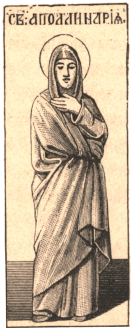
Аполлинария29 была внучка благочестивого императора Маркиана; о родителе её Анфиме, зяте Маркиана, сперва первом министре, потом императоре запада (468–471 г.)30, св. Феофан говорит в своей летописи: «Это был муж самый христианский и управлял царством в Риме благочестиво»31. Само по себе понятно, что дочь таких родителей получила лучшее образование. Но на земле скучно душе при всякой обстановке, если только душа присматривается к себе и земле. Аполлинария сильно желала скрыться от сует мирских и посвятить жизнь свою на служение Господу. Родители страстно любили её и желали видеть её в замужестве. Она отклоняла предложения о браке и выпросила себе дозволение поклониться святым местам востока. Благочестивые родители поручили ей раздать богатые дары церквам и обителям востока. Она отправлена была с множеством слуг и служанок, с запасами серебра и золота. Буря пригнала корабль её к Аскалону. Совершив поклонение святым местам Иерусалима, раздав щедрую милостыню храмам, обителям и бедным, она предоставила свободу слугам и служанкам и оставила при себе только старца и евнуха. Из Иерусалима отправилась она в Египет поклониться мощам муч. Мины. Отдохнув в обители св. Мины, сказала, что должна посетить скитских отцов. На дороге ночью у источника, который после назывался источником Аполлинарии, когда слуги заснули, она оделась в одежду инока и скрылась в камышах соседнего озера. Здесь она мужественно вела начальную борьбу со страстями. Рои комаров скоро превратили мягкое тело её в сухую кожу; вся внешность её до того изменилась от насекомых и поста, что и знавшему нелегко было узнать её в одежде отшельника; скудную пищу доставляло ей финиковое дерево. В пустыне встретился с нею авва Евфимий. Она просила у него дозволения обитать с братиями и, при вопросе об имени, прибавила: грешный евнух Дорофей желает спасти душу свою. Авва дал евнуху келью и велел плести камышовые верёвки32. Скитскими отцами тогда уже принято было за правило принимать пищу не вечером, как бывало прежде, а в девятый час дня (в 2 пополудни). «Недавнее принятие пищи не дозволяет быть с лёгкими и тонкими мыслями на молитве. Потому признано за полезное принимать отдых в девятый час дня. Когда пища уже переварится в желудке, – инок бывает лёгким не только в ночное бдение, но и при вечернем славословии»33.
Apollinaria29 was the granddaughter of the pious Emperor Marcian; of her parent Anthimus, Marcian’s son-in-law, first prime minister, then emperor of the West (A.D. 468–471)30, St. Theophanes says in his chronicle: “He was a man most Christian and ruled the kingdom in Rome piously.”31 It is self-evident that the daughter of such parents received the best education. But on earth the soul is weary in every circumstance, if only the soul looks closely at itself and at the earth. Apollinaria greatly desired to hide herself from worldly vanities and to devote her life to the service of the Lord. Her parents loved her passionately and wished to see her married. She declined proposals of marriage and obtained permission to venerate the holy places of the East. Her pious parents entrusted her with distributing rich gifts to the churches and monasteries of the East. She was sent with a multitude of servants and maidservants, with stores of silver and gold. A storm drove her ship to Ascalon. Having performed the veneration of the holy places of Jerusalem, having given generous alms to churches, monasteries, and the poor, she granted freedom to the servants and maidservants and kept with her only an old man and a eunuch. From Jerusalem she set out for Egypt to venerate the relics of the Martyr Menas. Having rested in the monastery of St. Menas, she said that she must visit the Scetic fathers. On the road at night by a spring, which afterwards was called the Spring of Apollinaria, when the servants fell asleep, she dressed herself in the garb of a monk and hid in the reeds of a nearby lake. Here she courageously waged the initial struggle with the passions. Swarms of mosquitoes soon turned her soft body into dry skin; her whole appearance was so changed by insects and fasting that even one who knew her could scarcely recognize her in the garb of a hermit; a date palm provided her with scanty food. In the desert Abba Euthymius met her. She asked his permission to dwell with the brethren and, when asked her name, added: “The sinful eunuch Dorotheus desires to save his soul.” The Abba gave the eunuch a cell and bade him weave reed ropes.32 By that time the Scetic fathers had already adopted as a rule to take food not in the evening, as had been the custom before, but at the ninth hour of the day (2 p.m.). “Recent eating does not allow one to have light and subtle thoughts in prayer. Therefore it was deemed beneficial to take rest at the ninth hour of the day. When the food has already been digested in the stomach, the monk becomes light not only for the night vigil, but also for the evening doxology.”33
Так подвизался и евнух Дорофей. Аполлинария проводила время в подвигах, незнаемая никем; в скиту знали только евнуха-инока Дорофея. У родителей Аполлинарии была другая дочь; та была одержима бесом. Родители отправили её к скитским отцам, с просьбой помолиться об исцелении больной. Настоятель поручил больную Дорофею, хотя тот и отказывался. Молитвами Аполлинарии больная исцелилась. Возвратившись к родителям, сестра скоро опять подверглась болезни, и злобный дух обвинял инока Дорофея в растлении девицы. Поднялся шум против иноков. Посланы были нарочные взять преступного Дорофея для суда и наказания.
Thus also the eunuch Dorotheus struggled. Apollinaria spent her time in ascetic labors, known to none; in the skete they knew only the eunuch-monk Dorotheus. Apollinaria’s parents had another daughter; she was possessed by a demon. Her parents sent her to the Scetic fathers, with a request to pray for the healing of the sick one. The superior entrusted the sick one to Dorotheus, although he refused. Through the prayers of Apollinaria the sick one was healed. Having returned to her parents, the sister soon fell ill again, and the evil spirit accused the monk Dorotheus of corrupting the maiden. A clamor arose against the monks. Envoys were sent to seize the guilty Dorotheus for trial and punishment.
«Пусть позволено будет поговорить с царём и царицей в уединённой комнате», – сказал мнимый евнух. В уединённой комнате евнух выпросил обещание отпустить его в пустыню, когда открыта будет тайна. Затем открыл он грудь свою и прибавил, что видят дочь свою Аполлинарию; больная сестра в то же время была исцелена. В восторгах радости родители плакали, что видят любимую дочь свою и какой? Они просили её остаться при них в обители; но надобно было выполнить данное слово, и они просили молиться за них пред Господом. Возвратившись в скит, Аполлинария предузнала, что близка смерть её. Она просила настоятеля, чтобы не касались тела умершего при погребении. Как это можно? отвечал настоятель Дорофею. По смерти мнимого евнуха иноки, приготовлявшие тело к погребению, узнали, что это раба Божия Аполлинария. Её положили (в 470 г.) на восточной стороне церкви, в пещере преп. Макария, и много чудес совершалось от её гроба.
“Let it be permitted to speak with the emperor and empress in a secluded room,” said the supposed eunuch. In the secluded room the eunuch obtained a promise to let him go into the desert when the secret was revealed. Then he uncovered his breast and added that they saw their daughter Apollinaria; the sick sister was at the same time healed. In transports of joy the parents wept that they saw their beloved daughter, and in what state? They begged her to remain with them in the monastery; but the given word had to be kept, and they asked her to pray for them before the Lord. Having returned to the skete, Apollinaria foreknew that her death was near. She asked the superior that no one should touch the body of the deceased at burial. “How is that possible?” the superior answered Dorotheus. After the death of the supposed eunuch, the monks preparing the body for burial learned that this was the handmaiden of God Apollinaria. She was laid to rest (in A.D. 470) on the eastern side of the church, in the cave of Venerable Macarius, and many miracles were performed at her tomb.
В городе Оксиринхе, ныне почти засыпанном песком, было до 20 тысяч инокинь. Древние публичные здания и храмы, посвящённые прежде ложным божествам, обращены были в иноческие обители. Влияние иноческой жизни на горожан было изумительное. Они такую имели любовь к успокоению странных, что высылали слуг к городским воротам и сами выходили смотреть, не близится ли где какой странник? Если странник был инок, бежали навстречу ему, каждый тащил к себе; хватались за плечи, за одежду, только бы иметь счастье успокоить его. Руфин говорит, как очевидец, что в его время в Оксиринхе не было ни одного язычника и ни одного еретика, так что епископ с такой же свободой мог проповедовать на площади, как и в церквах34.
In the city of Oxyrhynchus, now almost covered with sand, there were up to 20 thousand nuns. Ancient public buildings and temples, formerly dedicated to false gods, were turned into monastic cloisters. The influence of monastic life on the citizens was astonishing. They had such love for giving rest to strangers that they sent servants to the city gates and themselves went out to see whether any stranger was drawing near. If the stranger was a monk, they ran to meet him, each dragged him to his own home; they seized him by the shoulders, by the clothing, only to have the happiness of giving him rest. Rufinus says, as an eyewitness, that in his time in Oxyrhynchus there was not a single pagan and not a single heretic, so that the bishop could preach in the square with the same freedom as in the churches.34
Дивный тут был и епископ Анфий. Когда он был монахом, вёл весьма строгую жизнь; а когда стал епископом, хотел вести такую же строгую жизнь и среди мира, но не мог. Повергаясь пред Богом, говорил он: неужели по причине епископства отступила от меня благодать? И было ему открыто: «нет, но тогда ты был в пустыне, там не было ни одного человека – и Бог помогал тебе, а ныне ты в мире – и люди помогают тебе»35.
Wonderful also was the bishop Anthius there. When he was a monk, he led a very strict life; and when he became bishop, he wished to lead the same strict life even in the world, but could not. Prostrating himself before God, he said: “Has grace truly departed from me because of the bishopric?” And it was revealed to him: “No, but then you were in the desert, there was not a single man there—and God helped you; but now you are in the world—and men help you.”35
На восточном берегу Нила стоял город Антиноя, а напротив Антинои – Гермополь, ныне, с VII века, Аншунейм. На восточном берегу продолжавшиеся Аравийские горы испещрены пещерами: это древнейшие каменоломни и гробницы. И здесь-то были Фиваидские уединения, прославленные делами христианских подвижников и подвижниц. Они начинались от нынешней Мингэты и тянулись далеко на юг. В Шейх–Абаде, возле исчезнувшей Антинои, в мечети показывают гробницу Антинойского епископа Аммона, подписавшегося под определением собора 394 года36. По известию Палладия, в Антиное было 12 женских обителей, где вели жизнь богоугодную.
On the eastern bank of the Nile stood the city of Antinoë, and opposite Antinoë—Hermopolis, now, since the 7th century, Anshuneim. On the eastern bank the continuing Arabian mountains are riddled with caves: these are ancient quarries and tombs. And here were the Thebaid retreats, glorified by the deeds of Christian male and female ascetics. They began from present-day Mingeta and stretched far to the south. In Sheikh Abada, near vanished Antinoë, a mosque shows the tomb of the Antinoë bishop Ammon, who signed the decree of the Council of 394.36 According to the account of Palladius, in Antinoë there were 12 women’s monasteries, where they led a God-pleasing life.
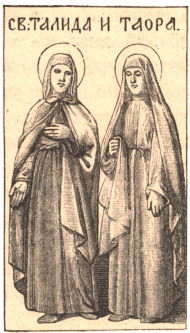
Между Антинойскими подвижницами отличалась особенно высокой духовной жизнью старица амма (мать) Талида37. Она уже восемьдесят лет пребывала в подвижничестве, когда виделся с нею Палладий. С нею жило шестьдесят девственниц. По её наставлениям, они проводили жизнь постническую и чистую. Они все так уважали и любили её, что ворота монастыря их не затворялись, как в других монастырях; одна любовь и уважение к воле аммы удерживали их в стенах обители, и они крепко хранили чистоту души и тела для вечной славы. В ушах и сердцах их постоянно звучали слова Апостола, переданные им аммой: «поступайтедостойно звания, в которое вы призваны, со всяким смиреномудрием и кротостью, и долготерпением, снисходя друг другу любовью, стараясь сохранить единство духа в союзе мира» (Еф.4:1–3). Амма Талида достигла невозмутимой чистоты душевной. «Когда пришёл я к ней и сел, – говорит Палладий, – она села подле меня и положила на мои плечи свои руки, с изумительным упованием на Христа, сохраняющего чистоту её помыслов».
Among the Antinoë ascetics, the elder amma (mother) Talida37 was especially distinguished for her high spiritual life. She had already been eighty years in asceticism when Palladius saw her. With her lived sixty virgins. According to her instructions, they led a life of fasting and purity. They all so respected and loved her that the gates of their monastery were not locked, as in other monasteries; only love and respect for the will of the amma kept them within the walls of the cloister, and they firmly preserved the purity of soul and body for eternal glory. In their ears and hearts constantly sounded the words of the Apostle, transmitted to them by the amma: “Walk worthy of the calling with which you were called, with all lowliness and gentleness, with longsuffering, bearing with one another in love, endeavoring to keep the unity of the Spirit in the bond of peace” (Eph. 4:1–3). Amma Talida attained unruffled purity of soul. “When I came to her and sat down,” says Palladius, “she sat down beside me and placed her hands on my shoulders, with astonishing trust in Christ, Who preserves the purity of her thoughts.”
Что это за бесстрастие Талиды? Не свойство ли одряхлевшего организма? О! нет, в мире бывают старики и старухи 80 лет такие, что в их членах сильно играет нечистый грех. С другой стороны, один жил в пустыне с детства, но когда в первый раз увидал на дороге женщин, сказал отцу своему: «вот те самые, которые приходили ко мне ночью в скит». Авва Антоний говорил: «думаю, что тело имеет движение естественное, прирождённое ему, но оно не действует, когда душа не хочет, и бывает движение без похоти. Есть и другое движение, происходящее от питания и разгорячения тела пищей и питием. Происходящий от них жар крови производит нечистые возбуждения в теле. Потому и сказал Апостол: не упивайтеся вином, в немже есть блуд (Еф.5:19); равно и Господь в Евангелии сказал ученикам: внемлите, да не когда отягчают сердца ваша объядением или пиянством (Лк.21:34). В подвижниках бывает и иное движение от коварства и зависти диавола»38. Приложите эти слова к Талиде и увидите истину. Восходивший с земли на небо говорил о себе, что до разлуки с телом он не считает себя свободным от опасности: но вместе с тем воля, крепкая благодатью, ныне и вчера одерживает победы и над естественными движениями испорченной плоти и по временам уходит с земли на небо.
What is this dispassion of Talida? Is it not a property of a decrepit organism? Oh, no! In the world there are old men and old women of 80 years such that unclean sin plays strongly in their members. On the other hand, one man lived in the desert from childhood, but when he first saw women on the road, he said to his father: “These are the very ones who came to me at night in the skete.” Abba Anthony said: “I think that the body has a natural movement, innate to it, but it does not act when the soul does not will it, and there is a movement without lust. There is also another movement, arising from nourishment and the heating of the body by food and drink. The heat of blood arising from them produces unclean excitations in the body. Therefore the Apostle said: Be not drunk with wine, wherein is excess (Eph. 5:18); likewise the Lord in the Gospel said to the disciples: Take heed to yourselves, lest at any time your hearts be overcharged with surfeiting, or drunkenness (Lk. 21:34). In ascetics there is also another movement from the craftiness and envy of the devil.”38 Apply these words to Talida and you will see the truth. He who ascended from earth to heaven said of himself that until separation from the body he does not consider himself free from danger; but at the same time the will, strengthened by grace, now and yesterday gains victories even over the natural movements of corrupted flesh and from time to time ascends from earth to heaven.
В том же Антинойском монастыре жила девственница Таора, ученица св. Талиды. Она уже 30 лет подвизалась, когда видел её Палладий. «Она никогда не хотела взять ни нового хитона, ни мафорты (μαθόριον), ни обуви»39. Для меня нет надобности в том, говорила она, чтобы иначе не заставили выходить за ворота. Когда прочие сёстры в воскресный день (и только в воскресный) обыкновенно ходили в церковь, для приобщения св. таин, она, покрытая ветошками, оставалась в монастыре, постоянно занимаясь делом. Лицо её было так красиво, что самый твёрдый с трудом мог не увлечься красотой её, но её подвижничество внушало невольный страх даже самому бесстыдному оку. Верная раба Божия отказывала себе в духовном утешении – в посещении храма Божия, оттого, что страшилась соблазнять кого-либо лицом своим, и себя избавляла от искушения опасного. Взор на мужчину язвит или уязвляется, говорит духовный опыт. «Девственница, – писал великий Антоний, – не должна питать в себе чувств, свойственных жене; она должна удаляться нечистых мыслей, гордости и всего, что приятно диаволу; должна любить всех, бегать мирской славы, быть преданной Богу, обуздывать язык и строго хранить пост». Так подвизалась преподобная Таора40.
In the same Antinoë monastery there lived a virgin, Taora, a disciple of St. Talida. She had already been struggling in asceticism for thirty years when Palladius saw her. “She never wished to take either a new tunic or a maphorion (μαθόριον), nor shoes”39. “I have no need of such things,” she said, “lest otherwise they force me to go outside the gates.” When the other sisters on Sunday (and only on Sunday) customarily went to church for Communion of the Holy Mysteries, she, covered in rags, remained in the monastery, constantly occupied with work. Her face was so beautiful that even the most steadfast man could hardly help being captivated by her beauty, but her asceticism inspired involuntary fear even in the most shameless eye. This faithful handmaiden of God denied herself the spiritual consolation of visiting the house of God because she feared to tempt anyone with her face, and thus delivered herself from dangerous temptation. “A glance at a man either wounds or is wounded,” says spiritual experience. “A virgin,” wrote the great Anthony, “ought not to nourish in herself feelings proper to a wife; she must shun unclean thoughts, pride, and everything pleasing to the devil; she must love all, flee worldly glory, be devoted to God, curb her tongue, and strictly keep the fast.” Thus did the Venerable Taora struggle40.
«Была и ещё в Антиное, – говорит Палладий, – истинная девственница, бдительно совершавшая дело подвижничества. Она жила не в далёком от меня расстоянии». Палладий путешествовал по пустыням Египта в 388–392 г., в том числе жил и в Антиное41. «Я не видел её в лицо, – продолжает он; – она, как говорили знавшие её, никогда не выходила из кельи, с тех пор, как отреклась от мира, и 60 лет провела в подвижничестве вместе со своей матерью. Когда же, наконец, пришло время перейти ей из этой жизни в жизнь вечную, явился ей прославившийся мужеством в том месте святой мученик Коллуф и сказал: „сегодня ты пойдёшь к своему Господу и узришь всех святых. Потому приди разделить вместе с нами трапезу в монастыре“. Блаженная, встав рано поутру, оделась, положила в свою корзинку хлеба, оливок и несколько овощей и, после столь многолетнего затворничества, отправилась в храм мученика. Здесь она помолилась, села, и целый день выжидала времени для вкушения. В девятом часу, когда пришло время вкусить пищу, и в храме уже никого не было, она выложила снедь и обратилась к мученику с молитвой: „благослови, святой Коллуфе, пищу мою, и да сопутствуют мне молитвы твои!“ После того, сев, вкусила. Потом, ещё помолившись, пришла домой около захода солнца. Здесь передала она матери своей толкование строматописца Климента на пророка Амоса со словами: „передай это епископу, посланному в заточение, и скажи ему, чтобы он помолился обо мне, – я отхожу ко Господу“. В ту же ночь она скончалась: не страдав ни горячкой, ни головной болью, она сама себя приготовила к погребению и предала дух в руки Божьи»42.
“There was yet another in Antinoë,” says Palladius, “a true virgin, who vigilantly performed the work of asceticism. She lived not far from me.” Palladius traveled through the deserts of Egypt in 388–392 A.D., and also lived in Antinoë41. “I did not see her face,” he continues; “she, as those who knew her said, never left her cell from the time she renounced the world, and spent sixty years in asceticism together with her mother. When, at last, the time came for her to pass from this life into the eternal life, the holy martyr Colluthus, who had become famous for his courage in that place, appeared to her and said: ‘Today you shall go to your Lord and behold all the saints. Therefore come and share the meal with us in the monastery.’ The blessed one, rising early in the morning, dressed herself, put bread, olives, and a few vegetables into her basket, and, after so many years of seclusion, set out for the martyr’s church. There she prayed, sat down, and waited the whole day for the time to eat. At the ninth hour, when the time came to take food and there was no one left in the church, she laid out her provisions and turned to the martyr with a prayer: ‘Bless my food, holy Colluthus, and may your prayers accompany me!’ After that, sitting down, she ate. Then, having prayed again, she returned home about sunset. Here she gave her mother the commentary of Clement the Stromatist on the prophet Amos, with the words: ‘Give this to the bishop who has been sent into exile, and tell him to pray for me—I am departing to the Lord.’ That same night she reposed: suffering neither fever nor headache, she prepared herself for burial and gave up her spirit into the hands of God”42.
Авва Даниил около 420 года, посещая пустыни Фиваиды, пришёл в Гермополь и сказал ученику своему: иди вот в тот женский монастырь и скажи игуменье, что желаю быть у них. Это был монастырь, основанный о. Иеремией, – в нём сестёр было до 300. Ученик постучал в ворота. Привратница тихо спросила: «что нужно?» Ученик отвечал: «скажи игуменье, что один инок хочет беседовать с нею». Пришла игуменья и спросила: что нужно? Брат отвечал: «сотвори любовь, позволь ночевать в твоей обители мне и брату, чтобы иначе не съели нас звери». Игуменья отвечала: «мужчина никогда не входит сюда, и для вас полезнее быть пищей зверей, чем страстей». Ученик объявил, что скитский авва Даниил желает быть у них. Тогда игуменья велела отворить оба ворота, немедленно созвала всех сестёр. Постницы от ворот до места, где стоял старец, покрыли путь коврами и, кланяясь ему, целовали ноги его – и с радостью ввели его в монастырь. Игуменья приказала принести лохань и, налив тёплой воды, положив в воду благовонных трав, уставив сестёр в два ряда, сама обмыла своими руками ноги его и ноги ученика его, и затем окропила той водой всех сестёр и обмыла себе голову. Постницы стояли безмолвными – и только знаками давали знать о нужном; ходили они весьма тихо и скромно. Старец сказал игуменье: «нас ли стыдятся сестры, или они всегда таковы?»
Abba Daniel, around the year 420, while visiting the deserts of the Thebaid, came to Hermopolis and said to his disciple: Go to that women’s monastery and tell the abbess that I wish to stay with them. This was a monastery founded by Father Jeremiah—it had up to three hundred sisters. The disciple knocked at the gate. The portress asked quietly: “What is needed?” The disciple answered: “Tell the abbess that a monk wishes to speak with her.” The abbess came and asked: What is needed? The brother replied: “Do me the kindness, allow me and my brother to spend the night in your monastery, lest the beasts devour us.” The abbess answered: “No man has ever entered here, and for you it would be more profitable to be food for beasts than for the passions.” The disciple declared that Abba Daniel of Scetis wished to stay with them. Then the abbess ordered both gates to be opened, and immediately summoned all the sisters. The ascetics covered the path from the gate to the place where the elder stood with carpets and, bowing to him, kissed his feet—and joyfully led him into the monastery. The abbess ordered a basin to be brought and, having poured warm water and placed fragrant herbs in it, arranged the sisters in two rows, herself washed his feet and those of his disciple with her own hands, and then sprinkled all the sisters with that water and washed her own head. The ascetics stood in silence—and only by signs made known what was needed; they walked very quietly and modestly. The elder said to the abbess: “Are the sisters ashamed of us, or are they always like this?”
Из инокинь одна лежала в монастыре в разодранной одежде. Старец спросил игуменью: «кто это лежит?» Игуменья отвечала: «это одна из сестёр, не трезвая; не знаю, что с нею делать? Выгнать из монастыря боюсь, не согрешить бы; держать её – смущение для других». Старец сказал ученику: «возьми умывальницу и налей воды на неё». Когда он исполнил это, она встала как будто пьяная.
Among the nuns, one lay in the monastery in torn clothing. The elder asked the abbess: “Who is that lying there?” The abbess answered: “That is one of the sisters, not sober; I do not know what to do with her. I am afraid to expel her from the monastery, lest I sin; to keep her is a disturbance for the others.” The elder said to his disciple: “Take the basin and pour water on her.” When he did this, she got up as if drunk.
«Благослови, отче, рабынь твоих – покушать при тебе», – сказала игуменья. Сама она и по ней вторая сели со старцем. Старцу предложены были: чечевица квашеная, неварёный овощ, финики и вода; ученику поставили хлеб, варёный овощ и вино, разбавленное водой; инокиням предложены были: разная варёная пища, рыба и вино. Когда старец встал из-за трапезы, сказал игуменье: «отчего это у тебя так? Надлежало бы нам кушать лучшую пищу, а у вас вы кушали лучшее».
“Bless, father, your handmaidens to eat in your presence,” said the abbess. She herself and, after her, the second sister sat down with the elder. To the elder were offered: pickled lentils, raw vegetables, dates, and water; to the disciple they set bread, cooked vegetables, and wine mixed with water; to the nuns were offered: various cooked dishes, fish, and wine. When the elder rose from the meal, he said to the abbess: “Why is it like this with you? We ought to have eaten the better food, but you ate the better.”
Игуменья отвечала: «ты, отче, инок, и тебе предложена иноческая пища; ученику твоему подана пища, приличная ученику великого старца; а сестры мои, как новоначальные, ели пищу новоначальных».
The abbess answered: “You, father, are a monk, and you were offered monastic food; your disciple was given food suitable for the disciple of a great elder; and my sisters, as beginners, ate the food of beginners.”
«Господь да воздаст вам за любовь вашу, – за урок, полезный для нас», – сказал старец. Когда все ушли спать, старец приказал ученику идти посмотреть, где будет спать та пьяная? Он, посмотрев, сказал: в отхожем месте. Старец сказал: побдим эту ночь. Когда заснули инокини, старец и ученик пришли к тому месту, где была мнимая пьяная, и видят: она стоит с поднятыми к небу руками, слёзы текут по щёкам её, – она бьёт поклоны усердные. Когда выходила для нужды сестра, она ложилась как пьяная и храпела. Позови ко мне игуменью и вторую по ней, сказал старец ученику. Они, придя, смотрели всю ночь. Игуменья со слезами говорила: как много неприятностей делала я ей! Когда ударили в било, игуменья рассказала всем постницам о подвиге мнимой пьяницы. Но та, когда увидела, что узнали её, тайно пришла туда, где спал старец, унесла посох его с милотью, отворила ворота и на воротах написала: «простите меня, сестры, в чём согрешила я, и молитесь обо мне». Затем скрылась. Сёстры искали её целый день и, не найдя увидали на воротах прощальные слова её. Сестры плакали по ней. Старец сказал им: вот каких пьяниц любит Бог43.
“May the Lord reward you for your love—for the lesson useful to us,” said the elder. When all had gone to sleep, the elder ordered his disciple to go and see where that drunken one would sleep. He, having looked, said: In the latrine. The elder said: Let us keep vigil this night. When the nuns had fallen asleep, the elder and his disciple came to the place where the supposed drunkard was, and they see: she stands with her hands raised to heaven, tears flow down her cheeks—she makes fervent prostrations. When a sister came out for a need, she would lie down as if drunk and snore. “Call the abbess and the second after her to me,” said the elder to his disciple. They, coming, watched all night. The abbess said with tears: How much trouble I caused her! When the semantron was struck, the abbess told all the ascetics about the feat of the supposed drunkard. But she, when she saw that she was discovered, secretly came to where the elder slept, took his staff and his sheepskin, opened the gate, and wrote on the gate: “Forgive me, sisters, for whatever I have sinned against you, and pray for me.” Then she disappeared. The sisters sought her the whole day and, not finding her, saw her farewell words on the gate. The sisters wept for her. The elder said to them: These are the drunkards whom God loves43.
Первым св. пророк называется в отличие от второго св. пророка Михея, жившего на 130 л. позже. Св. пророк Михей 1-й пророчествовал изустно; был современником св. пророка Ильи; предсказал Ахааву, царю Израильскому, что он будет убит на войне с Ассирианами. «Видел я, – говорил он, – Господа, окружённого небесной силой и пославшего духа лжи обмануть царя Ахаава, прельстивши его через лживых пророков обещанием победы...» (2Пар.18). За эти слова был отведён в темницу и, уходя туда, говорил: «если царь Ахаав возвратится в мире, то я соглашусь, что Бог не говорил мне о нём»... Слова его сбылись. Ахаав погиб на войне, около 897 г. до Р.X. По словам Четь-Минеи, св. пророк скончался мученически.
The first holy prophet is so called to distinguish him from the second holy prophet Micah, who lived 130 years later. St. Micah the First prophesied orally; he was a contemporary of the holy prophet Elijah; he foretold to Ahab, king of Israel, that he would be killed in the war with the Assyrians. “I saw,” he said, “the Lord, surrounded by the heavenly host, sending a spirit of lies to deceive King Ahab, seducing him through false prophets with the promise of victory...” (2 Chr. 18). For these words he was led away to prison, and as he went there, he said: “If King Ahab returns in peace, then I will agree that God did not speak to me about him”... His words came true. Ahab perished in the war, around 897 B.C. According to the Chetyi-Minei, the holy prophet died a martyr’s death.
Родом простолюдин, неучёный и даже безграмотный, Роман имел счастье быть сыном благочестивых родителей. В благочестии их он и почерпнул то настоящее душевное просвещение, которое вернейшим из всех земных путей приводит к единой истинной цели: соединению с Богом. Простые, но верные суждения родителей – христиан среди их скромной житейской деятельности затеплили в душе его искру Божью... и вот, разгорелась она постепенно и стала освещать ему обстоятельства его жизни, и превратилась, наконец, в тот пламенный порыв любви к Богу, ради которого он и жизнь свою положил...
A commoner by birth, unlearned and even illiterate, Roman had the good fortune to be the son of pious parents. From their piety he drew that true spiritual enlightenment which, more surely than any earthly path, leads to the one true goal: union with God. The simple but faithful judgments of his Christian parents, amidst their humble daily labors, kindled the spark of God in his soul... and so it gradually flared up and began to illumine the circumstances of his life, and finally turned into that fiery impulse of love for God for which he laid down his life...
Услышав однажды рассказы соседей о св. Гробе Господнем, подготовленная христиански душа его не осталась равнодушной к услышанному; тронутый и взволнованный новыми для его тёмного ума впечатлениями, он решился немедленно сам отправиться в Иерусалим. Бог помог ему добраться до св. мест, где, поклонившись святыням, он пришёл в Лавру св. Саввы освященного. Здесь привелось ему слышать чтение о мучениках, которые подвергались всяким страданиям ради будущих вечных благ.
Having once heard the neighbors’ stories about the Holy Sepulcher of the Lord, his Christianly prepared soul did not remain indifferent to what he heard; touched and agitated by impressions new to his dark mind, he resolved to set out immediately for Jerusalem. God helped him to reach the holy places, where, having venerated the shrines, he came to the Lavra of St. Sabbas the Sanctified. There he happened to hear a reading about martyrs who had undergone every kind of suffering for the sake of future eternal blessings.
Получив от добрых иноков разрешение возникших в душе его различных вопросов, Роман и сам пожелал достигнуть Царствия Божия путём мученичества и объявил о своём желании Иерусалимскому патриарху. Тот останавливал его, опасаясь исхода такого внезапного, не созревшего решения, и опасаясь также, чтобы это не послужило к проявлению неприязненных отношений со стороны турок к самому Гробу Господню.
Having received from the good monks the resolution of the various questions that had arisen in his soul, Roman himself desired to attain the Kingdom of God through the path of martyrdom and declared his wish to the Patriarch of Jerusalem. The patriarch restrained him, fearing the outcome of such a sudden, unripe decision, and also fearing that this might provoke hostile relations on the part of the Turks toward the Holy Sepulcher itself.
Роман ушёл из Иерусалима в Солунь; здесь явился он к городскому судье и смело исповедал перед ним свою веру во Христа; Веру же в Магомета назвал ложной и учение его обманом.
Roman departed from Jerusalem to Thessalonica; there he appeared before the city judge and boldly confessed before him his faith in Christ; the faith in Muhammad he called false and his teaching a deception.
Турки, хотя и не предавали в то время поголовному истязанию христиан, допускали их мирно проживать в своих владениях, но никогда не терпели открытого восстания против их веры. Судия решил покарать добровольного исповедника; он велел бить его и мучить без всякой пощады, по, видя его твёрдость, осудил его на обезглавление.
The Turks, although at that time they did not subject Christians to universal torture, allowing them to dwell peacefully in their domains, yet never tolerated open rebellion against their faith. The judge decided to punish the voluntary confessor; he ordered him to be beaten and tormented without any mercy, but, seeing his steadfastness, condemned him to beheading.
Случилось при этом быть капитану Солунских кораблей; он попросил судью уступить ему мученика – в работники на корабле, представляя на вид, что это будет для него хуже смерти, потому что на этой службе он будет мучиться це́лую жизнь. Судия согласился, и Роман был взят на корабль. Спустя несколько времени после этого, несколько христиан, находившихся в хороших отношениях с капитаном, выкупили мученика из тяжкой неволи и доставили ему средства уйти на Афон. Здесь он принял иночество, но душа его продолжала жаждать высшего подвига. Он чувствовал себя на земле точно чужим... Он весь углубился в молитву и строгим постом подготовлял себя к довершению подвига. Наконец решился он отправиться в Константинополь, где снова начал обличать ложное верование в Магомета. Его остановили, бросили в сухой колодезь, продержали в нём 40 дней без всякой пищи, требуя от него отречения от христианской веры. Но видя, что никакие мучения не могут его поколебать, визирь приказал отрубить ему голову.
It happened that the captain of the ships of Thessalonica was present; he asked the judge to yield the martyr to him—as a worker on the ship, pointing out that this would be worse for him than death, because in this service he would suffer for his whole life. The judge agreed, and Roman was taken onto the ship. Some time after this, several Christians who were on good terms with the captain ransomed the martyr from his grievous bondage and provided him with the means to depart for Athos. There he received the monastic tonsure, but his soul continued to thirst for a higher feat. He felt himself on earth as a stranger... He immersed himself entirely in prayer and by strict fasting prepared himself for the completion of his feat. Finally he resolved to set out for Constantinople, where he again began to denounce the false belief in Muhammad. They stopped him, cast him into a dry well, kept him there for 40 days without any food, demanding that he renounce the Christian faith. But seeing that no torments could shake him, the vizier ordered his head to be cut off.
Так пострадал преподобномученик Роман, в 1694-м г. Бывшие при этом моряки Англичане купили его святые останки за 600 пиастров и отвезли их на своём корабле в Англию.
Thus suffered the Venerable Martyr Roman, in the year 1694. English sailors who were present bought his holy remains for 600 piastres and took them on their ship to England.
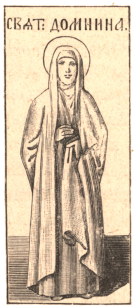
Вот что пишет о св. Домнине, бывший современником её жизни, блаженный Феодорит44: «чудная Домнина старалась подражать жизни св. Марона45. Она в саду своей матери построила себе небольшую хижину, покрытую соломой. С пением петухов идёт она в храм Божий; это она делает и по окончании дня. Храм Божий благоговейно чтит она и учит тому же и других. По этой причине она много заботится о храме и уговаривает мать и братьев употреблять своё имущество на храм. Пища её – чечевица, размоченная водою. Тело у неё высохшее и полумёртвое, но выносит всякий труд. Голос её звучный и выразительный, но слова её всегда сопровождаются слезами. Ту, у которой такое богатство философии, плачущую, воздыхающую, какое слово в состоянии похвалить? Сильная любовь к Богу рождает эти слёзы. Она заботится о тех, которые приходят к ней, подаёт им всё необходимое. Имущество матери и братьев открыто ей для расходов, и за то мать её благословляются небом».
Here is what the blessed Theodoret44, who was a contemporary of her life, writes about St. Domnina: "The wondrous Domnina strove to imitate the life of St. Maron45. In her mother's garden she built herself a small hut covered with straw. At the crowing of the cocks she goes to the church of God; this she does also at the end of the day. The church of God she reverently honors and teaches others to do the same. For this reason she cares much for the church and persuades her mother and brothers to use their property for the church. Her food is lentils soaked in water. Her body is withered and half-dead, yet it endures every labor. Her voice is sonorous and expressive, but her words are always accompanied by tears. She who possesses such a wealth of philosophy, weeping, sighing—what word is able to praise her? A strong love for God gives birth to these tears. She cares for those who come to her, supplying them with all necessities. The property of her mother and brothers is open to her for expenses, and for this her mother is blessed by heaven."
Евсевий о жизни Константина, кн. 4, § 26, 28. Св. Елена в Иерусалиме «дев, вписанных в списки церковные, приглашала к своему столу и, служа им сама, приносила на стол яств». Сократа Ист. 1, 17. Послания св. Климента Римского к девственницам, известные Иерониму и Епифанию, известны и ныне.
Eusebius, Life of Constantine, Bk. 4, § 26, 28. St. Helen in Jerusalem "invited the virgins enrolled in the church lists to her table and, serving them herself, brought dishes to the table." Socrates, Hist. 1, 17. The Epistles of St. Clement of Rome to Virgins, known to Jerome and Epiphanius, are also known today.
Иночествующие приняли образ жизни от св. Евангелиста Марка, первого первосвященника Александры, жили не только так, как пишется в Деяниях Апостольских о первых верующих: «всё у них было общее, но стремились к высшей жизни, удалялись в скрытые загородные места и, проводя жизнь в строгом воздержании, изумляли язычников».
Those living the monastic life received their way of life from St. Mark the Evangelist, the first high priest of Alexandria; they lived not only as it is written in the Acts of the Apostles concerning the first believers: "they had all things in common," but they strove for a higher life, withdrew to hidden rural places, and, living in strict abstinence, amazed the pagans.
Первомученица Фекла за любовь к детству и вере страдала от матери и градоначальника, сент. 24. Св. м. Лукия принадлежала к «обществу посвящённых дев» (junii 24 июля 4). Евсевий о Палестинских мучениках гл. 5: «судия предаёт содержателям блудниц для посрамления – посвятивших жизнь Богу дев». В истории страданий Сатурнина св. Виктория, бросив жениха, «бежит в храм чистоты, в пристанище стыдливости, в церковь и, посвятив власы свои Богу, сохраняет в непорочности девство своё» (Ар. Ruinartum, Acta S. Saturnini § 16). В истории св. Феодота видим «трёх дев, которых апотактиты (отделённые, иноки), считают своими»; потом семь дев молятся: «Господи Иисусе Христе! доколе было в нашей власти сохранять непорочным девство, ревностно хранили мы до сего дня» (Ар. Aninartum, Acta S. Theodoti § 13, 19). Мученицы девы 2 века: Дросида (март. 22), Ермиония (сент. 4), (Евдокия март. 1), Гликерия (мая 13), Параскева (июля 25), Татиана дева, диаконисса (янв. 12); мученицы девы 3 века: Агния (янв. 21), Екнафа, Валентина и Павла (февр. 10 по Евсевию, украшенные венцом девства, о мучен, гл.3:9), Евгения (дек. 24), Анфуса (авг. 22) Пелагия (окт. 8), Иулиания (дек. 21), Пелагия (мая 4), Сосанна (авг. 11), Евфимия (сент. 16) и др. В Александрии при Диоклитиане «добровольные девственные подвижницы» (αὐτοπαρθεναι ἀσκητριαι) преданы были на поругание (Евсевий о мучен. гл. 5).
The Protomartyr Thecla suffered for love of virginity and faith from her mother and the city governor, Sept. 24. St. M. Lucia belonged to the "society of consecrated virgins" (June 24, July 4). Eusebius, On the Palestinian Martyrs, ch. 5: "the judge delivers over to brothel-keepers for dishonor—virgins who have consecrated their life to God." In the history of the sufferings of Saturninus, St. Victoria, having abandoned her bridegroom, "flees to the temple of purity, to the haven of modesty, to the church, and, having consecrated her hair to God, preserves her virginity in purity" (Ap. Ruinartum, Acta S. Saturnini § 16). In the history of St. Theodotus we see "three virgins, whom the apotactites (the separated, the monks) consider as their own"; then seven virgins pray: "Lord Jesus Christ! As long as it was in our power to preserve virginity inviolate, we zealously kept it until this day" (Ap. Ruinartum, Acta S. Theodoti § 13, 19). Virgin martyrs of the 2nd century: Drosida (Mar. 22), Hermione (Sept. 4), (Eudocia Mar. 1), Glyceria (May 13), Parasceva (July 25), Tatiana virgin, deaconess (Jan. 12); virgin martyrs of the 3rd century: Agnes (Jan. 21), Ecnatha, Valentina and Paula (Feb. 10, according to Eusebius, adorned with the crown of virginity, On the Martyrs, ch. 3:9), Eugenia (Dec. 24), Anthusa (Aug. 22), Pelagia (Oct. 8), Juliana (Dec. 21), Pelagia (May 4), Susanna (Aug. 11), Euphemia (Sept. 16), and others. In Alexandria under Diocletian, "voluntary virgin ascetics" (αὐτοπαρθεναι ἀσκητριαι) were given over to dishonor (Eusebius, On the Martyrs, ch. 5).
В Христ. чт. 1824 г., ч. 16 нап. «св. Афанасия Александрийского жизнь и деяния святой и славной матери нашей Синклитикии». Только Никифор Каллист (Ист. 8, 40) выдаёт это житие за сочинение великого Афанасия, но никто из древних не указывал этого жития между его сочинениями. Ни слог, ни язык, ни красноречие жития не принадлежат великому учителю. По рукописям наставления св. Синклитикии оканчиваются такой заметкой: «доселе наставления записаны были Арсением Пегадским». Так как склад речи одинаков и в исторической повести и в наставлениях, то до́лжно признать всю биографию за сочинение Арсения Пегадского, современника св. Синклитикии. На Греч. житие издано у Котельера: Monum. eccl. gr. 1, 201–277. int. opera spuria S. Athanasii у Миня Op. 4. В Четь-Минее извлечение из жития очень короткое.
In Christian Reading, 1824, part 16, was printed "St. Athanasius of Alexandria's Life and Deeds of our holy and glorious Mother Syncletica." Only Nicephorus Callistus (Hist. 8, 40) puts forth this life as a composition of the great Athanasius, but none of the ancients indicated this life among his works. Neither the style, nor the language, nor the eloquence of the life belong to the great teacher. According to the manuscripts, the instructions of St. Syncletica end with this note: "Thus far the instructions were recorded by Arsenius of Pegadia." Since the turn of speech is the same both in the historical narrative and in the instructions, one must recognize the entire biography as a composition of Arsenius of Pegadia, a contemporary of St. Syncletica. In Greek, the life is published by Cotelier: Monum. eccl. gr. 1, 201–277, among the spurious works of St. Athanasius in Migne, Op. 4. In the Cheti-Minei, the extract from the life is very brief.
Athanasii alea de virginitate, Оп. 4, 263. Биограф Святой не упоминает о перемене одежды, как о деле, известном с давнего времени. Одежда девственниц была особенная. Святитель Астерий говорит о св. Евфимии: «стояла дева, короткой одеждой и плащом исповедовавшая философию» (Concil. nic. act. 4). Бл. Иероним о деве, «надевает бедную рубашку, покрывается ещё более бедным плащом». Vili tunica induitur, viliori tegitur pallio. Ep. 130 ad Demetriadem, ed. Migne p. 1110. «Узкая рубашка не марается, когда повергается она на землю... Пояс кожаный стягивает одеяния и не дерёт их». Ер. 38 ad Marcellan. ed. Migne p. 464, 465. Волосы на голове девственницы не остригались, а только обрезывались, или, как говорит св. Афанасий, подрезывались кругом: первого не допускали для того, чтобы иначе христианская девственница не походила на жрицу Изиды.
Athanasii alea de virginitate, Op. 4, 263. The biographer of the Saint does not mention the change of clothing, as a matter known from ancient times. The clothing of virgins was special. Hierarch Asterius says of St. Euphemia: "the virgin stood, confessing philosophy by her short garment and cloak" (Concil. nic. act. 4). Bl. Jerome concerning a virgin: "she puts on a poor tunic, she is covered with an even poorer cloak." Vili tunica induitur, viliori tegitur pallio. Ep. 130 ad Demetriadem, ed. Migne p. 1110. "The narrow tunic does not get soiled when she casts herself to the ground... A leather belt draws the garments together and does not tear them." Ep. 38 ad Marcellan. ed. Migne p. 464, 465. The hair on the head of a virgin was not cut short, but only trimmed, or, as St. Athanasius says, cut round; the former was not permitted so that the Christian virgin might not otherwise resemble a priestess of Isis.
Св. Исидор Пелусиот писал в один монастырь девственнице, «вы не заботитесь о чести пола и своём подвижничестве; не устрашились обольщений, какие представляет город и для взора и для слуха; не убоялись будущего наказания, ходя в город. Если опять будете посещать, то и, не желая, подвергнетесь искушению. Бегите брани шума мирского, которая страшными стрелами поражает подвижничество». Lib. 2. ер. 367.
St. Isidore of Pelusium wrote to a virgin in one monastery: "You take no care for the honor of your sex and your asceticism; you have not been frightened by the temptations which the city presents both to the sight and to the hearing; you have not feared the future punishment, going about the city. If you visit again, then, even unwillingly, you will fall into temptation. Flee the warfare of worldly noise, which strikes asceticism with terrible arrows." Lib. 2. ep. 367.
Некоторые из приведённых наставлений читаются и в достопамятных сказаниях о подвижничестве Отцов, или в азбучном Патерике, стр. 321–327, М. 1846 г.
Some of the cited instructions are also read in the Memorable Sayings on the Asceticism of the Fathers, or in the Alphabetical Patericon, pp. 321–327, M. 1846.
Православная Церковь, как и Римская, празднует память её янв. 5. Бароний в замечаниях на мартиролог: «жила во время импер. Константина».
The Orthodox Church, like the Roman, celebrates her memory on Jan. 5. Baronius in his notes on the Martyrology: "she lived during the time of Emperor Constantine."
Жизнь её в сборном Патерике под знам. а, гл. 38 и в Прологе; Метафрастово сказание о Четье-Минее января 4. Acta Sanct. 5 janu. I, 260–261.
Her life is in the Collected Patericon under the letter a, ch. 38 and in the Prologue; the Metaphrastic account in the Cheti-Minei for January 4. Acta Sanct. 5 janu. I, 260–261.
Патерик: «Анфимию, иже от Льва великого поставлен бысть в Риме сожительствовати, бывши дщи». Перевод неверный. Анфимий возведён был имп. Львом Фракиянином на императорский престол западной империи, а не на святительскую кафедру. В Четь-Минее вслед за Баронием, Анфимий назван не императором, а анфипатом. Но эта поправка неудачна. Бароний принял Анфима, зятя имп. Маврикия, за Анфима – опекуна имп. Феодосия младшего. Но тут ошибка очевидна: если бы опекун Феодосия был западным императором († 471 г.), то ему надлежало бы иметь пред смертью около ста десяти лет. См. Евагрия ист. 2, 16. Феофана летоп. Du-Cang. Const. chr. р. 152. Familiae byzant. p. 70. 79.
Patericon: "Anthemius, who by Leo the Great was appointed in Rome to cohabit, being a daughter." The translation is incorrect. Anthemius was raised by Emperor Leo the Thracian to the imperial throne of the Western Empire, not to a hierarchal see. In the Cheti-Minei, following Baronius, Anthemius is called not emperor but anthypatos. But this correction is unsuccessful. Baronius took Anthemius, the son-in-law of Emperor Maurice, for Anthemius—the guardian of Emperor Theodosius the Younger. But here the error is obvious: if the guardian of Theodosius had been the Western emperor († 471), he would have had to be about one hundred and ten years old at his death. See Evagrius, Hist. 2, 16. Theophanes, Chronicle. Du-Cang. Const. chr. p. 152. Familiae byzant. p. 70. 79.
У Метафраста и в истории монашества. М., 1854 г., стр. 254, сказано, что в пустыне встретился с Аполлинарией и дал ей келью преп. Макарий египетский. Этого не могло быть, потому что преподобный Макарий Египетский почил лет за 70 прежде того. По прологу, келью дал евнуху Дорофею авва Евфимий.
In Metaphrastes and in the History of Monasticism, M., 1854, p. 254, it is said that in the desert the Venerable Macarius of Egypt met Apollinaria and gave her a cell. This could not have been, because the Venerable Macarius of Egypt reposed about seventy years before that. According to the Prologue, Abba Euthymius gave a cell to the eunuch Dorotheus.
Rufini hist. monach. c. 5 Aegypt. mon. hist. in. ecclesiae graec. monum. 3, 175. Venimus ad civitatem quandam Thebaidis, говорит Руфин, говоря об Оксиринхе.
Rufini hist. monach. c. 5 Aegypt. mon. hist. in. ecclesiae graec. monum. 3, 175. Venimus ad civitatem quandam Thebaidis, says Rufinus, speaking of Oxyrhynchus.
Аммиан Маркеллин lib. 22. В Фиваиде много городов; славнее других Гермополь, Коптос и Антиноя, которую имп. Адриан построил в честь любимца своего Антиноя. По основателю своему Антиноя называлась Адрианополем. Так и св. Аммон под определениями собора 394 г. подписался: «Аммон Адрианопольский», тогда как Феофил архиеп. Алекс. писал послание к Аммону, епископу Фиваиды. О епископах Фиваиды Le-Quin. Or. chr. 2, 593–604. Г. Норов называет епископа Аммона, которого гробница стоит в мечети, мучеником (путеш. по Египту 2, 14, 24–26). Но это не согласно с действительностью. Аммон епископ, скончавшийся мученически при Диоклитиане, был епископом Лятополя или Асны, Le-Quin Or. chr. 610. О подвижниках Гермополя и Антинои. Ист. монаш. 2, 154–174.
Ammianus Marcellinus, lib. 22. In the Thebaid there are many cities; the most renowned among them are Hermopolis, Coptos, and Antinoë, which the Emperor Hadrian built in honor of his favorite Antinous. After its founder, Antinoë was called Adrianopolis. Thus also St. Ammon, under the decrees of the Council of 394, signed himself: "Ammon of Adrianopolis," while Theophilus, Archbishop of Alexandria, wrote an epistle to Ammon, Bishop of the Thebaid. On the bishops of the Thebaid, see Le-Quin, Or. chr. 2, 593–604. Mr. Norov calls Bishop Ammon, whose tomb stands in a mosque, a martyr (Journey through Egypt 2, 14, 24–26). But this is not in accordance with reality. Ammon the bishop, who died a martyr's death under Diocletian, was Bishop of Lycopolis or Esna, Le-Quin, Or. chr. 610. On the ascetics of Hermopolis and Antinoë, see Hist. Monach. 2, 154–174.
В Русском переводе Лавсаика (стр. 278), как и в Латинском, Амматалида. Это – ошибка: два слова, нарицательное и личное, соединены в одно. Амма – мать, обыкновенное Коптское название уважаемым подвижницам. У Палладия Питирим о св. Исидоре: «она и вам и мне Амма», и Палладий прибавил: «так называются там духовные матери». У Гераклида (гл. 48) Талида названа Аматой. У Людольфа Амат – раба Амата, Вагед – раба Единственного, т. е. Сына Божия. Comm. р. 412.
In the Russian translation of the Lausiac History (p. 278), as in the Latin, Ammatalida. This is an error: two words, one appellative and one proper, have been joined into one. Amma — mother, the customary Coptic title for revered ascetic women. In Palladius, Pityrim says of St. Isidora: "she is an Amma to you and to me," and Palladius adds: "so are spiritual mothers called there." In Heraclides (ch. 48), Talida is called Amata. In Ludolf, Amat is the servant of Amata, Waged the servant of the Only-begotten, i.e., the Son of God. Comm. p. 412.
Талиде и Таоре Лавзаик гл. 137–138. Гераклид гл. 48. Сказание Лавсаика в сборном Патерике под знам. к., но и текст испорчен и перевод тёмен. Память о св. Талиде и Таоре в сырную субботу. У Абиссинцев св. Амата Христова мая 28 (23). Ludolf comment, р. 417. См. прим. стр. 75.
On Talida and Taor, Lausiac History, chs. 137–138. Heraclides, ch. 48. The account of the Lausiac History in the Paterikon of collected sayings under the sign k., but both the text is corrupted and the translation obscure. The memory of Sts. Talida and Taor is on Cheese Saturday. Among the Abyssinians, St. Amata of Christ is commemorated on May 28 (23). Ludolf, Comment., p. 417. See note, p. 75.
Лавсаик гл. 123. Гераклид гл. 48. Сборный Патерик под знам. к. Память мученика Колуфа, сожжённого при Максимиане, мая 19 ч. Имя преподобной, о которой говорит Палладий, не показано им и осталось неизвестным. Безымянных святых много в месяцеслове Греческом. См. Вершинского Месяцеслов, стр. 298–301.
Lausiac History, ch. 123. Heraclides, ch. 48. The Paterikon of collected sayings under the sign k. The memory of the Martyr Coluthus, burned under Maximian, is on May 19. The name of the Venerable woman of whom Palladius speaks is not given by him and has remained unknown. There are many nameless saints in the Greek Menologion. See Vershinsky's Menologion, pp. 298–301.