Orthodox Translations

January 44 января

Old Calendar: civil January 17 · New Calendar: civil January 4

History

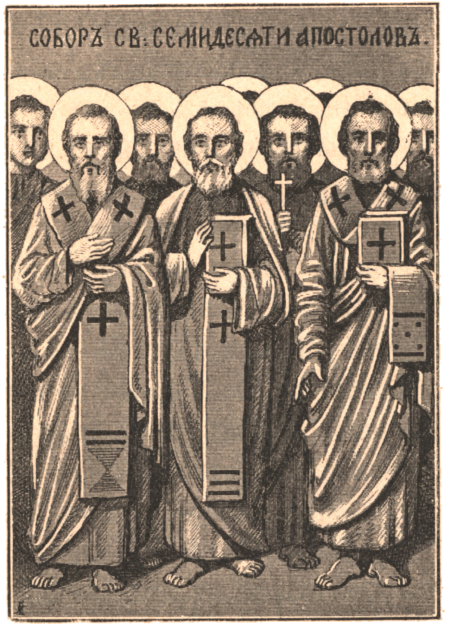
Собор св. Семидесяти апостолов

Synaxis of the Holy Seventy Apostles

E1.TAI draft
Synaxis of the Holy Seventy Apostles

Собор св. Семидесяти Апостолов

Synaxis of the Holy Seventy Apostles

E1.CAI draft

Кроме 12, Господь Иисус Христос избрал ещё 70 и посылал их пред Собою по городам и весям проповедовать Евангелие Царствия Божия (Лк.10). По сошествии Св. Духа они проповедовали в разных странах, и некоторые сопутствовали Апостолам из 12, как например Марк и Лука Евангелисты. В церковном праздновании в лике семидесяти прославляются и некоторые из неизбранных Господом непосредственно, но потрудившихся апостольски. День собора в честь 70 Апостолов установлено без сомнения с тем же благочестивым намерением, с каким и день в честь собора 12, т. е. ради равночестия каждого из 70 Апостолов и для предохранения верующих от разногласия – в почитании их. Всех их вместе и равночестно прославляет Сам Господь, говоря: радуйтеся, яко имена ваша написана суть на небесех, и всех их назвал блаженными (Лк.10:20, 23). Апостолы из лика 70 прославляются Православной Церковью в следующем порядке:

Besides the twelve, the Lord Jesus Christ chose another seventy and sent them before Him to the towns and villages to preach the Gospel of the Kingdom of God (Lk. 10). After the descent of the Holy Spirit, they preached in various countries, and some accompanied the Apostles from among the twelve, such as, for example, Mark and Luke the Evangelists. In the Church's celebration, there are also glorified among the choir of the seventy some who were not directly chosen by the Lord, but who labored apostolically. The day of the synaxis in honor of the Seventy Apostles was established, without doubt, with the same pious intention as the day in honor of the Synaxis of the Twelve, that is, for the equal honor of each of the Seventy Apostles and to protect the faithful from discord in their veneration. The Lord Himself glorifies them all together and with equal honor, saying: Rejoice, because your names are written in heaven, and He called them all blessed (Lk. 10:20, 23). The Apostles from the choir of the Seventy are glorified by the Orthodox Church in the following order:

E1.0AI draft

1) Иаков брат Господень (23 октября).

1) James, the brother of the Lord (October 23).

E1.1AI draft

2) Марк Евангелист (25 апреля).

2) Mark the Evangelist (April 25).

E1.2AI draft

3) Лука Евангелист (18 октября).

3) Luke the Evangelist (October 18).

E1.3AI draft

4) Клеопа, младший брат Иосифа обручника, с Лукой путешествовал в Еммаус и увидел Господа по воскресении Его из мёртвых (Лк.24:18, 35). За проповедь Евангелия он убит был Иудеями в том самом доме, где познал воскресшего Иисуса, в преломлении хлеба.

4) Cleopas, the younger brother of Joseph the Betrothed, traveled with Luke to Emmaus and saw the Lord after His resurrection from the dead (Lk. 24:18, 35). For preaching the Gospel, he was killed by the Jews in that same house where he recognized the risen Jesus in the breaking of bread.

E1.4AI draft

5) Симеон, сын Клеопы – сродник Господень, после Иакова был вторым епископом в Иерусалиме, и там за проповедание распятого Иисуса Христа сам распят был на кресте (27 апреля).

5) Simeon, the son of Cleopas—a relative of the Lord, after James was the second bishop in Jerusalem, and there, for preaching the crucified Jesus Christ, he himself was crucified on a cross (April 27).

E1.5AI draft

6) Варнава (11 июня).

6) Barnabas (June 11).

E1.6AI draft

7) Иосиф или Иосий, называемый также в книге Деяний Иустом или Варсавой (Деян.1:23; Кол.4:11), поставлен был Апостолами вместе с Матфием при избрании в число двенадцати Апостолов на место Иуды. Некоторые считают Иосия сыном Иосифа обручника. Он был епископом в Иудейском городе Елевферополе, и там страдальчески кончил жизнь (30 октября).

7) Joseph or Josiah, also called in the book of Acts Justus or Barsabbas (Acts 1:23; Col. 4:11), was appointed by the Apostles together with Matthias at the election into the number of the twelve Apostles in place of Judas. Some consider Josiah to be a son of Joseph the Betrothed. He was bishop in the Judean city of Eleutheropolis, and there ended his life as a martyr (October 30).

E1.7AI draft

8) Фаддей из ученика св. Иоанна Предтечи сделался учеником Иисуса Христа: крестил и исцелил от проказы Эдесского князя Авгаря, и после многих трудов апостольского служения скончался в Берите (Бейруте) (21 августа).

8) Thaddaeus, from being a disciple of St. John the Forerunner, became a disciple of Jesus Christ: he baptized and healed the Edessan prince Abgar of leprosy, and after many labors of apostolic service, reposed in Berytus (Beirut) (August 21).

E1.8AI draft

9) Анания, по повелению Божьему, крестил Савла (Павла) в Дамаске (Деян.9:10–17); в этом же городе был епископом, и жизнь свою окончил в Елевферополе, городе Палестины. Игемон этого города Лукиан приказал побить его камнями (1 октября).

9) Ananias, by God's command, baptized Saul (Paul) in Damascus (Acts 9:10–17); in this same city he was bishop, and ended his life in Eleutheropolis, a city of Palestine. The hegemon of this city, Lucian, ordered him to be stoned (October 1).

E1.9AI draft

10) Стефан архидиакон и первомученик (27 декабря).

10) Stephen, the Archdeacon and Protomartyr (December 27).

E1.10AI draft

11) Филипп с Мариамной, один из 7 диаконов, избранных Апостолами, крестил Симона-волхва вместе с прочими Самарянами, и евнуха царицы Эфиопской Кандакии (Деян.8); был епископом в Траллии, Лидийском городе, где обратил многих к Христу, и преставился в глубокой старости (11 октября).

11) Philip, with Mariamne, one of the seven deacons chosen by the Apostles, baptized Simon the Magus together with the other Samaritans, and the eunuch of Candace, queen of the Ethiopians (Acts 8); he was bishop in Tralles, a Lydian city, where he converted many to Christ, and reposed at a great old age (October 11).

E1.11AI draft

12) Прохор, также один из 7 диаконов (Деян.6:5), сопутствовал св. Иоанну Богослову и участвовал в его апостольских трудах; был первым епископом в Никомидии, Вифинском городе, и проповедовал учение Христово в Антиохии, где и скончался мучеником (28 июля).

12) Prochorus, also one of the seven deacons (Acts 6:5), accompanied St. John the Theologian and participated in his apostolic labors; he was the first bishop in Nicomedia, a Bithynian city, and preached the teaching of Christ in Antioch, where he also died a martyr (July 28).

E1.12AI draft

13) Никанор, из 7 диаконов (Деян.6:5), в тот самый день, в который убит первомученик Стефан и воздвигнуто было сильное гонение на Церковь Иерусалимскую (Деян.8:1), умерщвлён Иудеями вместе с двумя тысячами уверовавших во Христа (28 июля и 28 декабря).

13) Nicanor, one of the seven deacons (Acts 6:5), on that same day on which the Protomartyr Stephen was killed and a great persecution was raised up against the Church of Jerusalem (Acts 8:1), was put to death by the Jews together with two thousand who had believed in Christ (July 28 and December 28).

E1.13AI draft

14) Тимон, из 7 диаконов (Деян.6:5), был епископом в Аравийском городе Бостре; за проповедание имени Христова много страдал от иудеев и Еллинов; брошен был в раскалённую печь, но вышел из неё невредим и вскоре скончался (28 июля и 30 декабря).

14) Timon, one of the seven deacons (Acts 6:5), was bishop in the Arabian city of Bostra; for preaching the name of Christ he suffered much from the Jews and pagans; he was thrown into a red-hot furnace, but came out of it unharmed and soon after reposed (July 28 and December 30).

E1.14AI draft

15) Пармен, из 7 диаконов (Деян.6:5), ревностно подвизался в проповедании слова Божия и претерпел мученическую смерть (28 июля).

15) Parmenas, one of the seven deacons (Acts 6:5), zealously labored in preaching the word of God and endured a martyr's death (July 28).

E1.15AI draft

16) Тимофей, спутник и соучастник в трудах Апостола Павла, который рукоположил его епископом в Ефес и написал к нему два послания (22 января).

16) Timothy, companion and fellow-laborer of the Apostle Paul, who ordained him bishop in Ephesus and wrote two epistles to him (January 22).

E1.16AI draft

17) Тит, сотрудник Ап. Павла в благовестии; рукоположен был им во епископа в Крит для утверждения там Церкви, основанной Ап. Павлом, который в наставление по сему предмету написал к нему послание из Никополя, города Македонии, около 66 года по Р.X. (25 августа).

17) Titus, fellow-worker of the Apostle Paul in the gospel; he was ordained by him as bishop in Crete for the establishment there of the Church founded by the Apostle Paul, who for instruction on this matter wrote an epistle to him from Nicopolis, a city of Macedonia, about the year 66 A.D. (August 25).

E1.17AI draft

18) Филимон с Анфией был веропроповедником и епископом в Палестинском городе Газе; к нему св. Павел написал особое послание из Рима, около 62 года по Р.X. (22 ноября и 19 февраля).

18) Philemon, with Apphia, was a preacher of the faith and bishop in the Palestinian city of Gaza; to him St. Paul wrote a special epistle from Rome, about the year 62 A.D. (November 22 and February 19).

E1.18AI draft

19) Онисим был рабом Филимона, к которому Апостол Павел написал послание, обращён ко Христу Апостолом Павлом: после Тимона был епископом в Ефесе; за имя Христово пострадал при Траяне от Римского епарха Тертилла в Италийском городе Путеоле (15 февраля).

19) Onesimus was a slave of Philemon, to whom the Apostle Paul wrote an epistle; he was converted to Christ by the Apostle Paul: after Timon he was bishop in Ephesus; for the name of Christ he suffered under Trajan from the Roman eparch Tertillus in the Italian city of Puteoli (February 15).

E1.19AI draft

20) Епафрас епископствовал в Македонском городе Колоссах. С св. Ап. Павлом он был в Риме в узах и называется в послании к Филимону спленником Апостола Павла о Xpucme*Иисусе* (ст. 23). О нём упоминает Ап. Павел в послании к Колоссянам (IV:12–13), писанном из Рима около 62 года по Р.X., хваля его молитвы и заботы о Колоссянах.

20) Epaphras was bishop in the Macedonian city of Colossae. He was with St. the Apostle Paul in chains in Rome and is called in the epistle to Philemon a fellow-prisoner of the Apostle Paul in Christ Jesus (v. 23). The Apostle Paul mentions him in the epistle to the Colossians (4:12–13), written from Rome about the year 62 A.D., praising his prayers and care for the Colossians.

E1.20AI draft

21) Архипп, упоминаемый в послании к Филимону (ст. 2), занимал епископскую кафедру в Колоссах, по отбытии Епафраса в Рим. О нём св. Павел пишет к Колоссянам: «скажите Архиппу, смотри, исполняй служение, которое ты приял в Господе» (4:17) (22 ноября и 19 февраля).

21) Archippus, mentioned in the epistle to Philemon (v. 2), occupied the episcopal see in Colossae after the departure of Epaphras to Rome. Of him St. Paul writes to the Colossians: "Say to Archippus, 'See that you fulfill the ministry which you have received in the Lord'" (4:17) (November 22 and February 19).

E1.21AI draft

22) Сила вместе с Ап. Павлом проповедал слово Божье (Деян.15:40–41) и с ним претерпел многие страдания и темничное заключение. Рукоположенный епископом в Коринф, он ревностно трудился в насаждении веры, подкрепляя учение своё знамениями и чудесами (30 июля).

22) Silas, together with the Apostle Paul, preached the word of God (Acts 15:40–41) and with him endured many sufferings and imprisonment. Ordained bishop in Corinth, he labored zealously in planting the faith, confirming his teaching with signs and wonders (July 30).

E1.22AI draft

23) Силуан, о котором упоминается в соборном послании Петровом (1Пет.5:12) и в послании к Коринфянам (2Кор.1:19), подвизался в распространении веры Евангельской вместе со св. Апостолом Павлом; потом был епископом в Македонском городе Солуни, где много пострадал за имя Христово (30 июля).

23) Silvanus, who is mentioned in the catholic epistle of Peter (1 Pet. 5:12) and in the epistle to the Corinthians (2 Cor. 1:19), labored in spreading the Gospel faith together with St. the Apostle Paul; afterwards he was bishop in the Macedonian city of Thessalonica, where he suffered much for the name of Christ (July 30).

E1.23AI draft

24) Крискент или Криск, по поручению Ап. Павла, насаждал Церковь Божию в Галатах (2Тим.4:10), в сане епископском; также проповедовал в Галлии и поставил епископом в городе Виенне ученика своего Захарию; потом возвратился в Галатию, и здесь скончался мученически в царствование императора Траяна (30 июля).

24) Crescens or Crispus, by the commission of the Apostle Paul, planted the Church of God in Galatia (2 Tim. 4:10), in the episcopal rank; he also preached in Gaul and appointed his disciple Zacharias as bishop in the city of Vienne; then he returned to Galatia, and there died a martyr in the reign of the emperor Trajan (July 30).

E1.24AI draft

25) Крисп (1Кор.1:14), обращённый в христианскую веру Ап. Павлом, во время проповеди его в Коринфе (Деян.18:8), был епископом на эгейском острове Эгипе.

25) Crispus (1 Cor. 1:14), converted to the Christian faith by the Apostle Paul during his preaching in Corinth (Acts 18:8), was bishop on the Aegean island of Aegina.

E1.25AI draft

26) Епенет (Рим.16:5) епископствовал в Карфагене (30 июля).

26) Epaenetus (Rom. 16:5) was bishop in Carthage (July 30).

E1.26AI draft

27) Андроник с Юнией (Рим.16:7) – в Паннонии (17 мая и 30 июля).

27) Andronicus, with Junia (Rom. 16:7)—in Pannonia (May 17 and July 30).

E1.27AI draft

28) Стахий (Рим.16:9) – в Византии, рукоположенный св. Ап. Андреем Первозванным (31 октября).

28) Stachys (Rom. 16:9)—in Byzantium, ordained by St. the Apostle Andrew the First-Called (October 31).

E1.28AI draft

29) Амплий (Рим.6:8) свидетельствовал в Лидде или Диосполе, Иудейском городе (31 октября).

29) Amplias (Rom. 16:8) bore witness in Lydda or Diospolis, a Judean city (October 31).

E1.29AI draft

30) Урван (Рим.16:9) – в Македонии (31 октября).

30) Urban (Rom. 16:9)—in Macedonia (October 31).

E1.30AI draft

31) Наркисс (Рим.16:11) – в Афинах (31 октября).

31) Narcissus (Rom. 16:11)—in Athens (October 31).

E1.31AI draft

32) Апеллий или Апелл (Рим.16:10) – в Ираклее (31 октября).

32) Apelles or Apellos (Rom. 16:10)—in Heraclea (October 31).

E1.32AI draft

33) Аристовул (Рим.16:10) – в Британии (31 октября и 16 марта).

33) Aristobulus (Rom. 16:10)—in Britain (October 31 and March 16).

E1.33AI draft

34) Иродион или Родион (Рим.16:10) – в Ахайском городе Патрасе (8 апреля и 11 ноября).

34) Herodion or Rodion (Rom. 16:10)—in the Achaian city of Patras (April 8 and November 11).

E1.34AI draft

35) Агав имел дар пророчества (Деян.11:28, 21:10, 11) и предсказал голод, бывший при Клавдии кесаре, а также страдания Ап. Павла в Иерусалиме (8 апреля).

35) Agabus had the gift of prophecy (Acts 11:28, 21:10, 11) and foretold the famine that occurred under Caesar Claudius, as well as the sufferings of the Apostle Paul in Jerusalem (April 8).

E1.35AI draft

36) Руф (Рим.16:13) епископствовал в Фивах Виотийских (8 апреля).

36) Rufus (Rom. 16:13) was bishop in Thebes of Boeotia (April 8).

E1.36AI draft

37) Асинкрит (Рим.16:14) – в Гиркании, части нынешнего Дагестана (8 апреля).

37) Asyncritus (Rom. 16:14)—in Hyrcania, a part of present-day Dagestan (April 8).

E1.37AI draft

38) Флегонт (Рим.16:14) – в городе Марафоне (8 апреля).

38) Phlegon (Rom. 16:14)—in the city of Marathon (April 8).

E1.38AI draft

39) Ерм (Рим.16:14) – в Филиппополе (5 ноября).

39) Hermas (Rom. 16:14)—in Philippopolis (November 5).

E1.39AI draft

40) Патров (Рим.16:14) – в Неаполе и Путеоле (5 ноября).

40) Patrobas (Rom. 16:14)—in Neapolis and Puteoli (November 5).

E1.40AI draft

41) Ермий (Рим.16:14) – в Далмации (8 апреля).

41) Hermes (Rom. 16:14)—in Dalmatia (April 8).

E1.41AI draft

42) Лин, упоминаемый во втором послании Павловом Тимофею (4:21), святительствовал в Риме (5 ноября).

42) Linus, mentioned in the second epistle of Paul to Timothy (4:21), served as hierarch in Rome (November 5).

E1.42AI draft

43) Гаий (Рим.16:23) – в Ефесе после св. Тимофея (5 ноября).

43) Gaius (Rom. 16:23)—in Ephesus after St. Timothy (November 5).

E1.43AI draft

44) Филолог (Рим.16:15) – в Синопе, рукоположенный св. Ап. Андреем (5 ноября).

44) Philologus (Rom. 16:15)—in Sinope, ordained by St. the Apostle Andrew (November 5).

E1.44AI draft

45) Лукий (Рим.16:21) – в Лаодикии, Фригийском городе (10 сентября).

45) Lucius (Rom. 16:21)—in Laodicea, a Phrygian city (September 10).

E1.45AI draft

46) Иасон (Рим.16:21) – в Киликийском городе Тарсе (28 апреля).

46) Jason (Rom. 16:21)—in the Cilician city of Tarsus (April 28).

E1.46AI draft

47) Сосипатр (Рим.16:21) – в Иконии, Ликаонском городе (28 апреля).

47) Sosipater (Rom. 16:21)—in Iconium, a Lycaonian city (April 28).

E1.47AI draft

48) Олимпан или Олимп (Рим.16:15) последовал за Ап. Петром в Рим, и там, по повелению Нерона, усечён мечом вместе со св. Ап. Родионом (10 ноября).

48) Olympas or Olympus (Rom. 16:15) followed the Apostle Peter to Rome, and there, by order of Nero, was beheaded with the sword together with St. Rodion (November 10).

E1.48AI draft

49) Тертий (Рим.16:22) епископствовал в Иконии после св. Ап. Сосипатра (10 ноября).

49) Tertius (Rom. 16:22) was bishop in Iconium after St. the Apostle Sosipater (November 10).

E1.49AI draft

50) Ераст (Рим.16:23) – в Панеаде или Кесарии Филипповой, Галилейском городе (10 ноября).

50) Erastus (Rom. 16:23)—in Paneas or Caesarea Philippi, a Galilean city (November 10).

E1.50AI draft

51) Куарт или Кварт (Рим.16:23) – в Финикийском городе Бейруте (10 ноября).

51) Quartus or Quartus (Rom. 16:23)—in the Phoenician city of Beirut (November 10).

E1.51AI draft

52) Евод был епископом Антиохии. О нём говорит преемник его – Игнатий Богоносец в послании своём к Антиохийцам: «поминайте блаженного Евода отца вашего, иже первый вам от Апостолов пастырь поставлен бысть» (7 сентября).

52) Evodius was bishop of Antioch. His successor, Ignatius the God-bearer, speaks of him in his epistle to the Antiochenes: "Remember the blessed Evodius, your father, who was appointed the first pastor for you from the Apostles" (September 7).

E1.52AI draft

53) Онисифор, о котором упоминает св. Павел в послании к Тимофею: да даст милость Господь Онисифорову дому (2Тим.1:16), был епископом в Колофоне, городе Малой Азии, и Киринфе – городе Африки (7 сентября и 8 декабря).

53) Onesiphorus, whom St. Paul mentions in the epistle to Timothy: The Lord grant mercy to the house of Onesiphorus (2 Tim. 1:16), was bishop in Colophon, a city of Asia Minor, and in Cyrene, a city of Africa (September 7 and December 8).

E1.53AI draft

54) Климент или Клим (Флп.4:3) занимал епископскую кафедру в Риме после Лина и Клита; за веру Христову сослан был в заточение в Херсон, перенёс многие страдания и утоплен в море в 100 году по Р.X. (25 ноября).

54) Clement or Clemens (Phil. 4:3) occupied the episcopal see in Rome after Linus and Cletus; for the faith of Christ he was exiled to confinement in Cherson, endured many sufferings, and was drowned in the sea in the year 100 A.D. (November 25).

E1.54AI draft

55) Сосфен (Деян.18:17) обращён к вере Ап. Павлом, который в послании к Коринфянам поставляет его имя наряду со своим (1Кор.1:1); епископствовал в Колофоне (8 декабря).

55) Sosthenes (Acts 18:17) was converted to the faith by the Apostle Paul, who in the epistle to the Corinthians places his name alongside his own (1 Cor. 1:1); he was bishop in Colophon (December 8).

E1.55AI draft

56) Аполлос, сотрудник св. Павла (Деян.18:24–25; 1Кор.3:6), был епископом в Смирне прежде св. Поликарпа (10 сентября и 8 декабря).

56) Apollos, fellow-worker of St. Paul (Acts 18:24–25; 1 Cor. 3:6), was bishop in Smyrna before St. Polycarp (September 10 and December 8).

E1.56AI draft

57) Тихик, упоминаемый в Деяниях Апостольских (Деян.20:4), в посланиях Павловых к Ефесеям (6:21), к Тимофею (2Тим.4:12) и Колоссянам; Апостол называет его возлюбленным братом, верным служителем и соработником о Господе (Кол.4:7) (8 декабря).

57) Tychicus, mentioned in the Acts of the Apostles (Acts 20:4), in the Pauline epistles to the Ephesians (6:21), to Timothy (2 Tim. 4:12) and to the Colossians; the Apostle calls him a beloved brother, a faithful minister and fellow-servant in the Lord (Col. 4:7) (December 8).

E1.57AI draft

58) Епафродит, которого св. Павел в послании к Филиппийцам назвал своим братом и споспешником и сводвижником (2:25), проходил епископское служение в Андриании, городе Фракии при Чёрном море (8 декабря).

58) Epaphroditus, whom St. Paul in his epistle to the Philippians called his brother, fellow-worker and fellow-soldier (2:25), fulfilled the episcopal office in Andriania, a city of Thrace on the Black Sea (December 8).

E1.58AI draft

59) Карп, у которого Ап. Павел, бывший в Троаде, оставлял и фелонь, и книги свои, принесённые ему после св. Тимофеем (2Тим.4:13), епископствовал в Берии, Македонском городе (26 мая).

59) Carpus, with whom the Apostle Paul, while in Troas, left both his cloak and his books, which were later brought to him by St. Timothy (2 Tim. 4:13), was bishop in Beroea, a Macedonian city (May 26).

E1.59AI draft

60) Кодрат, бывший епископ в Афинах, претерпел там от Еллинов мученическую смерть при императоре Адриане (21 сентября).

60) Quadratus, who was bishop in Athens, suffered there a martyr's death at the hands of the pagans under the Emperor Hadrian (September 21).

E1.60AI draft

61) Марк, именуемый также Иоанном, спутник Ап. Павла и Варнавы (Деян.16:25), был епископом в Финикийском городе Вивле (27 сентября).

61) Mark, also called John, the companion of the Apostles Paul and Barnabas (Acts 16:25), was bishop in the Phoenician city of Byblos (September 27).

E1.61AI draft

62) Зина, называемый (Тит.3:13) законником, то есть, учителем закона Моисеева, епископствовал в Лидде (27 сентября).

62) Zenas, called (Titus 3:13) a lawyer, that is, a teacher of the Law of Moses, was bishop in Lydda (September 27).

E1.62AI draft

63) Аристарх, спутник св. Павла, упоминаемый в Деяниях Апостольских (19:29), в посланиях к Колоссянам (4:10) и к Филимону (ст. 23), был епископом в Анамее, Сирийском городе (15 апреля и 27 сентября).

63) Aristarchus, the companion of St. Paul, mentioned in the Acts of the Apostles (19:29), in the epistles to the Colossians (4:10) and to Philemon (v. 23), was bishop in Apamea, a Syrian city (April 15 and September 27).

E1.63AI draft

64) Пуд (2Тим.4:21), благочестивый Римский сенатор, принимал в доме своём Ап. Павла и других веровавших в Господа. Его дом после обращён был в церковь, названную пастырской, в которой, как говорят, священнодействовал Ап. Пётр (15 апреля).

64) Pudens (2 Tim. 4:21), a pious Roman senator, received in his house the Apostle Paul and others who believed in the Lord. His house was afterwards turned into a church, called the Pastoral, in which, it is said, the Apostle Peter officiated (April 15).

E1.64AI draft

65) Трофим, о котором говорится в Деяниях Апостольских (Деян.20:4) и в послании к Тимофею (2Тим.4:20), вместе с Ап. Пудом и Аристархом разделял страдания св. Павла в Риме, и там, по повелению Нерона, все трое были обезглавлены (15 апреля).

65) Trophimus, of whom mention is made in the Acts of the Apostles (Acts 20:4) and in the epistle to Timothy (2 Tim. 4:20), together with the Apostles Pudens and Aristarchus shared the sufferings of St. Paul in Rome, and there, by the command of Nero, all three were beheaded (April 15).

E1.65AI draft

66) Марк, племянник Варнавин (Кол.4:10), проходил епископское служение в Самарийском городе Аполлониаде (30 октября).

66) Mark, the nephew of Barnabas (Col. 4:10), fulfilled the episcopal office in the Samaritan city of Apollonias (October 30).

E1.66AI draft

67) Артема (Тит.3:12) был епископом в Ликаонском города Листре (30 октября).

67) Artemas (Titus 3:12) was bishop in the Lycaonian city of Lystra (October 30).

E1.67AI draft

68) Акила (Рим.16:3; Деян.18:2) епископствовал в Ираклее, Фракийском городе; также проповедовал слово Божие в Малой Азии и Ахаии, и здесь был убит неверными (14 июля).

68) Aquila (Rom. 16:3; Acts 18:2) was bishop in Heraclea, a Thracian city; he also preached the word of God in Asia Minor and Achaia, and there was killed by the unbelievers (July 14).

E1.68AI draft

69) Фортунат (1Кор.16:17) во время проповеди претерпел мученическую смерть.

69) Fortunatus (1 Cor. 16:17) suffered a martyr's death during his preaching.

E1.69AI draft

70) Ахаик, который (1Кор.16:17), вместе с Фортунатом, приходил к Ап. Павлу в Ефес.

70) Achaicus, who (1 Cor. 16:17), together with Fortunatus, came to the Apostle Paul in Ephesus.

E1.70AI draft

71) Кифа Апостол, которому явился Господь по воскресению (1Кор.15:5–6).

71) Cephas the Apostle, to whom the Lord appeared after the resurrection (1 Cor. 15:5–6).

E1.71AI draft

72) Симеон, по прозванию Нигер (Деян.13:1). Что он также принадлежит к сонму апостольскому, о том свидетельствует св. Епифаний, поставляющий имя его наряду с именами Марка, Луки, Варнавы и прочих меньших Апостолов.

72) Simeon, surnamed Niger (Acts 13:1). That he also belongs to the apostolic company is testified by St. Epiphanius, who places his name alongside those of Mark, Luke, Barnabas and the other lesser Apostles.

E1.72AI draft

Хотя собор меньших Апостолов заключает в себе 72, но называется собором 70, потому что это число есть первоначальное – Христово; Христос избрал семьдесят (Лк.10:1).

Although the council of the lesser Apostles includes 72, it is called the council of the 70, because that is the original number—Christ's; Christ chose seventy (Lk. 10:1).

E1.73AI draft

Церковь в день Собора в честь лика 70 учеников Христовых между прочим восхваляет их за то, что они научили нас почитать Троицу единосущную и нераздельную, и доселе пребывают светильниками Божественной веры.

The Church, on the day of the Synaxis in honour of the choir of the 70 disciples of Christ, praises them among other things for having taught us to honour the consubstantial and undivided Trinity, and for remaining to this day luminaries of the divine faith.

E1.74AI draft

В IX веке Православная Церковь приняла от Иосифа песнопевца канон на день Собора 70.

In the 9th century, the Orthodox Church received from Joseph the Hymnographer a canon for the day of the Synaxis of the 70.
E1.75AI draft

Память преп. Феоктиста

Commemoration of the Venerable Theoctistus

E2.TAI draft

игумена в Кукуме Сицилийском, недалеко от Панорма (ныне Палермо); скончался около 800 года.

abbot in Cucumus of Sicily, not far from Panormus (now Palermo); he reposed about the year 800.

E2.0AI draft

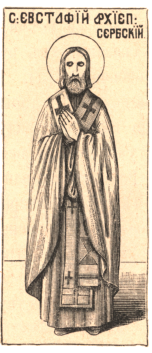
† Преставление св. Евстафия, архиепископа Сербского

† Repose of St. Eustathius, Archbishop of Serbia

E3.TAI draft
St. Eustathius, Archbishop of Serbia

Св. Евстафий, архиепископ Сербский

St. Eustathius, Archbishop of Serbia

E3.CAI draft

В месяцеслове Евангелия, писанного в 1329 году, показана под 4 января «память св. Евстафия, архиепископа сербского»4. Мощи его покоятся под спудом в кафедральном храме Печской архиепископии5. Блаженный Евстафий, сын богобоязненных родителей из Будимльской жупы, обучавшись в юности книжной мудрости, принял иночество в Зетской Михайловской обители; от руки епископа Неофита. Пожив здесь в посте, отправился с двумя иноками к св. местам и, возвращаясь оттуда, поступил в Афонский Хиландарский монастырь. Здесь за добродетельную жизнь избран был в игумена6, в каковом звании видим его с 1263 года7. Потом посвящён был в епископа Зетского туда, где принял он монашество8. Последовавшие затем гражданские смуты Сербии имели последствием своим замешательство церковное в Сербии. Когда король Урош изгнан был из королевства (1269 г.), блаж. Иоанникий архиепископ, любивший короля своего, последовал за ним и скончался вдали от своей кафедры. Сербская церковь, уважавшая блаж. Иоанникия, не хотела признать никого первосвятителем своим, прежде чем отдана была должная почесть почившему на чужбине первосвятителю. Король Драгутин должен был исполнить желание Сербии. Когда открыли гроб блажен. Иоанникия, тело его оказалось нетленным и его с почестью положили в Сопочанском монастыре вблизи тела Урошева. Тогда-то приступили к избранию нового первосвятителя, и избран был блажен. Евстафий.

In the menologion of a Gospel written in 1329, under January 4 is indicated "the commemoration of St. Eustathius, archbishop of Serbia"4. His relics rest hidden beneath the ground in the cathedral church of the Archbishopric of Peć5. Blessed Eustathius, the son of God-fearing parents from the župa of Budimlje, having been instructed in book-learning in his youth, received the monastic tonsure in the Michael's monastery in Zeta, from the hand of Bishop Neophytus. Having lived there in fasting, he set out with two monks to the holy places and, returning from there, entered the Hilandar Monastery on Mount Athos. Here, for his virtuous life, he was chosen as abbot6, in which office we see him from the year 12637. Afterwards he was consecrated Bishop of Zeta, to that very place where he had received the monastic life8. The civil disturbances in Serbia that followed had as their consequence ecclesiastical confusion in Serbia. When King Uroš was driven from the kingdom (1269 A.D.), the blessed Archbishop Joannicius, who loved his king, followed him and reposed far from his see. The Serbian Church, which respected blessed Joannicius, would not acknowledge anyone as its chief hierarch until due honour had been paid to the chief hierarch who had reposed in a foreign land. King Dragutin had to fulfil the desire of Serbia. When they opened the coffin of blessed Joannicius, his body was found incorrupt, and they laid it with honour in the Sopoćani Monastery near the body of Uroš. Then they proceeded to the election of a new chief hierarch, and blessed Eustathius was chosen.

E3.0AI draft

Высокие добродетели Евстафия доставили ему уважение и нового короля Милютина. В звании архиепископа всей Сербии, он с 12 епископами присутствовал на соборе, на котором король Милютин утвердил за Хиландарским монастырём земли и угодья Сербской страны9. Когда спустя 7 лет правления своего блажен. Евстафий почувствовал близость кончины своей, то, призвав ближних епископов и игуменов, простился со всеми, приобщился св. таин и, с весёлым лицом сказав: «в руки Твои, Господи, предаю дух мой», мирно скончался (а).

The lofty virtues of Eustathius won him the respect also of the new king, Milutin. In the rank of Archbishop of all Serbia, he was present with 12 bishops at a council at which King Milutin confirmed to the Hilandar Monastery the lands and estates of the Serbian country9. When, after seven years of his rule, blessed Eustathius felt the nearness of his end, he summoned the neighbouring bishops and abbots, took leave of all, partook of the Holy Mysteries, and with a cheerful countenance, saying, "Into Thy hands, O Lord, I commit my spirit," reposed peacefully (a).

E3.1AI draft

Сербская церковь поёт св. Евстафию: «на него же уповал еси, святителю, из млада возраста, радуяся же яко елень востекл еси на гору святую, земная вся оставил еси, прилепився закону Творца и Владыки исполнением заповедей».

The Serbian Church sings to St. Eustathius: "On Him didst thou set thy hope, O hierarch, from thy youth; rejoicing like a hart, thou didst hasten to the holy mountain, leaving all earthly things behind, cleaving to the law of the Creator and Master by the fulfilment of the commandments."

E3.2AI draft

«Очистив душу и тело от скверны, праведно-преподобна и незлобива учителя себе показал еси, отче блаженне: сирых питатель, обидимых помощник и странноприимец был еси: темже со дерзновением вопиеши: Тебе люблю, Иисусе Боже мой, света невечернего и миром владычествующа»10.

"Having cleansed soul and body from defilement, thou didst show thyself a righteous, venerable and guileless teacher, O blessed father: a nourisher of orphans, a helper of the wronged and a receiver of strangers wast thou; wherefore with boldness thou criest out: Thee do I love, O Jesus my God, who art the light unwaning and who rulest over the world"10.

E3.3AI draft

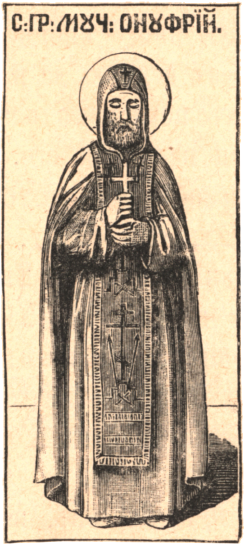
† Страдание св. Онуфрия

† Passion of St. Onuphrius

E4.TAI draft
St. Onuphrius

Св. Онуфрий

St. Onuphrius

E4.CAI draft

Св. Онуфрий, в крещении Матфей, родился в Габрове Терновской епархии11.

St. Onuphrius, in baptism Matthew, was born in Gabrovo in the diocese of Tarnovo11.

E4.0AI draft

Родители его болгары были люди богатые и пользовались известностью. Матфей учился в училище и при прекрасных способностях учился хорошо. Отец наказал его строго за какую-то шалость; пылкий и самолюбивый юноша закричал вслух турок, что он потурчится. Турки непременно совершили бы над ним обрезание, но его ловко выхватили из рук турок, и он, скрытый от них, остался христианином. Когда Матфей пришёл в зрелый возраст, он удалился на Афон и вступил в братство Хиландарского монастыря. Приняв иночество с именем Манассии, он рукоположен был в иеродиакона. Так как о. Манассия искренно и ревностно служил Господу, – а чем усерднее стремятся к совершенству духовному, тем яснее и сильнее чувствуют свои недостатки и погрешности, – то и о. Манассия стал сильно чувствовать тяжесть отречения своего от св. веры, совершённого в пылкой, полусознательной юности. А иже отречется Мене пред человеки, отвергнуся его и Аз пред Отцем Моим (Мф.10:33), эти слова Господа громко раздавались в душе его и не давали ей покоя. Он постоянно носил страх в душе своей, что если не принесёт он достойных плодов покаяния, откажется от него Христос Господь. Так страх за вечную участь породил в нём мысль о кровавом подвиге. Потом желание мученичества, при возрастании его в духовной жизни, стало плодом пламенной любви его к Господу, готовой на всё за славу имени Его.

His parents, Bulgarians, were wealthy people and enjoyed renown. Matthew studied at school and, with excellent abilities, learned well. His father punished him severely for some prank; the ardent and self-willed youth cried out in the hearing of the Turks that he would turn Turk. The Turks would certainly have performed circumcision upon him, but he was cleverly snatched from the hands of the Turks, and, hidden from them, he remained a Christian. When Matthew reached a mature age, he withdrew to Mount Athos and entered the brotherhood of the Hilandar Monastery. Having received the monastic tonsure with the name Manasseh, he was ordained a hierodeacon. Since Father Manasseh sincerely and zealously served the Lord—and the more earnestly one strives for spiritual perfection, the more clearly and strongly one feels one's own shortcomings and failings—Father Manasseh began to feel keenly the weight of his denial of the holy faith, committed in his ardent, half-conscious youth. But whosoever shall deny Me before men, him will I also deny before My Father (Mt. 10:33); these words of the Lord resounded loudly in his soul and gave it no peace. He constantly bore fear in his soul that if he did not bring forth worthy fruits of repentance, Christ the Lord would deny him. Thus fear for his eternal lot gave birth in him to the thought of a bloody struggle. Afterwards, the desire for martyrdom, as he grew in the spiritual life, became the fruit of his fervent love for the Lord, ready for all things for the glory of His name.

E4.1AI draft

Прежде чем решился он на великий подвиг, он открывал желание своё старцам. Те советовали ему испытать себя. После долгого самоиспытания идёт он к духовнику Никифору и просит принять его в келью свою, с тем, чтобы приготовить его к мученичеству. «Не отказываюсь принять тебя к себе, отвечал старец, но с тем, чтобы ни с кем ты не имел, сношения и прежде кровавого мученичества подвизался бы так, как бы был в муках».

Before he resolved upon the great struggle, he revealed his desire to the elders. They counselled him to test himself. After a long self-examination, he goes to his spiritual father Nicephorus and asks to be received into his cell, in order that he might prepare him for martyrdom. "I do not refuse to receive you," answered the elder, "but on condition that you have intercourse with no one, and that before the bloody martyrdom you struggle as though you were already in torments."

E4.2AI draft

«Согласен на условия», – весело сказал Манассия. Возвратившись в обитель, он распорядился своими вещами: довольную сумму отдал монастырю, с тем, чтобы обитель покоила отца его, жившего в ней. Сказав в монастыре, что идёт в Иерусалим, отправился он к старцу Никифору. Тот дал ему особую келью, приказал ученику служить ему и не допускать никого другого, преподал наставления, как должен подвизаться, и оставил с миром Божиим. Заключившись в келийце, преподобный в первые 40 дней вкушал пищу иногда через два дня, иногда через три, а иногда и через неделю, да и то в малом количестве хлеба с водою; земных поклонов клал до 3.500 в сутки, и слёзы постоянно текли из очей его. Так как от таких подвигов он очень ослабевал, то старец умерил пост его. В это время принял он схиму, с именем Онуфрия. По окончании испытания старец Никифор послал Онуфрия для желаемого им подвига в Хиос; в спутники ему дан опытный инок Григорий.

"I agree to the conditions," said Manasseh cheerfully. Returning to the monastery, he disposed of his belongings: a considerable sum he gave to the monastery, that the community might care for his father, who was living there. Having said in the monastery that he was going to Jerusalem, he set out to the elder Nicephorus. The elder gave him a separate cell, commanded his disciple to serve him and to admit no one else, gave him instructions on how he should struggle, and left him with the peace of God. Having shut himself up in his little cell, the venerable one during the first forty days partook of food sometimes after two days, sometimes after three, and sometimes even after a week, and even then only a small quantity of bread with water; he made up to 3,500 prostrations a day, and tears constantly flowed from his eyes. Since from such struggles he grew very weak, the elder moderated his fast. At this time he received the schema, with the name Onuphrius. After the completion of the trial, the elder Nicephorus sent Onuphrius to Chios for the struggle he desired; as a companion, the experienced monk Gregory was given to him.

E4.3AI draft

Прибыв в Хиос 29 декабря, путники остановились у благочестивого христианина. Онуфрий провёл семь дней в посте, молитве и безмолвии и не раз причастился св. таин. В одну ночь в лёгком сне видел он следующее: сонм иереев, архиереев, воинов объявляет ему: «иди, Царь хочет видеть тебя». Онуфрий в трепете отвечает: – для чего Царю видеть меня, пустого человека? Прошу уволить меня, если это возможно. «Нельзя, – был ответ, – ты идёшь за нами». Онуфрий пришёл вслед за ними в какое-то светлое, чудное место и, увидав Царя, пал пред ним. Царь сказал: «готово место», и указал на место света неизъяснимого. Блаженный в восторге проснулся, и сердце его полно было радостью. В следующую ночь почувствовал он отсутствие этой радости и со скорбью говорил о том спутнику. Опытный Григорий велел ему просить молитв за себя у всех христиан, и смиренный Онуфрий кланялся каждому, прося помолиться за него.

Having arrived at Chios on December 29, the travelers stopped at the home of a pious Christian. Onuphrius spent seven days in fasting, prayer, and silence, and partook of the Holy Mysteries more than once. One night, in a light sleep, he saw the following: a multitude of priests, hierarchs, and soldiers declared to him: "Go, the King wishes to see you." Onuphrius, trembling, replied: "Why should the King wish to see me, an empty man? I beg to be excused, if that be possible." "It cannot be," was the answer, "you are coming with us." Onuphrius followed them into a certain bright, wondrous place, and, seeing the King, fell down before Him. The King said: "The place is ready," and pointed to a place of ineffable light. The blessed one awoke in rapture, and his heart was filled with joy. The following night he felt the absence of this joy and spoke of it sorrowfully to his companion. The experienced Gregory bade him ask all Christians for prayers for himself, and the humble Onuphrius bowed to each one, asking them to pray for him.

E4.4AI draft

Явившись в суд в зелёной повязке и красных башмаках, Онуфрий говорил: «назад тому 15 лет ранен я в подобном месте; с того времени рана моя не заживает; врачи говорят мне: если не явлюсь в то место, где ранен, не исцелею».

Appearing before the court in a green turban and red shoes, Onuphrius said: "Fifteen years ago I was wounded in a similar place; from that time my wound has not healed; the physicians tell me: if I do not appear in the place where I was wounded, I shall not be healed."

E4.5AI draft

– Что за рана у тебя? – спросил кадий.

"What wound do you have?" asked the qadi.

E4.6AI draft

«Будучи юным, – отвечал блаженный, – по неразумию высказал я желание потурчиться, хотя никогда не служил вере вашей, а всегда жил христианином. Придя в зрелый возраст, чувствую жгучесть этой раны и с полным убеждением говорю: „магометанство – пагуба душе“».

"Being young," answered the blessed one, "through foolishness I expressed a desire to become a Turk, although I never served your faith, but always lived as a Christian. Having come to mature age, I feel the burning of this wound and say with full conviction: 'Mohammedanism is the ruin of the soul.'"

E4.7AI draft

Сказав это, он сбросил с головы зелёную повязку. Судьи онемели. Наконец молодой турок, казавшийся себе очень умным и ловким, говорит: «что ты делаешь, братец? Это – священная вещь: подними и накройся ею». Исповедник отвечал: «называть пустую вещь святой – богохульство. В том-то и беда людей потерянных, что отвергают, топчут в грязи Богом открытую истину и Богом посланную святыню, а чтут мечты больного воображения людского, глупости, осмеиваемые трезвым умом; точно как язычники не ищут Искупителя мира грешного, создали себе и нравственность, и рай по вкусу животных страстей. Да и ещё довольны собой! Не страшное ли это состояние?»

Having said this, he threw off the green turban from his head. The judges were struck dumb. Finally, a young Turk, who considered himself very clever and adroit, said: "What are you doing, brother? This is a sacred thing: pick it up and cover yourself with it." The Confessor answered: "To call an empty thing holy is blasphemy. The very misfortune of lost men is that they reject and trample in the mud the truth revealed by God and the holiness sent by God, while they honor the fantasies of a sick human imagination, follies mocked by a sober mind; just as the pagans do not seek the Redeemer of the sinful world, they have created for themselves both a morality and a paradise according to the taste of animal passions. And yet they are pleased with themselves! Is this not a terrible state?"

E4.8AI draft

Исступлённые закричали: смерть христианину. Очередный военный чиновник отвёл исповедника в тюрьму мусселима и наложил на него колодку. При этом один магометанин дал исповеднику две пощёчины. «Благодарю за себя и жалею о тебе», сказал исповедник. Премудрые судьи, побывав в мечети, решили: смерть христианину, если не благословит Корана. Исповедник, вновь позванный на суд, не изъявил желания целовать глупости магометанства. Судьи приговорили истребить и память его. Вследствие того обезглавленное тело и вся одежда мученика брошены были в море. Страдание совершилось 4 января 1818 г., на 32 году мученика.

Enraged, they cried out: "Death to the Christian!" The military officer on duty led the Confessor to the prison of the musselim and put him in stocks. At this, one Mohammedan gave the Confessor two slaps on the face. "I give thanks for myself and pity you," said the Confessor. The wise judges, having visited the mosque, decided: death to the Christian if he does not bless the Koran. The Confessor, summoned again to the court, expressed no desire to kiss the folly of Mohammedanism. The judges sentenced even his memory to be destroyed. Consequently, the beheaded body and all the clothing of the martyr were thrown into the sea. The suffering took place on January 4, 1818, in the 32nd year of the martyr's life.

E4.9AI draft

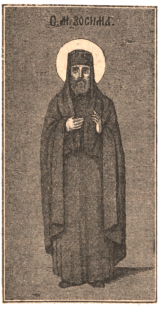
Св. мученика Зосимы, пустынника Киликийского, и Афанасия Коментарисия

The Holy Martyr Zosimas, Hermit of Cilicia, and Athanasius Commentariensis

E5.TAI draft
The Holy Martyr Zosimas

Св. мученик Зосима

The Holy Martyr Zosimas

E5.CAI draft

Св. Зосима, застигнутый в своём уединении гонителями христиан при Домитиане, был предан мучениям. Но чудесным образом был избавлен от смерти и отпущен на свободу. Бывший при этом смотритель за узниками, Афанасий Коментарисий, обратился в христианскую веру и последовал за св. Зосимой в его пустыню, где оба они скончались в расселине камня, во время гонения, воздвигнутого Диоклитианом.

St. Zosimas, overtaken in his solitude by the persecutors of Christians under Domitian, was subjected to tortures. But he was miraculously delivered from death and set free. The overseer of the prisoners who was present, Athanasius the Commentarisius, was converted to the Christian faith and followed St. Zosimas into his desert, where both of them died in a cleft of a rock during the persecution raised by Diocletian.

E5.0AI draft

Примечания Notes

Григоровича путешествие по Турции, стр. 18. Казань. 1848 г.

Grigorovich's Journey through Turkey, p. 18. Kazan. 1848.

N4AI draft

Зап. географ. об. XIII, 174.

Notes of the Geographical Society XIII, 174.

N5AI draft

Гласник дружства Сербск. лит. VI, 31–33. См. ниже прим. 29.

Glasnik of the Serbian Literary Society VI, 31–33. See below note 29.

N6AI draft

Послесловие грамматиста Феодора: «тогдаже (1263 г.) предръжащю крьмыло хыландарскые лавры преподобному отцу нашему игумену курь Евстафию»... Калайдовича экзарх, стр. 164.

Afterword of the grammarian Theodore: "At that time (1263) the helm of the Hilandar Lavra was held by our Venerable Father, Abbot Kyr Eustathius"... Kalaydovich's Exarch, p. 164.

N7AI draft

Гласник V, 32. О зетских епископах Иларионе и Неофите янв. 12 пр. 29, 24.

Glasnik V, 32. Concerning the Zetan bishops Hilarion and Neophytus, January 12, notes 29, 24.

N8AI draft

Григоровича путеш. 41. 46.
а) Гласник VI, 33–34. Тронош. летоп. в гласнике V, 50–53. Последняя говорит, что после Иоанникия восходил на кафедру Даниил I и венчал Драгутина, тогда как по родослову Даниил I был на кафедре после Саввы II (муз. Румянц. стр. 159. Гласник VI, 29). Но если управлению блаж. Иоанникия назначают всего 4 года (гласник VI, 31), то могло быть, что по удалению Иоанникия Даниил I во второй раз восходил на кафедру, но как говорит и летоп. (глас. V, 51–53), скоро оставил её, по неудовольствиям народа за Уроша. Савва III не помещает Даниила между своими предшественниками (см. август 30 прим. 30). Это подкрепляет известия тронош. летописи, так как венчание Драгутина Даниилом могло казаться столько виновным для Саввы, что он не поставил Даниила в числе архиепископов, хотя по известию Даниила II тот был архиепископом. По времени правления Саввы 2 (1263 – Февр. 1268) и Иоанникия (4 года с включением Данилова правления) надобно положить, что св. Евстафий взошёл на кафедру в 1272 г. Так, а не иначе, заставляет полагать и троношская летопись. На списке толкового Евангелия запись: «написано бысть во дни краля – Стефана Уроша в 5 лето державного владычества его, от числа же сложения мира лет 6794, в сие лето поставлен бысть светы преосвященный архиепископ Ияков», (Миклошича monum. № 488, s. 561). Здесь в написании числа лет миробытия – ошибка. Пятый год правления Милютинова был в 1279 г. от Р.X. и в 6787 г. миробытия. Итак, св. Евстафий почил в 1279 г. и в том же году взошёл на кафедру преемник его архиеп. Иаков.

Grigorovich's Journey, 41, 46.
a) Glasnik VI, 33–34. The Tronoša Chronicle in Glasnik V, 50–53. The latter says that after Joannicius, Daniel I ascended the throne and crowned Dragutin, whereas according to the genealogical list, Daniel I was on the throne after Sabbas II (Rumyantsev Museum, p. 159. Glasnik VI, 29). But if the administration of the blessed Joannicius is assigned only 4 years (Glasnik VI, 31), it could be that after the removal of Joannicius, Daniel I ascended the throne a second time, but, as the chronicle also says (Glas. V, 51–53), he soon left it, due to the people's displeasure over Uroš. Sabbas III does not place Daniel among his predecessors (see August 30, note 30). This supports the accounts of the Tronoša Chronicle, since the crowning of Dragutin by Daniel might have seemed so blameworthy to Sabbas that he did not include Daniel among the archbishops, although according to the account of Daniel II, the latter was archbishop. By the time of the rule of Sabbas II (1263 – February 1268) and Joannicius (4 years, including Daniel's rule), it must be supposed that St. Eustathius ascended the throne in 1272. This, and no other, is what the Tronoša Chronicle also compels us to suppose. On a copy of the Explanatory Gospel there is an inscription: "It was written in the days of King Stephen Uroš, in the 5th year of his sovereign rule, from the creation of the world in the year 6794; in this year the holy most-reverend Archbishop James was appointed" (Miklosich, Monumenta, No. 488, p. 561). Here there is an error in the writing of the year of the world. The fifth year of Milutin's reign was in 1279 A.D. and in 6787 from the creation of the world. Therefore, St. Eustathius reposed in 1279, and in the same year his successor, Archbishop James, ascended the throne.

N9AI draft

Сербляк, Белград 1861 г. сл.

Serbljak, Belgrade 1861, etc.

N10AI draft

Страдание его по ркп. Афонского скита св. Предтечи описано в Афонском патерике 2, 335–352.

His suffering, according to a manuscript of the Athonite Skete of St. John the Forerunner, is described in the Athonite Patericon 2, 335–352.

N11AI draft