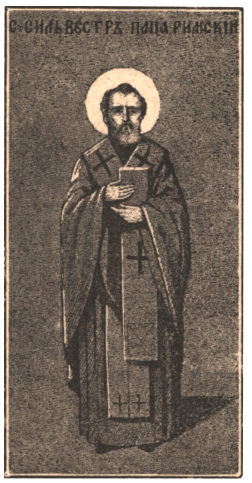
Сильвестр, родом Римлянин, был учеником благочестивого Кирина пресвитера и любил принимать странников. Пришёл тогда в Рим с востока, из Антиохии, епископ Тимофей проповедовать Евангелие язычникам, а тогда на два миллиона жителей Рима христиан не было и десятой части. Он жил в доме Сильвестра год и несколько месяцев и обратил многих ко Христу, но за это был наконец схвачен и заключён в темницу.
Sylvester, a Roman by birth, was a disciple of the pious presbyter Cyrinus and loved to receive strangers. At that time, Bishop Timothy came to Rome from the East, from Antioch, to preach the Gospel to the pagans; and then, out of two million inhabitants of Rome, Christians were not even a tenth part. He lived in the house of Sylvester for a year and several months and converted many to Christ, but for this he was finally seized and cast into prison.
Его принуждали отречься от христианской веры, трижды наказывали бичами и, как непреклонному, отсекли ему голову. Сильвестра же вызвал градоначальник и требовал выдачи имения, оставшегося после Тимофея. Получив в ответ, что имения не осталось, градоначальник потребовал, от него поклониться идолам, и за непокорность грозил муками. Сильвестр, провидя скорую кончину мучителя, сказал Евангельскими выражениями: «в эту ночь душу твою возьмут у тебя (Лк.12:20), и угрозы твои не сбудутся». Тогда градоначальник велел сковать его и отвести в темницу, а сам сел обедать. За обедом он подавился рыбьей костью и к полуночи умер, а Сильвестр был выпущен.
They forced him to renounce the Christian faith, punished him three times with scourges, and, as he was unyielding, cut off his head. The city prefect summoned Sylvester and demanded the surrender of the property left after Timothy. Receiving the answer that no property remained, the prefect demanded that he worship idols, and threatened him with torments for disobedience. Sylvester, foreseeing the swift end of the tormentor, said in the words of the Gospel: "This night your soul will be required of you (Lk. 12:20), and your threats will not come to pass." Then the prefect ordered him to be bound and led away to prison, while he himself sat down to dine. At dinner he choked on a fishbone and died by midnight, and Sylvester was released.
Достигши тридцатилетнего возраста, он был посвящён в диакона папой Мелхиадом, а по смерти последнего (в 312 г.) и на епископский престол возведён. Прожил он на епископстве двадцать один год и одиннадцать месяцев, словом и делом поучая паству. Он запретил клирикам заниматься торговлей и вместо языческих названий дням установил названия христианские. Так, например первый день недели назывался у язычников днём солнца, а святой Сильвестр велел называть его днём Господним, потому что в этот день Господь Иисус воскрес из мёртвых.
Having reached the age of thirty, he was ordained a deacon by Pope Miltiades, and after the latter's death (in 312 A.D.) he was also elevated to the episcopal throne. He lived as bishop for twenty-one years and eleven months, teaching his flock by word and deed. He forbade the clergy to engage in trade and, instead of the pagan names for the days, established Christian names. Thus, for example, the first day of the week was called by the pagans the day of the sun, but St. Sylvester ordered it to be called the Lord's day, because on this day the Lord Jesus rose from the dead.
При нём Константин одолел врагов империи и христианства и даровал свободу Церкви. Обратив многих язычников и Евреев ко Христу, св. Сильвестр скончался в 335 году.
During his time, Constantine overcame the enemies of the empire and of Christianity and granted freedom to the Church. Having converted many pagans and Jews to Christ, St. Sylvester reposed in the year 335 A.D.
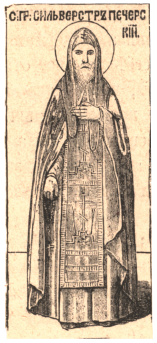
Мощи преподобного Сильвестра почивают открыто в Киевских пещерах у преподобного Антония1. У Кальнофойского он изображён так: «святой старец Сильвестр, послушливый чудотворец». По этому единственному сведению (жития его нет в патерике), преподобный Сильвестр послушанием достиг высокой степени духовного совершенства, смирив им в себе строптивое самолюбие, и послушание столько возвысило его, что осенился он даром чудес.
The relics of the Venerable Sylvester lie openly in the Kiev Caves near the Venerable Anthony1. By Kalnofoysky he is depicted thus: "the holy elder Sylvester, an obedient wonderworker." According to this sole information (his life is not in the Patericon), the Venerable Sylvester, through obedience, attained a high degree of spiritual perfection, having thereby humbled his stubborn self-love within himself, and obedience so exalted him that he was overshadowed by the gift of miracles.
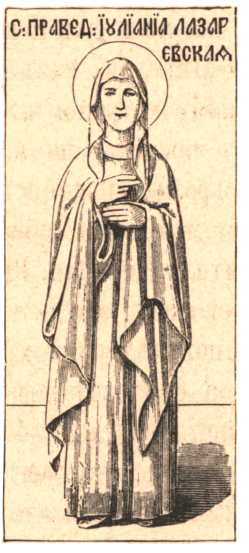
Праведная Иулиания была дочь благочестивых и богатых дворян Недюревых2; отец её Иустин был ключником при дворе царя Иоанна; шести лет оставшись сиротой после смерти матери, она была взята на воспитание бабкой своей Анастасией Лукиной, урождённой Дубенской; бабка, умирая, передала её замужней дочери своей Наталье Араповой, когда Иулиании было 12 лет; у Араповой было много своих детей, потому на долю сироты немного досдавалось приятного. Скромная девушка-сирота любила пост и молитву; сестры насмехались над нею за то, а тётка бранила; кроткая и безответная, она усердно занималась рукоделиями («прядильным и пяличным делом»); тогда как другие девушки находили удовольствие в пустых забавах и играх, для неё утешением было присмотреть за больным бедняком, сшить рубашку для неимущих, приласкать сироту. Её сверстницы о том только и думали, что лелеяли свою красоту; с раннего утра ели и пили; к тому же побуждали Иулианию; тётка даже бранила её за то, что губит она девственную красоту невниманием к ней, но Иулиания хранила воздержание, берегла чистоту души своей и лелеяла в себе только страх Божий. Девушку-сироту не учили грамоте, и это как будто в порядке вещей для сироты. Она во всё время девичьего возраста ни разу не была в церкви; в деревне, где жила она, не было храма, он был в 2-х вёрстах, а обычай, не дозволявший девушке отлучаться из дома и являться среди чужих, благовидно прикрывал в глазах воспитателей её опущение св. долга. Тем не менее Иулиания была девушкой редкой по доброте. Благой смысл был наставником её в добре, и страх Божий раскрывал смысл её.
The Righteous Juliana was the daughter of pious and wealthy nobles, the Nedyurevs2; her father Justin was a key-keeper at the court of Tsar John. Left an orphan at the age of six after the death of her mother, she was taken to be raised by her grandmother, Anastasia Lukina, née Dubenskaya. The grandmother, dying, entrusted her to her married daughter, Natalia Arapova, when Juliana was twelve years old. The Arapovs had many children of their own, so the orphan's lot was not a pleasant one. The modest orphan girl loved fasting and prayer; her sisters mocked her for this, and her aunt scolded her. Meek and uncomplaining, she diligently occupied herself with handiwork ("spinning and embroidery work"); while other girls found pleasure in empty amusements and games, her consolation was to care for a sick poor person, to sew a shirt for the needy, to caress an orphan. Her peers thought only of cherishing their beauty; from early morning they ate and drank; they urged Juliana to do the same; her aunt even scolded her for ruining her maidenly beauty by neglecting it, but Juliana kept abstinence, guarded the purity of her soul, and cherished only the fear of God within herself. The orphan girl was not taught to read and write, and this seemed as it were in the order of things for an orphan. Throughout the whole time of her maiden years, she never once went to church; in the village where she lived there was no church—it was two versts away—and the custom, which did not permit a girl to leave the house and appear among strangers, plausibly concealed in the eyes of her guardians her neglect of this holy duty. Nevertheless, Juliana was a girl of rare goodness. A good understanding was her instructor in goodness, and the fear of God opened her understanding.
В её время девушки выходили замуж на 15 году. Но Иулиания была сирота, её не спешили пристроить. Её выдали замуж, когда было ей 16 лет. Но сироте послал Бог мужа богатого и благородного, Юрия Осорьина, владельца с. Лазаревского; в этом селе венчал их благочестивый священник Потапий, бывший потом, с именем Пимена, архимандритом Муромского Спасского монастыря; благочестивый духовник много помогал Иулиании на новом пути жизни её своими советами и наставлениями. Услужливостью и трудолюбием она скоро приобрела себе любовь свёкра и свекрови, так что они поручили ей заведывание домом. Утром и вечером она постоянно совершала коленопреклонные молитвы, клала по 100 и больше поклонов. К тому же она приучила и супруга своего. По временам скорбела она, что не осталась в девстве, зато удваивала она усилие исполнять заповеди Божьи в кругу своей жизни.
In her time, girls were married at the age of fifteen. But Juliana was an orphan; they were in no hurry to settle her. She was given in marriage when she was sixteen years old. But God sent the orphan a rich and noble husband, George Osoryin, the owner of the village of Lazarevo; in this village the pious priest Potapius, who later, under the name Pimen, became archimandrite of the Spassky Monastery in Murom, married them; the pious spiritual father greatly helped Juliana on the new path of her life with his counsels and instructions. By her attentiveness and diligence she soon won the love of her father-in-law and mother-in-law, so that they entrusted her with the management of the household. Morning and evening she constantly performed prayers on her knees, making 100 or more prostrations. She also accustomed her husband to this. At times she grieved that she had not remained a virgin, but for this she redoubled her effort to fulfill the commandments of God within the circle of her life.
Случалось, что муж находился на царской службе в Астрахани год, два и три года. Тогда она по ночам занималась рукоделием, то пряла, то шила в пяльцах, и выручаемые за работу деньги раздавала бедным или в храм Божий; это делала она тайно даже от свекрови, хотя та любила её; только одна служанка знала подвиги любви её. Сирот и вдов она своими руками кормила и поила, обшивала и обмывала. Все слуги и служанки были у неё сыты, одеты, обуты; в обращении с ними она не допускала никакой гордости; каждого вежливо называла по имени и отчеству. Для себя лично она не требовала от них услуг: никогда не приказывала, чтобы подали ей воды или сняли с неё обувь, – всё это делала она сама. Только при гостях дозволяла себе приказывать то и другое слугам. Но и в таких случаях тяготилась услугами их. «Кто я, бедная, – говорила она, – чтобы служили мне другие?» Между слугами были и такие, которые, несмотря на всю её доброту, оказывали ей грубость; случалось ей видеть и слышать ссоры между слугами. Она старалась побеждать их строптивость терпеливой добротой. «Часто грешу я пред Богом, – говорила она, – и Бог терпит меня: потерплю и я, тем более, что хотя они подчинены мне, но в душе, быть может, они гораздо лучше меня пред Богом». Не смущаясь, переносила она выговор от свёкра, свекрови и супруга за беспорядки слуг, но не только не говорила о них лишнее, несправедливое, а старалась прикрывать и поправлять ошибки их.
It happened that her husband was away on the Tsar's service in Astrakhan for a year, two, or three years. Then she occupied herself at night with handiwork, spinning or embroidering on a frame, and the money she earned from her work she distributed to the poor or to the church of God; this she did secretly even from her mother-in-law, although she loved her; only one maidservant knew of her deeds of love. Orphans and widows she fed and gave drink with her own hands, clothed and washed them. All the menservants and maidservants were fed, clothed, and shod by her; in her dealings with them she allowed no pride; she addressed each one politely by name and patronymic. For herself personally she required no services from them: she never ordered anyone to bring her water or take off her shoes—she did all this herself. Only when guests were present did she allow herself to order this or that from the servants. But even in such cases she was burdened by their services. "Who am I, poor one," she said, "that others should serve me?" Among the servants there were some who, despite all her kindness, showed her rudeness; it happened that she saw and heard quarrels among the servants. She tried to overcome their stubbornness with patient kindness. "I often sin before God," she said, "and God bears with me: I too will bear with them, all the more so because, although they are subject to me, in soul they may be far better than I before God." Without being troubled, she bore reproof from her father-in-law, mother-in-law, and husband for the servants' disorders, but not only did she not say anything superfluous or unjust about them, but she tried to cover and correct their mistakes.
Ночью обыкновенно она молилась Богу; особенно великое усердие её было к святителю Николаю. Раз ночью, во время молитвы, она была поражена таким страхом, что, оставив молитву, поспешила укрыться в постель, но и затем страшные грёзы преследовали её; мечты грозили погубить её, если не перестанет молиться; наконец она мысленно обратилась к Богу и призывала в помощь святителя Николая. Внезапно явился святитель с книгой в руках и сказал: «будь тверда, дочь моя, не бойся этих угроз, Христос повелел мне хранить тебя». Пробудившись, она уже наяву увидела святолепного мужа, выходящего из её комнаты. С тех пор она ещё более начала молиться.
At night she usually prayed to God; she had a particularly great devotion to St. Nicholas. One night, during prayer, she was struck with such fear that, leaving off prayer, she hastened to hide in bed, but even then terrible visions pursued her; phantoms threatened to destroy her if she did not cease praying; finally she mentally turned to God and called upon St. Nicholas for help. Suddenly the saint appeared with a book in his hands and said: "Be steadfast, my daughter, fear not these threats; Christ has commanded me to keep you." Awakening, she already saw in reality a man of holy countenance leaving her room. From that time she began to pray even more.
Случился большой голод, так, что многие и умирали от недостатка пищи. Иулиания удвоила тайную свою милостыню. Она брала у свекрови пищу себе для завтрака и полудня и всё раздавала нуждавшимся, сама же, как и прежде того, ничего не ела до обеда и вечера. Свекровь говорила ей: «я рада, что теперь ты больше кушаешь; только отчего прежде не могла я заставить тебя ни завтракать, ни полдничать?» Блаженная, скрывая подвиг свой, отвечала: «тогда не рождала я детей, теперь же не могу довольно наесться». Если кто из бедных умирал, блаженная нанимала убрать мертвеца, покупала саван и молилась об усопшем. За голодом последовала зараза; люди запирались в домах, боясь прилипчивой смерти. Блаженная, тайно от своих, ухаживала за страдавшими от заразы и, если умирал кто, не гнушалась сама омывать его и на свой счёт погребала.
A great famine occurred, so that many died from lack of food. Juliana doubled her secret almsgiving. She took food from her mother-in-law for her breakfast and midday meal and gave it all to those in need, while she herself, as before, ate nothing until dinner and evening. Her mother-in-law said to her: "I am glad that now you eat more; but why could I not make you eat breakfast or a midday meal before?" The blessed one, concealing her ascetic labor, answered: "Then I was not bearing children; now I cannot eat enough." If any of the poor died, the blessed one hired someone to prepare the dead body, bought a shroud, and prayed for the departed. After the famine came a plague; people shut themselves up in their houses, fearing the contagious death. The blessed one, secretly from her family, cared for those suffering from the plague, and if someone died, she did not disdain to wash him herself and bury him at her own expense.
Свёкор и свекровь, достигши глубокой старости, скончались в иноческом одеянии. Блаженная раздала щедрую милостыню за них, делала трапезы для бедных, посылала подаяния заключённым в темницах и отправила поминовение в храме без мужа, бывшего на службе в Астрахани. У неё много было детей, и из них шесть сыновей и одну дочь возрастила она в страхе Божьем. Старший сын её был убит слугой: это сильно огорчило её, но она ещё имела столько твёрдости, что утешала супруга своего. Скоро после того другой сын убит был на царской службе – она и эту потерю перенесла благодушно. И однако эти две потери так потрясли её, что она сильно упрашивала супруга дозволить ей вступить в монастырь. Супруг удержал её: «твоё дело, – говорит он, – воспитывать детей для Господа». Он читал ей книги Козмы пресвитера и других блаженных учителей, где сказано: «чёрные ризы не спасут нас, если живём худо, – и белая риза – не пагуба, если творим волю Божию. Худо делают, удаляясь в монастырь от бедности и бросая детей без призора; дети плачут на них пред Богом». «Если так, – сказала блаженная, – воля Божия да будет», и осталась жить с детьми.
Her father-in-law and mother-in-law, having reached a ripe old age, reposed in the monastic habit. The blessed one distributed generous alms for them, made feasts for the poor, sent donations to those imprisoned in dungeons, and sent a memorial offering to the church without her husband, who was serving in Astrakhan. She had many children, and of them she raised six sons and one daughter in the fear of God. Her eldest son was killed by a servant: this greatly grieved her, but she still had enough fortitude to comfort her husband. Soon after, another son was killed on the Tsar's service—she bore this loss also with good cheer. And yet these two losses so shook her that she earnestly begged her husband to allow her to enter a monastery. Her husband restrained her: "Your duty," he said, "is to raise the children for the Lord." He read to her the books of Cosmas the Presbyter and other blessed teachers, where it is said: "Black robes will not save us if we live wickedly—and a white robe is not perdition if we do the will of God. They do ill who withdraw to a monastery out of poverty and abandon their children without care; the children weep for them before God." "If so," said the blessed one, "the will of God be done," and she remained to live with her children.
Блаженная выпросила у супруга дозволение не иметь более супружеского сожития с ним и стала спать на особой постельке. Она стала более прежнего поститься и молиться. Каждый пяток проводила она в уединённой клети на молитве ничего не вкушая; в понедельник и среду вкушала один раз сухой хлеб; в субботу и воскресение учреждала трапезы для духовных и нищих. Ночью спала она не более двух часов, с вечера, и то, подложив под голову полено, а под бок ключи. Когда другие крепко засыпали, она вставала на молитву и молилась до утрени, потом шла в церковь. Хотя и не умела она грамотно, любя, слушать чтение книг, она так научилась, что объясняла другим, как надобно жить, чтобы угодить Господу. Благочестивое чувство и опыты жизни привели её к уразумению высоких истин христианских. В доме была она матерью для всех, заботясь о довольства каждого слуги; провинившихся слуг и служанок вразумляла не бранью и побоями, а кроткими словами любящей матери.
The blessed one obtained from her husband permission to no longer have conjugal relations with him and began to sleep on a separate little bed. She began to fast and pray more than before. Every Friday she spent in a solitary cell in prayer, tasting nothing; on Monday and Wednesday she ate dry bread once; on Saturday and Sunday she prepared meals for the clergy and the poor. At night she slept no more than two hours, from evening, and even then, placing a log under her head and keys under her side. When others fell fast asleep, she rose for prayer and prayed until Matins, then went to church. Although she did not know letters, loving to hear the reading of books, she learned so well that she explained to others how one ought to live to please the Lord. A pious feeling and the experiences of life led her to an understanding of the high truths of Christianity. In the house she was a mother to all, caring for the comfort of every servant; erring servants and maids she admonished not with abuse and blows, but with the gentle words of a loving mother.
По смерти супруга своего она раздала милостыню по церквам и монастырям. Она молилась о душе его усердно и детям говорила: «не плачьте о нём много, дети мои! смерть его говорит нам, что и нам надобно готовиться на суд. Вместо слёз творите милостыню по силе, и храните между собою любовь». Щедрость её для бедных до того доходила теперь, что, по временам, не оставалось у неё ни копейки; занимая у детей деньги на одежду себе, она отдавала одежду нищему, а сама ходила без тёплой одежды зимой. Отягчая себя подвигами для Господа, она клала под босые ноги в сапоги скорлупу и так ходила. Господь призирал милостиво на её подвиги. Однажды зима была весьма суровая; блаженная, не имея ни одежды, ни обуви, несколько времени не ходила в храм; ей было уже 60 лет. Священник церкви св. Лазаря, придя к утрене в храм, внезапно услышал голос от иконы Богоматери: «иди, скажи милостивой вдове Иулиании, что напрасно не ходит она в церковь; домашняя молитва приятна Богу, но не так, как церковная; а вы уважайте её, Дух Божий почивает на ней». Священник, испугавшись, побежал к Иулиании и вслух всех рассказал, что слышал. Смиренная раба Божья огорчилась таким рассказом священника. «Ты в прелести, – говорила она; – кто я, грешная, чтобы удостоиться такого приглашения?» Она заклинала священника и всех слышавших не говорить о том ни слова, ни при жизни, ни по смерти её. Потом пошла в храм и отслужила молебен Богоматери. С того времени, не взирая ни на какую погоду, ходила она в церковь, когда только бывало богослужение. В доме же, что бы ни делала, ела ли или пила, постоянно творила молитву Иисусову.
After the death of her husband, she distributed alms to churches and monasteries. She prayed earnestly for his soul and said to her children: "Do not weep much for him, my children! His death tells us that we too must prepare for judgment. Instead of tears, give alms according to your means, and keep love among yourselves." Her generosity to the poor now reached such a point that, at times, not a single kopeck remained with her; borrowing money from her children for clothing, she would give the garment to a beggar, while she herself went without warm clothing in winter. Burdening herself with ascetic labors for the Lord, she placed nutshells under her bare feet in her boots and walked thus. The Lord looked mercifully upon her labors. Once the winter was very severe; the blessed one, having neither clothing nor footwear, did not go to church for some time; she was already 60 years old. The priest of the church of St. Lazarus, coming to Matins in the church, suddenly heard a voice from the icon of the Mother of God: "Go, tell the merciful widow Juliana that it is in vain she does not come to church; domestic prayer is pleasing to God, but not as much as church prayer; and you, respect her, the Spirit of God rests upon her." The priest, frightened, ran to Juliana and told everyone what he had heard. The humble handmaiden of God was grieved by such a tale from the priest. "You are in delusion," she said; "who am I, a sinner, to be deemed worthy of such an invitation?" She adjured the priest and all who heard not to speak a word of it, either during her life or after her death. Then she went to the church and served a moleben to the Mother of God. From that time, regardless of any weather, she went to church whenever there was a service. And at home, whatever she did, whether she ate or drank, she constantly prayed the Jesus Prayer.
Девять лет прожила она вдовой, благоугождая Богу постом, молитвой и милостыней. Запасами хлеба распоряжалась она так, чтобы доставало домашним на год, прочее же раздавала бедным. При ц. Борисе был страшный голод: некоторые ели даже человеческое мясо мертвецов. Блаженная просила детей и домашних отнюдь не касаться чужой собственности; сколько имела она скота и домашней рухляди, всё распродала для покупки хлеба и кормила не только домашних, но и чужих. Наконец, дошла она до крайней нищеты и, с упованием на Бога, переселилась в Нижегородскую деревню Вочнево. Когда и тут усилилась бедность, она, созвав рабов своих, сказала: «сами видите, каков голод; если кто из вас не хочет терпеть вместе со мною нужду, пусть идёт, куда ему угодно, для снискания себе хлеба». Иные остались с нею, других же отпустила она, по их желанию, со всей любовью. Оставшимся она велела собирать лебеду и древесную кору, чтобы готовить из того хлеб; по её молитвам хлеб оказывался вкусным и не только свои кормились и были здоровы, но и бедняки получали помощь. Соседи говорили нищим: «зачем вы ходите к Иулиании? она и сама умирает с голоду». Нищие отвечали: «много сёл обходили мы, но ни у кого не ели такого вкусного хлеба, как у неё». Зажиточные посылали к ней нарочно за хлебом, чтобы поверить слова нищих, и дивились приятности хлеба её. Всё время голода, целые два года, провела она в крайней скудости, но всегда была покойна и весела, благодаря за всё Господа.
She lived as a widow for nine years, pleasing God with fasting, prayer, and almsgiving. She managed the grain supplies so that there would be enough for the household for a year, and the rest she distributed to the poor. Under Tsar Boris there was a terrible famine: some even ate the human flesh of the dead. The blessed one asked her children and household not to touch another's property at all; whatever livestock and household goods she had, she sold everything to buy grain and fed not only her household but also strangers. Finally, she reached extreme poverty and, with hope in God, moved to the Nizhny Novgorod village of Vochnevo. When poverty intensified even there, she summoned her servants and said: "You yourselves see what the famine is like; if any of you does not wish to endure need together with me, let him go wherever he pleases, to find bread for himself." Some remained with her, while others she released, according to their wish, with all love. To those who remained she ordered them to gather goosefoot and tree bark to make bread from them; through her prayers the bread proved tasty, and not only were her own people fed and healthy, but the poor also received help. Neighbors said to the beggars: "Why do you go to Juliana? She herself is dying of hunger." The beggars replied: "We have gone around many villages, but nowhere have we eaten such tasty bread as at her house." Wealthy people sent to her on purpose for bread, to verify the beggars' words, and marveled at the pleasantness of her bread. The entire time of the famine, a full two years, she spent in extreme want, but was always calm and cheerful, thanking the Lord for everything.
Когда приблизилось время её кончины, в самый день Рождества Христова она заболела и была больной шесть дней. Но и в эти дни сама ночью вставала на молитву, так что слуги смеялись и говорили: что это за больная? В самый день кончины, рано утром, призвала она духовника своего, исповедалась и причастилась св. таин, потом благословила детей и заповедовала им жить в страхе Божьем. «Ещё с юности, присовокупила она при том, сильно хотела я облечься в иночество, но по грехам моим Бог не сподобил меня сей милости; слава Богу за всё»! И 2 января 1604 года мирно предала дух свой Богу. В ту же ночь явилась она своей служанке и просила похоронить тело её вблизи супруга её, у церкви св. Лазаря. Это и было исполнено. В 1614 г., когда погребали сына её, открыли гроб её, полный благоуханного мира. Многие больные, помазавшиеся сим миром, получали исцеление. Другие недужные получали исцеление после молитвы над гробом её; в числе их дети Червева страдали от ран, из которых текла кровь, и не владели руками, а после молитвы над гробом праведницы исцелились; точно так же слепой женщине возвратилось зрение; расслабленный и скорченный Андрей совсем выздоровел3. Такова раба Божия Иулиания.
When the time of her end drew near, on the very day of the Nativity of Christ she fell ill and was sick for six days. But even on those days she herself rose at night for prayer, so that the servants laughed and said: "What kind of sick woman is this?" On the very day of her repose, early in the morning, she summoned her confessor, confessed and partook of the Holy Mysteries, then blessed her children and commanded them to live in the fear of God. "Even from my youth," she added, "I greatly desired to be clothed in monasticism, but for my sins God did not vouchsafe me this mercy; glory to God for everything!" And on January 2, 1604, she peacefully surrendered her spirit to God. That same night she appeared to her servant and asked that her body be buried near her husband, at the church of St. Lazarus. This was done. In 1614, when her son was being buried, they opened her coffin, which was full of fragrant myrrh. Many sick people, anointing themselves with this myrrh, received healing. Other ailing persons received healing after prayer at her grave; among them, the children of Chervev suffered from wounds from which blood flowed, and could not use their hands, but after prayer at the grave of the righteous woman they were healed; likewise, a blind woman regained her sight; the paralyzed and crippled Andrew was completely restored3. Such was the handmaiden of God, Juliana.
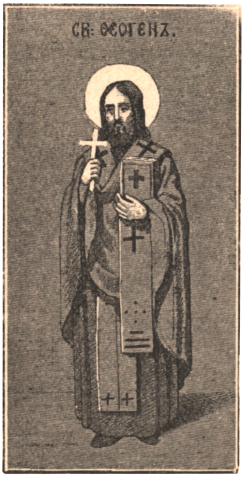
Епископ Парийский, города Троады, живший в IV веке. За исповедание веры Христовой он был осуждён Ликинием на потопление в море; перед исполнением казни он просил времени на молитву, и когда молился, то лицо его озарилось необыкновенным светом, что так поразило бывших при этом, что многие из них приняли христианскую веру.
Bishop of Parium, a city of Troas, who lived in the 4th century. For confessing the faith of Christ he was condemned by Licinius to be drowned in the sea; before the execution of the sentence he asked for time to pray, and while he prayed, his face was illumined with an extraordinary light, which so struck those present that many of them accepted the Christian faith.
После утопления тело его было вынуто из воды христианами и предано погребению при городской стене, и здесь совершается много чудес и исцеляются болезни в прославление угодника Божьего.
After the drowning, his body was taken out of the water by Christians and buried at the city wall, and here many miracles are performed and illnesses are healed, to the glory of the saint of God.
Рано овдовевшая, она вела жизнь благочестивую и посвятила всю себя воспитанно детей в страхе Божием. Память её также 1 Ноября и в Сырную субботу.
Widowed early, she led a pious life and devoted herself entirely to raising her children in the fear of God. Her memory is also on November 1 and on Cheesefare Saturday.
Жизнь прав. Иулиании описана сыном её Каллистратом Осорьиным, который в 1640 г. был губным старостой; он приводит Бога в свидетеля, что писал правду, и предоставляет поверить слова его расспросами соседей, лично знавших жизнь Иулиании. Это описание у Царского № 129, 136, у Толстого с описанием чудес 2. № 303. В переводе русском это житие, за исключением немногого, напеч. в «Русском вестнике» 1858 г. № 19. Подлинная повесть, но без описания чудес, изд. в памят. стар. рус. литер. I, 63–67.
The life of the Righteous Juliana was written by her son, Kallistrat Osoryin, who in 1640 was a provincial elder; he calls God as witness that he wrote the truth, and leaves it to be verified by questioning neighbors who personally knew Juliana's life. This account is in Tsarsky's collection, Nos. 129, 136, and in Tolstoy's collection, with a description of miracles, 2. No. 303. In a Russian translation, this life, with few exceptions, was printed in the Russian Messenger of 1858, No. 19. The original narrative, but without the description of miracles, was published in Monuments of Ancient Russian Literature I, 63–67.
«Егда приближися её честное преставление: и разболеся декабря 26 д. и лёжа 6 дней». Поэтому, кончина на 7 день после 26 дек., последовала 2 января. И, однако, в печатном издании поставлено: «генваря в 4 д.», последнее – ошибка писца. В ркп. святцах: «св. боляриня Юлиания, яже бысть в с. Лазаревском, новая чудотворица, преставися в л. 7112 (1604) м. генваря во 2-й день». Осорьин: «погребоша у церкви праведного Лазаря, подле мужа её, в с. Лазареве, за четыре версты от града, в л. 7112 (1604) генв. в 10 д.». Служба правед. Иулиании у Толстого III. № 68. (25).
"When her honorable repose drew near: she fell ill on December 26 and lay for 6 days." Therefore, her death, on the 7th day after December 26, occurred on January 2. And yet, in the printed edition it is given as "January 4," the latter being a scribal error. In the manuscript menologia: "St. noblewoman Juliana, who was in the village of Lazarevskoe, new wonderworker, reposed in the year 7112 (1604) on the 2nd day of January." Osoryin: "They buried her at the church of the Righteous Lazarus, beside her husband, in the village of Lazarevo, four versts from the city, in the year 7112 (1604) on the 10th day of January." The service to the Righteous Juliana is in Tolstoy's collection III. No. 68. (25).