Не одна осень служила началом года, но и весна. Месяц Авив или Нисан еврейский, соответствующий марту, служил для Евреев началом священного года со времени выхода их из Египта (Исх.12:2), в память избавления их от рабства египетского; а для христиан он напоминает о сотворении и искуплении мира Сыном Божиим, и, следовательно, служит началом великих благодеяний Божьих для народа Божия и всего человечества. События сотворения мира, воплощения, смерти и воскресения Сына Божия, чем запечатлел Он искупление мира, писатели Церкви полагают в марте. «Сей первый есть в месяцах месяц, – говорится в Следованной Псалтири в первый день марта, – зане в он началобытный свет сей видимый сотворен. В сей месяц Бог, неотступль престола величества Своего, сошед с небесе на землю, яко дождь на руно, Архангеловым благовещением, в пречистом чреве преблагословенной Девы Марии, от Духа Свята плоть Себе истка непостижимо. В сей месяц вольною страстью Его плотскою клятва потребися, смертью Его смерть умертвися, и пресветло живоносным Его воскресением из мертвых Адам и весь род человеческий от ада возведен и в первобытие паки приведен. Сего ради от первого числа марта приемлют начало все круги солнечные и лунные, и вруцелето, и високос, и равноденствие составляется в нём» и проч.
Not only autumn served as the beginning of the year, but also spring. The month Abib, or Nisan, in Hebrew, corresponding to March, served for the Jews as the beginning of the sacred year from the time of their departure from Egypt (Ex. 12:2), in memory of their deliverance from Egyptian bondage; and for Christians it recalls the creation and redemption of the world by the Son of God, and consequently serves as the beginning of the great benefactions of God for the people of God and for all mankind. The events of the creation of the world, the incarnation, death, and resurrection of the Son of God, by which He sealed the redemption of the world, the writers of the Church place in March. "This is the first of the months," it is said in the Followed Psalter on the first day of March, "for in it this visible light began to be created. In this month God, without departing from the throne of His majesty, came down from heaven to earth, like rain upon the fleece, by the Annunciation of the Archangel, and in the most pure womb of the most blessed Virgin Mary, from the Holy Spirit ineffably wove for Himself flesh. In this month, by His voluntary passion in the flesh, the curse was abolished; by His death, death was slain; and by His most radiant life-giving resurrection from the dead, Adam and all the human race were brought up from hades and restored again to their primal state. Therefore from the first day of March all the solar and lunar cycles take their beginning, and the hand of the year, and the leap year, and the equinox is established in it," and so forth.
В новолуние священного года у Евреев, как и в другие новолуния, работы не запрещались, но люди благочестивые сами прекращали их и спешили приносить жертвы (1Цар.20:5, 24–27), и посещали пророков для благочестивых собеседований (4Цар.4:23).
At the new moon of the sacred year among the Jews, as at other new moons, work was not forbidden, but pious people themselves ceased from it and hastened to offer sacrifices (1 Kgdms. 20:5, 24–27), and visited the prophets for pious conversations (4 Kgdms. 4:23).
Впоследствии первый весенний месяц – март, с которого у Евреев начинался новый священный или церковный год, принят был за начало года Римлянами и сохранялся у них до 45 года пред Р.X.
Subsequently, the first spring month—March, with which the new sacred or ecclesiastical year began among the Jews—was adopted as the beginning of the year by the Romans and was preserved by them until the year 45 B.C.
От Римлян, завоевателей мира и первых исправителей летоисчисления разделение года на 12 месяцев и название их перешли мало-помалу к другим народам. Переложению начала года с марта на январь в христианских землях особенно содействовало введение, в 531 году, Дионисием Малым, римским монахом, родом скифянином, нового летосчисления от Рождества Христова, бывшего пред январём.
From the Romans, the conquerors of the world and the first correctors of chronology, the division of the year into 12 months and their names passed little by little to other peoples. The transfer of the beginning of the year from March to January in Christian lands was especially furthered by the introduction, in the year 531, by Dionysius the Less, a Roman monk, by birth a Scythian, of the new reckoning from the Nativity of Christ, which had occurred before January.
В нашем отечестве январь принят началом года с XVIII столетия. Но прежде новолетие у нас было в 1 день марта, а потом с 1425 года или ещё ранее стало входить в употребление новолетие 1 день сентября. В 1492 году созванный в Москве собор, под председательством митрополита Зосимы, уложа церковную пасхалию на восьмое тысячелетие от сотворения мира, постановил, с согласия Великого Князя Иоанна Васильевича, перенести начало гражданского года с 1 марта на 1 сентября. Таким образом, круг гражданского года в 1492 году в нашем отечестве соединился с церковным. В 1674 году летопрошение и величание Спасу составлено было вновь.
In our fatherland, January was adopted as the beginning of the year from the XVIII century. But formerly the new year among us was on the 1st day of March, and then from the year 1425, or even earlier, the new year on the 1st day of September began to come into use. In 1492, a council convened in Moscow, under the presidency of Metropolitan Zosima, having laid out the church Paschal cycle for the eighth millennium from the creation of the world, decreed, with the consent of Grand Prince John Vasilievich, to transfer the beginning of the civil year from March 1 to September 1. Thus, the cycle of the civil year in 1492 in our fatherland was joined with the ecclesiastical. In 1674, the rite of supplication for the year and the glorification of the Savior was composed anew.
Пётр Великий, приняв летосчисление от Рождества Христова, повелел в империи своей начинать гражданский год с 1 января, и 1700 год, первый начатый с января, празднован был во всей России с отличным торжеством. Впрочем, следуя летосчислению от Рождества Христова, Церковь наша и отечество хранят летосчисление и от сотворения мира и, на книгах церковных и иных грамотах означают год от сотворения мира и от рождества по плоти Бога Слова.
Peter the Great, having adopted the reckoning from the Nativity of Christ, commanded that in his empire the civil year begin on January 1, and the year 1700, the first begun with January, was celebrated throughout all Russia with exceptional solemnity. However, following the reckoning from the Nativity of Christ, our Church and fatherland also preserve the reckoning from the creation of the world, and on church books and other documents indicate the year from the creation of the world and from the birth according to the flesh of God the Word.
Времясчисление, восприявшее начало своё у древних Римлян, было двукратно исправляемо в продолжение времени. В первый раз оно исправлено было за 45 лет до Р.X. при Юлии Кесаре, помощью Созигена, известного Александрийского астронома; при сём исправление начало года у Римлян перенесено с 1 дня марта на первое января. Вторично времясчисление исправлено было в 1582 году при папе Григорий XIII. Принятое Юлием называется Юлианским времясчислением старого стиля; а введённое Григорием – Григорианским времясчислением нового стиля, от которого старый отстаёт ныне 12 днями. Наша Церковь и отечество употребляют старый стиль, дабы не пришлось праздновать Пасху вместе с Евреями, как это и бывает на Западе, вопреки постановлениям соборов, а в других землях Запада следуют новому, который и по своему исправлению неисправен и ошибочен.
The reckoning of time, which took its beginning among the ancient Romans, was twice corrected in the course of time. The first time it was corrected was 45 years B.C., under Julius Caesar, with the help of Sosigenes, a renowned Alexandrian astronomer; at this correction the beginning of the year among the Romans was transferred from the 1st day of March to the first of January. The second time the reckoning of time was corrected was in 1582 under Pope Gregory XIII. That adopted by Julius is called the Julian reckoning of the old style; and that introduced by Gregory is the Gregorian reckoning of the new style, from which the old now lags by 12 days. Our Church and fatherland use the old style, so as not to have to celebrate Pascha together with the Jews, as happens in the West, contrary to the decrees of the councils; while other lands of the West follow the new, which even in its correction is incorrect and erroneous.
В день нового года – 1 января Церковь с коленопреклонением и с торжественным звоном благодарит Господа за благодеяния, излиянные на нас в прошедшее лето, и просит Его благословить наступающей год. «Владыко Господи Боже наш, Источниче жизни и безсмертия, всея твари видимые и невидимым Содетелю, и лета во Своей власти положивый и управляяй всяческая премудрым и всеблагим Твоим Промыслом! Благодарим о щедротах Твоих, яже удивил на нас в мимошедшее время. Молим Тя: благослови венец наступающаго лета, Твоею благостью сохрани Императора, Дом и вся люди Его, умножи дни живота их в непоколебимом здравии и во всех добродетелях преуспеяние даруй им». Оканчивая благодарения и прошения, Церковь молит Господа о многолетии Благочестивейшего Государя, Государыни и прочих лиц Царского Дома.
On the day of the new year—January 1—the Church, with kneeling and with solemn ringing of bells, gives thanks to the Lord for the benefactions poured out upon us in the past year, and asks Him to bless the coming year. "O Sovereign Lord our God, Source of life and immortality, Creator of all creation visible and invisible, who hast appointed the years in Thine own power and dost govern all things by Thy wise and all-good Providence! We give thanks for Thy mercies, which Thou hast wondrously shown upon us in the time past. We pray Thee: bless the crown of the coming year with Thy goodness; preserve the Emperor, his House, and all his people; multiply the days of their life in unwavering health, and grant them progress in all virtues." Concluding its thanksgivings and supplications, the Church prays to the Lord for the long life of the Most Pious Sovereign, the Sovereign Lady, and the other persons of the Imperial House.
Начиная новый год молитвой, Церковь обличает тех, кои, забывая сию священную обязанность, начинают, новый год не в духе христианского благочестия, а древле-языческого суеверия. Обличительный глас Церкви св. Златоуст прекрасно выражает в слове своём на новый год. «Дьявольское гулянье, – говорит он, – продолжающееся сегодня во всю ночь, смехи, бесчинства, ночные пляски и соблазнительные шутки отвели ныне город наш в пленение, которое тягостнее всякого неприятельского. Более всего огорчают меня игры, происходящие сегодня в гостиницах, преисполненных распутства и нечестия; – нечестия, потому что занимающиеся ими по-своему замечают дни, гадают и думают, что если первый день года удастся им провести в удовольствии и веселье, то и весь год будет совершенно таков же; распутства, потому что на самом рассвете мужчины и женщины наполняют стаканы вином и напиваются без меры. Если хочешь получить пользу от нового года, то при начале его возблагодари своего Владыку за то, что Он ввёл тебя в сие кругообращение лет, сокрушись сердцем, исчисли время новой жизни и скажи сам себе: дни текут и уходят; оканчиваются годы; бо́льшую часть нашего пути мы уже совершили, а что сделали мы доброго? Неужели мы пойдём отсюда без всего, без всякой добродетели! Гадать по дням несообразно с христианской мудростью; это дело еллинского заблуждения. Ты приписан к высшему граду, принят в тамошнее гражданство, вступил в общество Ангелов, где нет света, изменяющегося во тьму, ни дня, оканчивающегося ночью, но всегда день, всегда свет».
Beginning the new year with prayer, the Church reproves those who, forgetting this sacred duty, begin the new year not in the spirit of Christian piety, but of ancient pagan superstition. The reproving voice of the Church, St. Chrysostom, beautifully expresses in his homily on the new year. "The devilish revelry," he says, "continuing today throughout the whole night—laughter, disorder, nocturnal dances, and seductive jests—has led our city today into a captivity more grievous than any enemy's. What grieves me most are the games taking place today in the inns, filled with licentiousness and impiety—impiety, because those engaged in them mark the days in their own way, divine, and think that if they succeed in spending the first day of the year in pleasure and merriment, then the whole year will be exactly the same; licentiousness, because at the very dawn men and women fill their cups with wine and drink without measure. If you wish to receive benefit from the new year, then at its beginning give thanks to your Master that He has brought you into this revolution of the years; be contrite in heart, reckon the time of your new life, and say to yourself: the days flow on and pass away; the years come to an end; we have already completed the greater part of our journey, and what good have we done? Shall we indeed depart from here empty, without any virtue! To divine by days is inconsistent with Christian wisdom; this is the work of pagan error. You are enrolled in a higher city, received into its citizenship, entered into the society of Angels, where there is no light changing into darkness, nor day ending in night, but always day, always light."
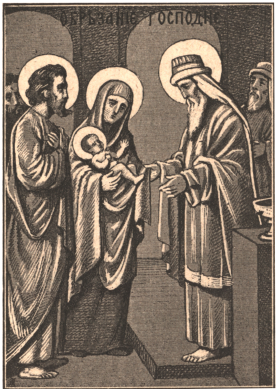
Обрезание, – это священнодействие ветхозаветной Церкви, бывшее прообразованием христианского таинства св. Крещения (Кол.2:11–12), совершалось у Иудеев над семидневными младенцами мужского пола и служило знамением вступления в Ветхий Завет с Богом со времени Авраама, отца верующих, которого Господь со всем многочисленным его потомством избрал для сохранения и распространения Ветхого Завета (Быт.17:14;Лев.12:2–3). Печатью этого знамения служило имя, которое давали младенцу при обрезании. Иисус Христос, происшедший по плоти из племени Авраама, был также обрезан в настоящий день, – восьмой по рождении Своём, и назван Иисусом – тем именем, которое предвозвещено было Пресв. Деве Марии Архангелом Гавриилом, когда он благовестил Ей тайну воплощения и рождения от Неё Сына Божьего (Лк.1:31, 2:21).
Circumcision—this sacred rite of the Old Testament Church, which was a type of the Christian mystery of holy Baptism (Col. 2:11–12)—was performed among the Jews upon seven-day-old male infants and served as a sign of entry into the Old Covenant with God from the time of Abraham, the father of the faithful, whom the Lord chose, with all his numerous posterity, for the preservation and spread of the Old Covenant (Gen. 17:14; Lev. 12:2–3). The seal of this sign was the name given to the infant at circumcision. Jesus Christ, who came according to the flesh from the tribe of Abraham, was also circumcised on this present day—the eighth after His birth—and was named Jesus—that name which was foretold to the Most Holy Virgin Mary by the Archangel Gabriel, when he announced to Her the mystery of the incarnation and of the birth from Her of the Son of God (Lk. 1:31, 2:21).
В воспоминанье Обрезания Господа, в восьмой день по рождению Его от Пресв. Девы Марии, прав. Церковь совершает издревле великий праздник. Начало его относится к первым векам христианства. До нас дошли многие слова св. отцов Церкви IV века, произнесённые ими в этот праздник. Таковы поучения св. Амфилохия, епископа Иконийского, св. Григория Нисского, св. Амвросия Медиоланского и других. В ΙV веке с празднованием Обрезания Господа, как видно из слова Амфилохия Иконийского на день Обрезания, соединено празднование и св. Василию Великому. От V века сохранилась до нас на день Обрезания беседа Максима, епископа Тавринского (Туринского). В VΙ веке о дне Обрезания Господня упоминает в книге своей о круге года св. Григорий Великий, епископ Римский. В VΙΙΙ веке Стефан Савваит написал канон Обрезанию Господню, доселе поемый Церковью в день этого события.
In remembrance of the Circumcision of the Lord, on the eighth day after His birth from the Most Holy Virgin Mary, the Orthodox Church has from ancient times celebrated a great feast. Its beginning goes back to the first centuries of Christianity. Many homilies of the holy fathers of the Church of the IV century, delivered by them on this feast, have come down to us. Such are the teachings of St. Amphilochius, Bishop of Iconium, St. Gregory of Nyssa, St. Ambrose of Milan, and others. In the IV century, with the celebration of the Circumcision of the Lord, as is evident from the homily of Amphilochius of Iconium on the day of the Circumcision, the celebration of St. Basil the Great was also joined. From the V century there has been preserved to us a discourse for the day of the Circumcision by Maximus, Bishop of Taurinum (Turin). In the VI century, St. Gregory the Great, Bishop of Rome, mentions the day of the Circumcision of the Lord in his book on the cycle of the year. In the VIII century, Stephen the Sabaite wrote a canon to the Circumcision of the Lord, still sung by the Church on the day of this event.
День Обрезания и наречения Господа, как восьмой по рождению Его на земле, служит заключением праздника Рождества Христова. Посему древние отцы Церкви, св. Амфилохий Иконийский, Григорий Нисский и Григорий Великий в своих писаниях называют день Обрезания восьмым днём по Рождеству Христову.
The day of the Circumcision and naming of the Lord, as the eighth after His birth on earth, serves as the conclusion of the feast of the Nativity of Christ. Therefore the ancient fathers of the Church—St. Amphilochius of Iconium, Gregory of Nyssa, and Gregory the Great—in their writings call the day of the Circumcision the eighth day after the Nativity of Christ.
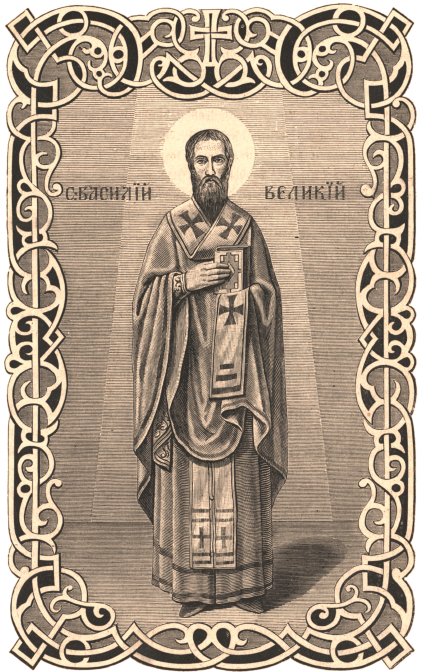
Василий Великий, архиепископ Кесарии Каппадокийской, родился около 329 года по Р.X. в Кесарии, столице Каппадокии, от благочестивых, благородных, знаменитых и богатых родителей – Василия, родом из Понта, и Емилии. «Василий освящён был Богу, – говорит Григорий Богослов, – с младенчества, от утробы матерней». Первые Лета детства своего провёл он под надзором и руководством благочестивой своей бабки, св. Макрины, родом из Неокесарии, и благочестивых своих родителей и воспитан ими в вере, благочестии и других науках. «Я воспитан, – пишет о себе Василий, – своей бабкой, блаженной женой. Говорю о знаменитой Макрине, от которой заучил я изречения блаженного Григория, сохранившиеся до неё по преемству памяти, кои и сама она соблюдала и во мне ещё с малолетства напечатлевала, образуя меня учением благочестия. Понятие о Боге, которое приобрёл я с детства от блаженной матери своей и бабки, возрастало во мне с раскрытием разума». «Первый возраст Васильев, – говорит св. Григорий Богослов, сверстник, друг и сподвижник св. Василия, под руководством великого отца, в лице которого Понт имел общего наставника добродетели, – повит был пеленами и образован в лучшее и чистейшее создание. Под сим-то руководством чудный Василий обучается делу и слову, которые в нём возрастают вместе и содействуют одно другому. И как благодетельно было для Василия, что он дома имел образец добродетели, на который взирая, скоро стал совершенным
Basil the Great, Archbishop of Caesarea in Cappadocia, was born around the year 329 A.D. in Caesarea, the capital of Cappadocia, of pious, noble, renowned, and wealthy parents—Basil, a native of Pontus, and Emilia. "Basil was consecrated to God," says Gregory the Theologian, "from infancy, from his mother's womb." The first years of his childhood he spent under the supervision and guidance of his pious grandmother, St. Macrina, a native of Neocaesarea, and of his pious parents, and was reared by them in faith, piety, and the other sciences. "I was brought up," Basil writes of himself, "by my grandmother, a blessed woman. I speak of the renowned Macrina, from whom I learned the sayings of the blessed Gregory, preserved to her by succession of memory, which she herself kept and impressed upon me from childhood, forming me by the teaching of piety. The conception of God which I acquired from childhood from my blessed mother and grandmother grew within me as my reason unfolded." "The first age of Basil," says St. Gregory the Theologian, his contemporary, friend, and fellow-laborer, "under the guidance of the great father, in whose person Pontus had a common instructor of virtue, was swaddled in swaddling-clothes and formed into a better and purer creation. Under this guidance the wondrous Basil learns deed and word, which grow together in him and aid one another. And how beneficial it was for Basil that he had at home a model of virtue, gazing upon which he soon became perfect."
Когда же довольно приобрёл он дома учёности, а между тем надобно было, чтобы не ускользнуло от него ни что хорошее, и чтобы ему ни в чём не отстать от трудолюбивой пчелы, которая со всякого цветка собирает самое полезное, – поспешает он в Кесарию для поступления в тамошние училище. Здесь он познакомился со св. Григорием Назианзеном, который подобно ему искал в Кесарии просвещения. «В короткое время Василий приобрёл славу у всех – и у простолюдинов, и у знатных, не по летам своим показывая знания, а ещё больше – степенность и постоянство. Он был ритор среди риторов, философ между философами и, что всего важнее – священник между христианами прежде принятия священства. Главным занятием Василия было любомудрие, т. е. отрешение от мира, пребывание в Боге, стремление через земные преимущества и через преходящее и тленное приобрести нетленное и вечное. Из Кесарии Самим Богом и прекрасной жаждой знаний Василий приведён в Византию – город, первенствующей на востоке, потому что он славился лучшими ораторами и философами, от которых, при естественной своей остроте и даровитости, в короткое время Василий собрал всё отличнейшее; – из Византии в Афины, обитель наук, где ожидали его с обширными и великими надеждами, потому что имя его ещё до прибытия повторялось в устах у многих. Тогда и я своего Великого Василия не только сам принял с уважением, потому что провидел в нём твёрдость нрава и зрелость в понятиях, но таким образом обходиться с ним убедил и других молодых людей, которые не могли ещё знать его; многими же уважаем был он с самого начала по предварительным слухам. Что же было следствием этого? Он почти один из прибывших избежал общего обычая для нововступающих в общество юношей учащихся и удостоен особенной чести, как нововступающий. И это было началом нашей дружбы; отсюда первая искра нашего, союза; мы стали друг для друга всё – и товарищи, и сотрапезники, и родные. Имея одну цель, мы непрестанно возрастали в пламенной любви друг к другу; казалось, что в обоих нас было одно упражнение – добродетель, и одно усилие – стремиться от земного, жить для будущих благ. Мы вели дружбу и с товарищами, но не с наглыми, а целомудренными, не с задорными, а с миролюбивыми. Нам известны были две дороги: одна, – это первая и превосходнейшая, вела к нашим священным храмам и к тамошним наставникам; другая, – это вторая и неравного достоинства с первой, вела к преподавателям наук внешних. Другие дороги – на зрелища, на народные сборища, пиршества, мы предоставили желающим».
When he had acquired sufficient learning at home, and meanwhile it was necessary that nothing good should escape him, and that he should not fall behind the industrious bee, which gathers the most useful from every flower—he hastens to Caesarea to enter the schools there. Here he became acquainted with St. Gregory of Nazianzus, who, like him, sought enlightenment in Caesarea. "In a short time Basil acquired glory among all—both among the common people and the noble—showing knowledge beyond his years, and even more, gravity and constancy. He was a rhetorician among rhetoricians, a philosopher among philosophers, and, what is most important—a priest among Christians before receiving the priesthood. Basil's chief occupation was philosophy, that is, detachment from the world, abiding in God, striving through earthly advantages and through the transient and corruptible to acquire the incorruptible and eternal. From Caesarea, by God Himself and by a beautiful thirst for knowledge, Basil was led to Byzantium—the city holding primacy in the East, because it was renowned for the best orators and philosophers, from whom, with his natural acuteness and giftedness, Basil in a short time gathered all that was most excellent;—from Byzantium to Athens, the abode of the sciences, where they awaited him with vast and great hopes, because his name was repeated on the lips of many even before his arrival. Then I too received my Great Basil not only with respect myself, because I foresaw in him firmness of character and maturity of understanding, but I also persuaded other young men, who could not yet know him, to treat him thus; and he was respected by many from the very beginning on the basis of preliminary reports. What was the result of this? He, almost alone among those who arrived, escaped the common custom for newly entering youths of students and was vouchsafed special honor, as a newcomer. And this was the beginning of our friendship; from this came the first spark of our union; we became everything to each other—both comrades and table-companions and kindred. Having one aim, we continually grew in fervent love for one another; it seemed that in both of us there was one exercise—virtue, and one effort—to strive from the earthly, to live for future blessings. We kept friendship also with comrades, but not with the insolent, but with the chaste; not with the quarrelsome, but with the peaceable. Two roads were known to us: one—this was the first and most excellent—led to our sacred churches and to the teachers there; the other—this was the second and of unequal worth with the first—led to the teachers of the external sciences. The other roads—to spectacles, to public assemblies, to feasts—we left to those who wished them."
«В каком роде наук не успел Василий с избытком, как бы занимавшийся одной наукой? Он изучил всё, как другой не изучает и одного предмета; каждую науку изучил он до такого совершенства, как бы не учился ничему другому. Кто сравнится с ним в риторстве», дышащем силой огня, хотя нравами не походил он на риторов? Кто, подобно ему, приводит в надлежащие правила грамматику или язык», связует историю, владеет мерами стиха, даёт законы стихотворству? Кто был так силён в философии, – в философии действительно возвышенной и простирающейся в горнее, то есть в деятельной и умозрительной, а равно и в той её части, которая называется диалектикой? Из астрономии же, геометрии и науки об отношении чисел изучив столько, чтобы искусные в этом не могли приводить его в замешательство, отринул он всё излишнее, как бесполезное для желающих жить благочестиво. Врачебную науку соделали для него необходимой и собственные телесные недуги, и хождение за больными. Впрочем, всё это, сколько ни важно, значит ли что-нибудь в сравнении с нравственным обучением Василия? В такой степени приобрёл Василий всё сие! Это был корабль, столько нагруженный знанием, сколько возможно для человеческой природы».
In what kind of science did Basil not succeed abundantly, as though occupied with one science alone? He studied everything, as another does not study even a single subject; each science he studied to such perfection, as though he had learned nothing else. Who can compare with him in rhetoric, breathing with the power of fire, although in his manners he did not resemble the rhetoricians? Who, like him, reduces grammar or language to proper rules, binds together history, commands the measures of verse, gives laws to poetry? Who was so strong in philosophy—in philosophy truly exalted and reaching to the heights, that is, the active and the contemplative, and equally in that part of it which is called dialectics? And of astronomy, geometry, and the science of the relations of numbers, having learned so much that those skilled in these could not confound him, he rejected all that was superfluous, as useless for those desiring to live piously. The medical science was made necessary for him both by his own bodily infirmities and by his care for the sick. However, all this, however important, does it mean anything in comparison with Basil's moral training? To such a degree did Basil acquire all this! This was a ship, so laden with knowledge as is possible for human nature.
С высоким образованием в науках Василий соединял чистоту веры. «Осмеливаюсь похвалиться о Господе, – пишет он сам о себе, – тем одним, что я никогда не держался погрешительных мнений о Боге и не переменял впоследствии мыслей, какие прежде имел; но то понятие о Боге, которое приобрёл с детства от блаженной матери моей и бабки Макрины, и возрастало во мне».
With his lofty education in the sciences, Basil united purity of faith. "I dare to boast in the Lord," he writes of himself, "of this one thing alone: that I never held erroneous opinions about God, nor did I afterwards change the thoughts which I had before; but that conception of God which I acquired from childhood from my blessed mother and grandmother Macrina grew within me."
По окончании учения, Василию, как отличнейшему и образованнейшему человеку, о достоинствах коего слух распространялся во всей Греции, предлагали должности адвоката и учителя, но он отказался и возвратился в Кесарию Каппадокийскую; мудрость, которую постигал он около 15 лет, не удовлетворяя великой душе его, возбудила в нём только сильнейшую жажду высшего любомудрия, уединения и подвигов, к чему много располагала его старшая сестра его, благочестивая девственница Макрина. Так он между прочим писал о плодах своего образования и своём желании удалиться от мира: «много времени потратил я на суету и всю почти юность свою потерял в суетном труде, с какими упражнялся в том, чтобы уразуметь уроки обуянной от Бога мудрости. Наконец, как бы пробудившись от глубокого сна, я воззрел на чудный свет истины евангельской и увидел тщету премудрости князей века сего престающих (1Кор.2:6). Тогда, оплакав жалкую жизнь свою, я желал снискать для себя руководителя к познанию истины. Прежде всего употребил я старание о том, чтобы сколько-нибудь исправить нрав свой, который повредился от долговременного моего обращения с людьми нечестивыми. Читая Евангелие и узнав из него, что продать имущество и раздать его бедной братии, совершенно не заботиться об этой жизни и отвратить душу свою от всякого пристрастия к земным предметам есть благонадёжнейший способ к усовершенствованию себя, я возжелал найти какого-нибудь брата, избравшего означенный путь на земле, чтобы вместе с ним переплыть глубокое море жизни. И действительно я нашёл (около 357 г.) много таких братий в Александрии и в остальной части Египта, также в Палестине, Сирии и Месопотамии; я удивлялся воздержанию их в пище, терпению в трудах, изумлялся неослабному постоянству их в молитвах и тому, как они препобеждали сон и не были сами побеждаемы ни одной естественной необходимостью, всегда сохраняли твёрдость – в алчбе и жажде, в зиме и наготе (2Кор.11:27), – не заботясь о теле и не допуская в себе никакого о нём попечения, но как бы живя в чужом теле, самым делом показывали, что̀ значит обитать среди предметов настоящей жизни и вместе жительствовать на небе. Удивляясь этой блаженной жизни мужей, которые делами своими являют, что мертвость Господа Иисуса в теле своём носят (2Кор.4:10), я и сам желал, сколько для меня возможно, подражать им».
Upon the completion of his studies, Basil, as the most excellent and most educated man, whose merits were rumored throughout all Greece, was offered the positions of advocate and teacher, but he refused and returned to Caesarea in Cappadocia; the wisdom which he had pursued for about fifteen years, not satisfying his great soul, awakened in him only a stronger thirst for higher philosophy, solitude, and ascetic labors, to which his elder sister, the pious virgin Macrina, greatly disposed him. Thus he wrote, among other things, of the fruits of his education and of his desire to withdraw from the world: "Much time did I waste on vanity, and I lost almost all my youth in vain labor, in which I exercised myself in understanding the lessons of wisdom made foolish by God. At last, as though awakened from deep sleep, I looked upon the wondrous light of evangelical truth and saw the vanity of the wisdom of the princes of this world, that come to nought (1 Cor. 2:6). Then, having lamented my pitiable life, I desired to find for myself a guide to the knowledge of truth. First of all I took pains to correct somewhat my character, which had been corrupted by my long association with ungodly men. Reading the Gospel and learning from it that to sell one's property and give it to the poor brethren, to take no thought at all for this life, and to turn one's soul away from every attachment to earthly things is the most reliable way to perfect oneself, I desired to find some brother who had chosen the aforesaid path on earth, that together with him I might cross the deep sea of life. And indeed I found (around the year 357) many such brethren in Alexandria and in the rest of Egypt, also in Palestine, Syria, and Mesopotamia; I marveled at their abstinence in food, their patience in labors; I was amazed at their unremitting constancy in prayers and at how they overcame sleep and were not themselves overcome by any natural necessity, always preserving firmness—in hunger and thirst, in cold and nakedness (2 Cor. 11:27)—taking no care for the body and admitting in themselves no concern for it, but as though living in another's body, showing by their very deeds what it means to dwell among the objects of this present life and at the same time to have one's citizenship in heaven. Marveling at this blessed life of men who by their deeds show that they bear about in the body the dying of the Lord Jesus (2 Cor. 4:10), I myself desired, as far as possible for me, to imitate them."
Насытившись зрелищем благочестивых подвигов и обогатившись высокими образцами благочестия и добродетели, Василий принял св. крещение в Иерусалиме и решился посвятить себя строжайшему благочестивому уединению для исправления и охранения духа и сердца своего от рассеяния. Но промысл Божий, уготовляя Василия в великого пастыря Церкви, возводит его постепенно, неспешно. Истолкователь священных книг, Василий сперва читает их народу, и эту степень (чтеца в церкви Кесарийской) служения алтарю не считает для себя низкой; потом на седалище старец (пресвитеров), потом в сане епископов хвалит Господа (Пс.106:32). Но прежде возведения в святительский сан «Василий удаляется в Понт и настоятельствует в тамошних обителях».
Having been filled with the sight of pious ascetic labors and enriched with lofty examples of piety and virtue, Basil received holy Baptism in Jerusalem and resolved to devote himself to the strictest pious solitude, for the correction and preservation of his spirit and heart from distraction. But the providence of God, preparing Basil to be a great shepherd of the Church, raises him gradually, without haste. As an interpreter of the sacred books, Basil first reads them to the people, and this degree (of reader in the Church of Caesarea) of service to the altar he does not consider low for himself; then in the seat of the elders (presbyters), then in the rank of bishops he praises the Lord (Ps. 106:32). But before his elevation to the hierarchal rank, "Basil withdraws to Pontus and presides over the monasteries there."
В Понтийской пустыне Василий удалился к реке Ирису, – в местечко, в котором прежде его уединились его мать и сестра, и которое им принадлежало. Макрина устроила тут монастырь. Вблизи его, при подошве высокой горы, покрытой частым лесом и орошаемой холодными и прозрачными водами, поселился Василий. Пустыня так была приятна Василию своим невозмутимыми безмолвием, что он предполагал окончить здесь дни свои. Здесь он подражал подвигам тех великих мужей, которых видел в Сирии и Египте. Он подвизался в крайнем лишении, имея для покрытия себя одну одежду – срачицу и мантию; носил и власяницу, но только ночью, чтобы её не видно было; питался хлебом и водой, приправляя эту скудную пищу солью и кореньями. От строгого воздержания он сделался так бледен и тощ, что казался без жизни. Никогда не ходил в баню и не зажигал огня. Но Василий жил не для одного себя: он собрал иноков в общежитие; своими письмами привлёк к себе в пустыню друга своего Григория.
In the Pontic wilderness Basil withdrew to the river Iris—to a place where his mother and sister had previously secluded themselves, and which belonged to them. Macrina established a monastery there. Near it, at the foot of a high mountain covered with dense forest and watered by cold and transparent streams, Basil settled. The wilderness was so pleasing to Basil by its undisturbed silence that he supposed he would end his days there. Here he imitated the struggles of those great men whom he had seen in Syria and Egypt. He asceticized in extreme deprivation, having for covering himself but one garment—a tunic and a mantle; he also wore a hair-shirt, but only at night, so that it might not be seen; he fed on bread and water, seasoning this meager fare with salt and roots. From strict abstinence he became so pale and emaciated that he seemed lifeless. He never went to the bath nor kindled a fire. But Basil did not live for himself alone: he gathered monks into a cenobitic community; by his letters he drew his friend Gregory to himself in the wilderness.
В своём уединении Василий и Григорий всё делали вместе; вместе молились; оба оставили чтение мирских книг, за которыми прежде много тратили времени, чтобы единственно заниматься св. Писанием. Желая лучше изучить его, они читали древних толковников, особенно Оригена, из писаний которого составили изъяснение на некоторые места св. Писания, известное под именем Добротолюбия (Филокалы). Написали уставы иноческого общежития, которыми иноки восточной Церкви большею частью руководствуются.
In their seclusion, Basil and Gregory did everything together; they prayed together; both abandoned the reading of worldly books, on which they had formerly spent much time, in order to occupy themselves solely with Holy Scripture. Desiring to study it better, they read the ancient commentators, especially Origen, from whose writings they compiled an explanation of certain passages of Holy Scripture, known under the name of the Dobrotolyubie (Philokalia). They wrote the rules of cenobitic monastic life, by which the monks of the Eastern Church are for the most part guided.
В отношении к жизни телесной Василий и Григорий находили удовольствие в терпении; работали своими руками, нося дрова, обтёсывая камни, сажая и поливая деревья, таская навоз, возя тяжести, так что мозоли на руках их долго оставались. Жилище их не имело ни кровли, ни ворот; не видно было там ни огня, ни дыма. Хлеб, который они ели, был так сух и худо пропечён, что зубы едва брали его.
With regard to bodily life, Basil and Gregory found pleasure in patience; they worked with their own hands, carrying wood, hewing stones, planting and watering trees, hauling manure, transporting heavy loads, so that calluses on their hands remained for a long time. Their dwelling had neither roof nor gate; neither fire nor smoke was seen there. The bread which they ate was so dry and poorly baked that their teeth could scarcely take it.
Но два друга инока недолго подвизались вместе в пустыне. Их призывала на помощь Церковь, обуреваемая арианами, в царствование Константия (337–361). Василий возвратился к Кесарию. В 362 г. он рукоположен был Мелетием Антиохийским в диакона, и в этом сане присутствовал на соборе в Константинополе. Вскоре Василий посвящён в сан пресвитера, против собственного желания, Евсевием Кесарийским. «Божие многообразное человеколюбие и смотрение о нашем роде, – говорит св. Григорий Богослов, – изведав Василия во многих встретившихся между тем обстоятельствах и показав более и более светлым, поставляет его знаменитым и славным светильником Церкви, сопричислив пока к священным престолам пресвитерства, и через один град – Кесарию возжигает его для целой вселенной». Но видя, что все чрезвычайно почитают и хвалят Василия за его мудрость и святость, Евсевий, по человеческой немощи, увлёкся ревностью к нему и начал выказывать своё к нему неблагорасположение. Посему Василий вместе с Григорием опять удалился в свою пустыню. Ограждая братию свою (иноков) в Понте от заразы нечестия, Василий в обширном послании изложил истинное учение веры о Сыне Божьем. В Понте он извлёк из Писания нравственные правила, необходимые для каждого христианина, и особенно для пастырей. При изъяснении священного Писания св. Василий сличал разные списки и переводы его; пользовался историей и преданием; ссылался на учение древнейших отцов Церкви и других толкователей.
But the two monk-friends did not asceticise together for long in the wilderness. The Church, tossed by the Arians during the reign of Constantius (337–361), called them to her aid. Basil returned to Caesarea. In 362 he was ordained deacon by Meletius of Antioch, and in this rank he was present at a council in Constantinople. Soon Basil was ordained to the rank of presbyter, against his own desire, by Eusebius of Caesarea. "The manifold love of God for mankind and His providence for our race," says St. Gregory the Theologian, "having tested Basil in many circumstances that occurred in the meantime, and having shown him ever more and more luminous, sets him up as a renowned and glorious luminary of the Church, having numbered him among the sacred thrones of the presbyterate, and through one city—Caesarea—kindles him for the whole universe." But seeing that all exceedingly honored and praised Basil for his wisdom and holiness, Eusebius, through human weakness, was carried away by jealousy toward him and began to show his ill-will toward him. Therefore Basil, together with Gregory, again withdrew to his wilderness. Guarding his brethren (the monks) in Pontus from the infection of impiety, Basil in an extensive epistle set forth the true doctrine of the faith concerning the Son of God. In Pontus he extracted from Scripture the moral rules necessary for every Christian, and especially for pastors. In explaining Holy Scripture, St. Basil compared various copies and translations of it; he made use of history and tradition; he referred to the teaching of the most ancient Fathers of the Church and other interpreters.
Во время царствования Юлиана Отступника (361–363) Василий уверял, что замыслы его вскоре разрушатся. Около этого времени он написал пять книг против Евномия.
During the reign of Julian the Apostate (361–363), Basil assured that his designs would soon be destroyed. Around this time he wrote five books against Eunomius.
Из пустыни снова вызван был Василий для пользы Церкви Евсевием, епископом Кесарийским, которого св. Григорий примирил с Василием и убедил своего сподвижника возвратиться в отечественную Церковь, около 364 г. «Хотя отшельничество Василия было любомудренно и чудно, – говорит св. Григорий, – но возвращение его ещё более превосходно и чудно. Когда мы упражнялись в пустыне, вдруг поднялась градоносная туча, угрожающая пагубой, и поражала все Церкви, над которыми разражалась и на который простирал власть свою златолюбивейший царь Валент (365–378), заражённый арианством. Предстояла великая борьба: что же предпримет сия мужественная, исполненная высоких помыслов и подлинно христолюбивая душа? Немного было убеждений Василию, чтобы он явился и стал поборником». По приглашению Евсевия на помощь Церкви, обуреваемой арианами, «он тотчас отправляется из Понта, ревнует об истине которая была в опасности, делается добровольным споборником и сам себя предаёт на служение Церкви. Для одних он твёрдая стена и оплот, для других млат, сотрыющий камень (Иер.23:29) и огнь в тернии (Пс.117:12); для предстоятеля был добрым советником, правдивым предстателем, истолкователем Божьего слова, жезлом старости, опорой веры, самым верным в делах внутренних, самым деятельным в делах внешних. С сего времени и церковное правление перешло к Василию, хотя на кафедре занимал он второе место».
From the wilderness Basil was again summoned for the benefit of the Church by Eusebius, the bishop of Caesarea, whom St. Gregory reconciled with Basil and persuaded his fellow-ascetic to return to his native Church, around 364. "Although Basil's hermit-life was wise and wondrous," says St. Gregory, "yet his return was even more excellent and wondrous. When we were exercising ourselves in the wilderness, suddenly a hail-bearing cloud arose, threatening destruction, and smote all the Churches over which it burst and over which the most gold-loving Emperor Valens (365–378), infected with Arianism, extended his authority. A great struggle was at hand: what then would this courageous soul, filled with lofty thoughts and truly Christ-loving, undertake? Few were the persuasions needed for Basil that he should appear and become a champion." At the invitation of Eusebius to aid the Church, tossed by the Arians, "he immediately sets out from Pontus, zealously contends for the truth which was in danger, becomes a voluntary fellow-champion, and gives himself over to the service of the Church. For some he was a firm wall and bulwark, for others a hammer that breaketh the rock in pieces (Jer. 23:29) and fire among the thorns (Ps. 117:12); for the presiding hierarch he was a good counselor, a truthful intercessor, an interpreter of God's word, a staff for his old age, a support of the faith, most faithful in internal affairs, most active in external affairs. From this time church governance passed to Basil, although he occupied the second place on the cathedra."
Одним из важнейших его занятий в это время было проповедание слова Божьего. Поучения свои святитель говорил без приготовления; проповедовал ежедневно, и даже по два раза в день – утром и вечером. К этому времени до́лжно отнести беседы св. Василия на шестоднев, на 16 глав пр. Исаии и другие. «Много и других доказательств Васильевой заботливости и попечительности о Церкви, – говорит Григорий Назианзен, – таковы: смелость Василия пред начальниками, как вообще пред всеми, так и пред самыми сильными в городе; его решения распрей, не без доверия принимаемые, а по произнесению его устами через употребление обратившиеся в закон; его предстательства за нуждающихся, большей частью в делах духовных, а иногда и в мирских (потому что и это, покоряя людей добрым расположением, пользует нередко душе); пропитание нищих, странноприимство, попечение о девах, писанные и неписанные уставы для монашествующих, чиноположения молитв (литургия), благоукрашения алтаря, и иное, чем только Божий воистину человек и действующий по Богу может пользовать народ».
One of his most important occupations at this time was the preaching of the word of God. The Hierarch delivered his teachings without preparation; he preached daily, and even twice a day—morning and evening. To this time must be ascribed the homilies of St. Basil on the Hexaemeron, on the 16 chapters of the Prophet Isaiah, and others. "Many other proofs of Basil's care and solicitude for the Church," says Gregory of Nazianzus, "are such as these: Basil's boldness before rulers, both generally before all and especially before the most powerful in the city; his resolutions of disputes, accepted not without trust, but by the utterance of his mouth through use having turned into law; his intercessions for the needy, for the most part in spiritual matters, and sometimes also in worldly ones (for this too, subduing people by good disposition, often benefits the soul); the feeding of the poor, hospitality, care for virgins, written and unwritten rules for monastics, the ordinances of prayers (the Divine Liturgy), the adornment of the altar, and other things by which a man truly of God and acting according to God may benefit the people."
По кончине Евсевия, епископа Кесарийского, Василий в 370 году 14 июня возведён был на степень архипастыря этой Церкви. Сан святительский принял Василий на 42 году от роду, и пас Церковь Божью 7 лет и шесть месяцев. Добрый пастырь, искавший мира внутреннего и единения с Богом, старался особенно о мире и единодушии своей паствы. В краткие дни своего святительства, при слабости своего здоровья, какую имел с раннего возраста до смерти, он понёс величайшие труды для мира и блага как Кесарийской, так и всей христианской Церкви. Почти ежедневно совершал Богослужение. Как верный страж в дому Божьем, он, назидая и утверждая верных, был в непрестанной борьбе с лжеучителями, действующими обыкновенно и хитростью и клеветой, отражая и низлагая их наглость и разящим оружием уст и стрелами письмен; ни обольщался обещаниями почестей, ни боялся угроз; был велик всегда, во всех своих словах и делах.
After the repose of Eusebius, bishop of Caesarea, Basil in the year 370, on the 14th of June, was elevated to the degree of archpastor of that Church. Basil received the hierarchal rank in the 42nd year of his age, and shepherded the Church of God for 7 years and six months. The good shepherd, who sought inner peace and union with God, strove especially for the peace and unanimity of his flock. In the brief days of his hierarchate, with the weakness of his health, which he had from early youth until death, he bore the greatest labors for the peace and welfare both of the Church of Caesarea and of the whole Christian Church. Almost daily he celebrated the divine services. As a faithful watchman in the house of God, edifying and confirming the faithful, he was in unceasing struggle with false teachers, who acted usually both with cunning and slander, repelling and overthrowing their insolence both with the striking weapon of his lips and with the arrows of his writings; he was neither seduced by promises of honors nor afraid of threats; he was great always, in all his words and deeds.
Несмотря на чистоту своей веры и действий, он ожидал для себя изгнания и заточения. «Удостоенный председательства, – говорит Григорий Богослов, – Василий ничем последующим не посрамил ни своего любомудрая, ни надежды вверивших ему служение. В одинаковой мере он оказывался непрестанно превосходящим других. Впрочем, не власть употреблял он наперёд, но снисхождением покорял власти и, что всего важнее, покорял тем, что все уступали его разуму, признавали добродетель его для себя недосягаемой, и в одном видели своё спасение – быть с ним и под его начальством, а также одно находили опасным – быть против него, и отступление от него почитали отчуждением от Бога».
Despite the purity of his faith and actions, he expected exile and imprisonment for himself. "Having been deemed worthy of the presidency," says Gregory the Theologian, "Basil in nothing subsequent disgraced either his wisdom or the hope of those who entrusted him with the service. In equal measure he proved himself constantly surpassing others. However, he did not employ authority first, but by condescension he subdued authority and, what is most important, subdued it by the fact that all yielded to his reason, acknowledged his virtue as unattainable for themselves, and saw their salvation in one thing—to be with him and under his command, and likewise found one thing dangerous—to be against him, and considered separation from him as estrangement from God."
«Когда Валент, обойдя прочие страны, устремился, с намерением поработить, на Церковь Кесарийскую – сию незыблемую и неуязвимую матерь Церквей; тогда в первый раз он почувствовал безуспешность своего замысла; ибо отражён был как стрела, ударившаяся в твердыню. К Модесту, областному начальнику, который, быв арианином, скрежетал зубами на Церковь, рыкал как лев и для многих был неприступен, вводится, в 371 году, или, лучше сказать, сам входит доблестный Василий, призванный как на пиршество, а не на суд». После напрасных убеждений склонить святителя к единомыслию с арианами, видя его непреклонность, Модест угрожает ему отнятием имущества, изгнанием, мучениями, смертью. «Всё это, – отвечает Василий, – для меня ничего не значит; тот не теряет имения, кто ничего не имеет, кроме сих ветхих и изношенных одежд и немногих книг, в которых заключается всё моё богатство. Ссылки нет для меня, потому что я не связан местом, и то место, на котором живу теперь, не моё, и всякое, куда меня ни кинут, будет моё. Лучше же сказать: везде, Божие место, где ни буду пресельником и пришельцем (Пс.38:13). А мучения что могут сделать мне? – я так слаб, что разве только первый удар будет чувствителен. Смерть же для меня благодеяние: она скорее приведёт меня к Богу, для Которого живу и тружусь и к Которому давно я стремлюсь». Изумлённый сими словами правитель сказал Василию: «с такой свободой никто доселе не говорил предо мною». «Может быть, – отвечал святитель, – ты не встречался с епископом; иначе, без сомнения, имея дело о подобном предмете, услышал бы ты такие же слова. Во всём ином мы кротки, смиреннее всякого, и не только пред таким могуществом, но и пред всяким, потому что так предписано нам законом. Но когда дело о Боге и против Него дерзают восставать, тогда мы, всё прочее вменяя за ничто, взираем только на Его единого: тогда огонь, меч, звери и железо, терзающие тело, скорее будут для нас удовольствием, нежели устрашать». Донося Валенту о непреклонности и неустрашимости св. Василия, Модест сказал: «побеждены мы, царь, настоятелем Церкви. Этот муж выше угроз, твёрже доводов, сильнее убеждений». После сего царь запретил делать Василию насилие и, переменив угрозы в удивление, хотя не принял общения с ним, стыдясь показать себя переменившимся, но стал искать оправдания более благоприличного. В день Богоявления (372 г.) при многочисленном стечении народа, в сопровождении окружающей свиты, Валент вошёл в храм и, вступив в среду народа, сим самым хотел показать вид единения с Церковью. Когда же в храме слух его как громом поражён был начавшимся псалмопением: когда увидел море народа, и в алтаре, и близь него не столько человеческое, сколько ангельское благолепие, и впереди всех, в прямом положении стоял Василий, не восклоняющийся ни телом, ни взором, ни мыслью, как будто бы в храме не произошло ничего нового, но пригвождённый, так сказать, к Богу и престолу, а окружающие его стояли в каком-то страхе и благоговении; когда царь увидел всё это и не находил примера, к которому бы мог применить видимое, то пришёл в изнеможение. Потом, по обычаю, надобно было царю принести к Божественной трапезе дары, и как неизвестно было, примет ли их Василий, то обнаружилась вся немощь Валента. Он колеблется на ногах, и если бы один из служителей алтаря не поддержал его, то он упал бы, и падение сие было бы достойно слёз.
"When Valens, having overrun other countries, rushed with the intention of enslaving the Church of Caesarea—that unshakable and invulnerable mother of Churches—then for the first time he felt the futility of his design; for he was repelled like an arrow that had struck against a fortress. To Modestus, the prefect of the province, who, being an Arian, gnashed his teeth at the Church, roared like a lion, and was inaccessible to many, the valiant Basil is brought in the year 371, or, rather, he himself enters, summoned as to a feast, and not to a trial." After vain attempts to persuade the Hierarch to agree with the Arians, seeing his inflexibility, Modestus threatens him with confiscation of property, exile, tortures, death. "All this," replies Basil, "means nothing to me; he does not lose his property who possesses nothing except these old and worn garments and a few books, in which all my wealth consists. There is no exile for me, because I am not bound to a place, and the place where I now live is not mine, and every place to which I may be cast will be mine. Or rather: everywhere is God's place, wherever I may be a sojourner and a stranger (Ps. 38:13). And what can tortures do to me?—I am so weak that only the first blow would be felt. Death, however, is a benefit to me: it will sooner bring me to God, for Whom I live and labor and to Whom I have long been striving." Astonished by these words, the governor said to Basil: "No one has ever spoken before me with such freedom." "Perhaps," replied the Hierarch, "you have never met a bishop; otherwise, without doubt, having to deal with a similar matter, you would have heard the same words. In everything else we are meek, humbler than anyone, and not only before such power, but before everyone, because such is prescribed for us by law. But when it is a matter concerning God and they dare to rise up against Him, then we, counting all else as nothing, look only to Him alone: then fire, sword, beasts, and iron that tear the body will be for us a pleasure rather than a terror." Reporting to Valens on the inflexibility and fearlessness of St. Basil, Modestus said: "We are defeated, O Emperor, by the prelate of the Church. This man is above threats, firmer than arguments, stronger than persuasions." After this, the Emperor forbade doing violence to Basil and, having changed threats into wonder, although he did not enter into communion with him, being ashamed to show himself changed, he began to seek a more seemly justification. On the day of Theophany (372 A.D.), with a great multitude of people, accompanied by his retinue, Valens entered the church and, stepping into the midst of the people, by this very act wished to show the appearance of unity with the Church. When, however, in the church his hearing was struck like thunder by the psalmody that had begun: when he saw a sea of people, and in the sanctuary and near it not so much human as angelic comeliness, and at the head of all, standing erect, Basil, not bowing either in body, or gaze, or thought, as if nothing new had happened in the church, but nailed, so to speak, to God and the altar, while those surrounding him stood in some kind of fear and reverence; when the Emperor saw all this and found no example to which he could apply what he saw, he came to exhaustion. Then, according to custom, the Emperor had to bring gifts to the Divine altar, and since it was unknown whether Basil would accept them, all the weakness of Valens was revealed. He staggers on his feet, and if one of the servants of the altar had not supported him, he would have fallen, and this fall would have been worthy of tears.
Но злые превозмогли: Василию определено изгнание. Наступила ночь, приготовлена колесница; враги рукоплескали; благочестивые унывали; мы окружали путника, с охотой готовившегося к отъезду; исполнено было и всё необходимое к этому прекрасному поруганию. И что же? Бог разоряет определение. Поразившей древле первенцев Египта, теперь поражает болезнью сына царёва (Галата). И мгновенно! Здесь писание об изгнании, а там определение о болезни; и рука писца удержана, муж спасается! Царёв сын страдал и изнемогал телом, сострадал с ним и отец. Отовсюду ищет он помощи, избирает лучших врачей, совершает молебствия с усердием, какого не оказывать дотоле. Мать больного видит в недуге сына Божий гнев за гонение святителя. Но как царь нигде не находил врачевства от болезни, то прибёг к Васильевой вере. Василий пришёл к одру болящего, не упоминая о случившемся; с его пришествием облегчается болезнь, отец предаётся благим надеждам.
But the evil ones prevailed: exile was decreed for Basil. Night fell, a chariot was prepared; the enemies applauded; the pious despaired; we surrounded the traveler, who was willingly ready for departure; and everything necessary for this beautiful outrage was fulfilled. And what then? God destroys the decree. That which once struck the firstborn of Egypt now strikes the Emperor's son (Galates) with illness. And instantly! Here is the decree of exile, and there the decree of illness; and the hand of the scribe is stayed, the man is saved! The Emperor's son suffered and languished in body; the father suffered with him. From everywhere he seeks help, chooses the best physicians, performs supplications with a zeal he had not shown before. The mother of the sick child sees in her son's illness God's wrath for the persecution of the Hierarch. But since the Emperor found no remedy for the illness anywhere, he had recourse to Basil's faith. Basil came to the bedside of the sufferer, not mentioning what had happened; with his coming the illness is alleviated, the father gives himself over to good hopes.
Валент, снова возбуждённый против Василия арианами, решился изгнать его. Но промысл опять защитил невинного. Царь взял уже трость, чтобы подписать определение о заточении святителя; трость в руке его ломается, и другая, и третья также. Валент смутился, изорвал бумагу и отменил приговор об изгнании Василия.
Valens, again incited against Basil by the Arians, resolved to exile him. But Providence again protected the innocent. The Emperor had already taken up the reed to sign the decree on the confinement of the Hierarch; the reed in his hand breaks, and another, and a third likewise. Valens was troubled, tore up the paper, and annulled the sentence of exile for Basil.
«Сказывают, что в то же время случилась болезнь и с областным начальником (Модестом). Постигшая болезнь и его подклонила под десницу святого». Больной просил Василия прийти к нему и помочь ему своими молитвами. Модест выздоровел и всем признавался, что своим выздоровлением обязан молитвам святителя. С этой поры Василий и Модест сделались друзьями.
"It is said that at the same time an illness also befell the prefect (Modestus). The illness that overtook him also bowed him under the right hand of the saint." The sick man asked Basil to come to him and help him with his prayers. Modestus recovered and confessed to all that he owed his recovery to the prayers of the Hierarch. From that time on, Basil and Modestus became friends.
Жизнь св. Василия протекала в постоянных трудах на пользу Церкви. Около 373 года св. Василий написал книгу о Св. Духе, по просьбе Амфилохия, епископа Иконийского. Ему же св. Василий написал три канонические знаменитые послания. Св. Григорий Богослов говорит о познаниях и писаниях св. Василия: «кто больше Василия просветился светом ве́дения, прозрел в глубины Духа и с Богом исследовал всё, что ведомо о Боге? В Василии красотой была добродетель, величием – богословие, шествием – непрестанное стремление и восхождение к Богу, силой – сеяние и раздаяние слова. И потому мне, не краснея, можно сказать: во всю землю изыде вещание его, и в концы вселенныя глаголы его, что Павел сказал об Апостолах (Рим.10:18). Что иное составляет и сегодня приятность собрания? Что услаждает на пиршествах, на торжищах, в церквах, увеселяет начальников и подчинённых, монахов и уединённо-общежительных, людей бездолжностных и должностных, занимающихся любомудрием внешним, или нашим? Везде одно и величайшее услаждение – это писания и творения Васильевы. У нас совершеннейший в слове тот, кто преимущественно пред другим знает Васильевы писания и имеет их в устах и делает внятными для слуха. Когда имею в руках его Шестоднев и произношу устно, тогда беседую с Творцом, постигаю законы творения и дивлюсь Творцу более, нежели прежде – имея своим наставником одно зрение. Когда имею пред собою его обличительные слова на лжеучителей, тогда вижу Содомский огнь, которым испепеляются лукавые и беззаконные языки. Когда читаю слова о Духе, тогда Бога, Которого имею, обретаю вновь и чувствую в себе дерзновение вещать истину, восходя по степеням его богословия и созерцания. Когда читаю прочие его толкования, которые он уясняет и для людей малозрящих, тогда убеждаюсь не останавливаться на одной букве и смотреть не на поверхность только, но простираться далее, из одной глубины поступать в новую, призывая бездной бездну и приобретая светом свет, пока не достигну высшего смысла. Когда займусь его похвалами подвижникам, тогда забываю тело, беседую с похваляемыми, возбуждаюсь к подвигу. Когда читаю нравственные и деятельные его слова, тогда очищаюсь в душе и теле, делаюсь благоугодным для Бога храмом, органом, в который ударяет Дух, песнословцем Божьей славы и Божьего могущества, и, чрез то преобразуясь, прихожу в благоустройство, из одного человека делаюсь другим, изменяюсь Божественным изменением».
The life of St. Basil passed in constant labors for the benefit of the Church. Around the year 373, St. Basil wrote the book on the Holy Spirit, at the request of Amphilochius, Bishop of Iconium. To him also St. Basil wrote three famous canonical epistles. St. Gregory the Theologian says of the knowledge and writings of St. Basil: "Who more than Basil was illumined by the light of knowledge, saw into the depths of the Spirit, and with God investigated all that is known about God? In Basil, beauty was virtue, greatness was theology, his course was an unceasing striving and ascent to God, his strength was the sowing and distribution of the word. And therefore I can say without blushing: his utterance went forth into the whole earth, and his words to the ends of the universe, which Paul said of the Apostles (Rom. 10:18). What else constitutes the pleasure of the assembly even today? What delights at feasts, in marketplaces, in churches, cheers rulers and subjects, monks and cenobites, people without office and those in office, those occupied with external philosophy or with ours? Everywhere one and the same greatest delight—these are the writings and works of Basil. Among us, the most perfect in speech is he who, more than another, knows the writings of Basil, has them on his lips, and makes them intelligible to the ear. When I have his Hexaemeron in my hands and pronounce it orally, then I converse with the Creator, comprehend the laws of creation, and marvel at the Creator more than before—having only my sight as my teacher. When I have before me his words of rebuke against false teachers, then I see the Sodomite fire, by which the wicked and lawless tongues are consumed. When I read the words on the Spirit, then I find anew the God Whom I have, and feel in myself the boldness to speak the truth, ascending by the steps of his theology and contemplation. When I read his other interpretations, which he clarifies even for people of weak sight, then I am persuaded not to stop at the letter alone and to look not only at the surface, but to go further, to proceed from one depth into a new one, calling upon abyss by abyss and acquiring light by light, until I attain the highest meaning. When I occupy myself with his praises of ascetics, then I forget the body, converse with those praised, and am roused to struggle. When I read his moral and practicalwords, then I am purified in soul and body, become a temple pleasing to God, an instrument upon which the Spirit plays, a singer of God's glory and God's power, and, through this transformation, I come into good order, become another man from what I was, and am changed by a Divine change."
В дни неусыпных попечений о Церкви Кесарийской св. Василий написал многие и иные писания, о которых св. Григорий Богослов не упомянул в своём надгробном ему слове.
In the days of his tireless cares for the Church of Caesarea, St. Basil wrote many other writings as well, which St. Gregory the Theologian did not mention in his funeral oration for him.
«На поприще своей ежедневной жизни Василий хвалил правило, что умеренность во всём есть совершенство, и соблюдал это правило в продолжение всей своей жизни. Богатство Василия было – не иметь у себя ничего и жить с единым крестом, который почитал он для себя драгоценней стяжаний. Был он почти невкушающим пищи и как бы бесплотным; поддерживал жизнь самым необходимым и одну знал роскошь – не иметь и вида роскоши. У Василия один был хитон, одна ветхая верхняя риза; а сон на голой земле и бдения составляли его украшение; самой вкусной снедью служили ему хлеб и соль, трезвенное и неоскудевающее питие, какое и нетрудившимся приносят источники. Никто лучше Василия не чтил и девства. Кем устроены были обители дев, составлены правила, которыми он уцеломудривал всякое чувство! Будучи благородный, рождённый от благородных и сияющий славой, Василий не гнушался и лобзанием уст, и чтил болезни, обнимал недужных как братьев».
"On the path of his daily life, Basil praised the rule that moderation in everything is perfection, and he observed this rule throughout his entire life. Basil's wealth was—to have nothing for himself and to live with only a cross, which he considered more precious than possessions. He was almost a non-partaker of food and as if incorporeal; he sustained life with the barest necessities and knew only one luxury—not to have even the appearance of luxury. Basil had one tunic, one old outer cloak; and sleep on the bare ground and vigils constituted his adornment; his most delicious fare was bread and salt, a temperate and never-failing drink, such as springs bring even to those who have not labored. No one honored virginity more than Basil. By whom were the monasteries of virgins established, the rules composed by which he made every sense chaste! Being noble, born of nobles and shining with glory, Basil did not disdain even the kiss of the lips, and honored infirmities, embracing the sick as brothers."
Св. Василий и в сане епископа сохранял расположение к жизни монашеской. Он близ себя в Кесарии воспитал иноков; устроил в Кесарии монастыри мужской и женский, с посвящённой 40 мученикам Церковью, в которой сохранялись мощи их. Иноки и инокини обителей, о которых святитель имел попечение, называются в его писаниях каноническими, как живущие по правилу общему для всех, и им усвоилось название киновитов – общежительных.
St. Basil, even in the rank of bishop, preserved a disposition toward the monastic life. He nurtured monks near himself in Caesarea; he established in Caesarea a men's and a women's monastery, with a church dedicated to the Forty Martyrs, in which their relics were preserved. The monks and nuns of the monasteries, for whom the Hierarch had care, are called in his writings canonical, as living according to a rule common to all, and they acquired the name of cenobites—those living in common.
Св. Василий созидал монастыри близ мест населённых, дабы мирские люди не были совершенно лишены выгод уединения и чтобы иноки не искушались пустотой своего уединения. Паства св. Василия назидалась примером и обращением иноков. По примеру их клирики св. Василия, – даже пресвитеры и драконы, – жили в чрезвычайной бедности, трудились своими руками и вели жизнь неукоризненно чистую.
St. Basil founded monasteries near inhabited places, so that worldly people might not be entirely deprived of the benefits of solitude, and so that monks might not be tempted by the emptiness of their seclusion. The flock of St. Basil was edified by the example and conduct of the monks. Following their example, the clergy of St. Basil—even presbyters and deacons—lived in extreme poverty, labored with their own hands, and led a life of irreproachable purity.
Сколько сам св. Василий жил бедно, столько щедр был для бедных. Он устроил близ Кесарии странноприимный дом, который был украшением страны. В нём помещались странники и всякого рода люди, нуждавшиеся в помощи, особенно больные; там жили лица, нужные для помощи бедных, врачи – служители, носильщики, рабочие, мастеровые для дел, потребных в доме. Странноприимный дом Василиев пользовался великим уважением и назывался Василиадой. Василий часто посещал этот дом для наставления и утешения бедных.
As poor as St. Basil himself lived, so generous was he to the poor. He established near Caesarea a hospice, which was an ornament to the region. In it were housed strangers and all manner of people in need of help, especially the sick; there dwelt persons needed for the assistance of the poor—physicians, servants, bearers, laborers, and craftsmen for the works required in the house. Basil's hospice enjoyed great respect and was called the Basiliad. Basil frequently visited this house for the instruction and consolation of the poor.
Но болезни от юности, труды учения, подвиги духовного любомудрия, многоразличные скорби и заботы пастырского служения рано истощили его телесные силы и повергли его на одр смерти. «Когда, течение скончав и веру соблюдши, – пишет св. Григорий, – возжелал св. Василий разрешиться, и наступило время к принятию венцов; тогда совершает он новое чудо. Будучи уже почти мёртв и бездыханен, он оказывается ещё крепким при произнесении исходной своей молитвы, чтобы отойти отселе с вещаниями благочестия. Василий лежал при последнем издыхании, призываемый к горнему ликостоянию, к коему с давнего времени простирал свои взоры. Вокруг него волновался весь город; нестерпима была потеря; жаловались на его отшествие, как на притеснение; думали удержать его душу, как будто можно было захватить и насильно остановить её руками и молитвами (горесть делала их безрассудными); и всякий, если бы только можно, готов был приложить ему что-нибудь от своей жизни. Изрёкши последнее слово: в руце Твои предложу дух мой (Пс.30:6), поемлемый Ангелами, святитель Христов радостно испустил дух, впрочем прежде тайноводствовав присутствующих». Выражение св. Григория: тайноводствовав, вероятно, указывает на чудо, которое совершилось в день смерти. Некто Иосиф, Еврей, отлично зная врачебное искусство, будучи хорошо знако́м святителю, посетил и его умиравшего и предсказал ему, что он не проживёт и до завтра.
But illnesses from youth, the labors of teaching, the feats of spiritual philosophy, and the manifold sorrows and cares of pastoral service early exhausted his bodily strength and cast him upon the bed of death. "When, having finished the course and kept the faith," writes St. Gregory, "St. Basil desired to be dissolved, and the time arrived for receiving the crowns, then he wrought a new wonder. Being already almost dead and breathless, he yet proved strong in uttering his final prayer, that he might depart hence with words of piety. Basil lay at his last breath, summoned to the heavenly assembly, toward which he had long directed his gaze. Around him the whole city was in turmoil; the loss was unbearable; they lamented his departure as an affliction; they thought to hold back his soul, as though one could seize it and forcibly detain it with hands and prayers (grief made them reckless); and each one, if it were possible, was ready to add something of his own life to his. Having uttered his last word: Into Thy hands I will commit my spirit (Ps. 30:6), borne by Angels, the Hierarch of Christ joyfully gave up his spirit, having first, however, initiated the bystanders into the mysteries." The expression of St. Gregory—"having initiated into the mysteries"—probably points to the miracle that took place on the day of his death. A certain Joseph, a Jew, excellently skilled in the medical art, being well acquainted with the Hierarch, visited him as he lay dying and predicted to him that he would not live until the morrow.
«Если же жизнь твоя продлится до завтра, сказал Иосиф, я крещусь во имя Того, Который только силой Своего Божественного всемогущества может продолжить жизнь твою». Иосиф удалился. Св. Василий, сложив охладевшие свои руки, молился Господу Иисусу даровать умирающим его членам несколько часов жизни и дыхания, дабы душа этого человека (Иосифа) сделалась участницей спасения и блаженства. На другой день Иосиф, увидев св. Василия живого, пал пред постелью его на колена и воскликнул: «теперь я совершенно уверен, что Бог твой есть истинный Бог, теперь я в точности исполню своё вчерашнее обещание». Больной сказал: «я сам буду и крестить тебя». Настал час крещения, и Василий является пред алтарём Господним, крестит и продолжает богослужение до 3-го часа пополудни в 1 день января 379 года. В этот же день св. Василий преставился, хотя в ранних ещё летах своей жизни, 50 лет от рождения, но уже на высоте архипастырского делания и славы.
"If your life is prolonged until tomorrow," said Joseph, "I will be baptized in the name of Him Who alone by the power of His Divine omnipotence can prolong your life." Joseph departed. St. Basil, folding his chilled hands, prayed to the Lord Jesus to grant his dying members a few hours of life and breath, so that the soul of this man (Joseph) might become a partaker of salvation and blessedness. On the next day Joseph, seeing St. Basil alive, fell upon his knees before his bed and cried out: "Now I am fully convinced that your God is the true God; now I will exactly fulfill my promise of yesterday." The sick man said: "I myself will baptize you." The hour of baptism arrived, and Basil appeared before the altar of the Lord, baptized, and continued the divine service until the third hour after noon, on the 1st day of January, 379 A.D. On this same day St. Basil reposed, though in the early years of his life, 50 years from birth, yet already at the height of archpastoral labor and glory.
Слава св. жизни и истинных достоинств началась для Василия с раннего его возраста. Ещё учась в Кесарии и Афинах, Василий был уже известен многим, как человек необыкновенный, и высоко цени́м всеми – и сверстниками, и наставниками, и другими. Восходя по степеням иерархии, Василий постоянно приобретал и умножал славу истинно великого и святого мужа; сделался средоточием для всех православных пастырей Востока, и своей твёрдостью, своими писаниями и неусыпными трудами не дал арианству поглотить паству Православных. Св. Григорий Богослов при жизни св. Василия писал ему: «ты око вселенной, звучный глас и труба, палата учёности. Одна весна в году, одно солнце между звёздами, одно небо объемлет собою всё, один голос выше всех, и это (если способен я только судить о подобных делах и не обманывает меня любовь, чего не думаю), это – твой голос».
The glory of a holy life and of true merits began for Basil from his earliest age. While still studying in Caesarea and Athens, Basil was already known to many as an extraordinary man, and was highly esteemed by all—both by his peers and by his teachers and others. Ascending the degrees of the hierarchy, Basil constantly acquired and multiplied the glory of a truly great and holy man; he became the center for all the Orthodox pastors of the East, and by his firmness, his writings, and his tireless labors, he did not allow Arianism to swallow up the flock of the Orthodox. St. Gregory the Theologian, during the life of St. Basil, wrote to him: "You are the eye of the universe, the resonant voice and trumpet, the chamber of learning. There is one spring in the year, one sun among the stars, one heaven that encompasses all things, one voice above all—and this (if I am capable of judging such matters and love does not deceive me, which I do not think) is your voice."
«По преставлению Василия, – говорит св. Григорий Назианзен, – святой выноси́м был руками святых. Но каждый заботился о том, чтобы взяться или за воскрилие риз, или за сень, или за священный одр, или только коснуться его (ибо что священнее и чище его тела!), или даже идти подле несущих или насладиться одним зрением. Наполнены были народом торжища, переходы, все жилья; тысячи всякого рода и возраста людей, дотоле незнаемых, то предшествовали, то сопровождали, то окружали одр и теснили друг друга. Псалмопения заглушаемы были рыданиями. От тесноты, стремления и волнения народного немалое число людей лишились жизни, и кончина их была ублажаема, как бы надгробная жертва Василию. Тело его с трудом укрылось, оставило позади себя сопровождающих и предано гробу отцов; и к иереям приложился архиерей, к проповедникам – великий глас, оглашающий ещё мой слух, к мученикам – мученик. И теперь он на небесах, и там приносит за нас жертвы и молится за народ. Впрочем, и доныне подаёт он мне советы, – говорит св. Григорий, – и уцеломудривает меня в ночных видениях».
"After the repose of Basil," says St. Gregory of Nazianzus, "the saint was borne out by the hands of the saints. But each one was concerned to take hold of the hem of his garments, or the canopy, or the sacred bier, or only to touch him (for what is more sacred and pure than his body!), or even to walk beside the bearers or to enjoy the mere sight. The marketplaces, the passages, all the dwellings were filled with people; thousands of every kind and age, people previously unknown, some preceded, some accompanied, some surrounded the bier and pressed upon one another. The psalmody was drowned out by sobs. From the crowding, the pressing, and the surging of the people, no small number lost their lives, and their death was blessed, as a funeral sacrifice to Basil. His body with difficulty escaped, left behind those who accompanied it, and was committed to the tomb of the fathers; and to the priests was joined the bishop, to the preachers the great voice that still rings in my ears, to the martyrs a martyr. And now he is in heaven, and there he offers sacrifices for us and prays for the people. Moreover, even to this day he gives me counsel," says St. Gregory, "and chastens me in night visions."
По преставлению св. Василия Церковь тотчас стала праздновать память его; отцы Церкви, св. Григорий Нисский, св. Ефрем Сириянин, св. Амфилохий Иконийский и св. Григорий Богослов в своих поучениях, дееписатели в своих повествованиях начали прославлять его, яко святого.
After the repose of St. Basil, the Church immediately began to celebrate his memory; the Fathers of the Church—St. Gregory of Nyssa, St. Ephraim the Syrian, St. Amphilochius of Iconium, and St. Gregory the Theologian—in their homilies, and the historians in their narratives, began to glorify him as a saint.
Св. Амфилохий, епископ Иконийский, современник Василия Великого, умерший в 394 году, в слове своём в день его смерти говорил: «великий Василий, великий архиерей Церкви, прошёл небеса не телом, но созерцанием и духом. Подражая первому и Божественнейшему Иерарху Иисусу Христу, он и сам вошёл во внутреннейшие завесы, изнёс оттуда закон духа и гром учения, и молниеносной Евангельской проповедью поразил и низложил закон письмени и обрезания плотского. Василий – ярко горящий светильник кафолической Церкви, светлое солнце Евангельской истины, обивающее всю землю лучами своего богословия, неподражаемый по делам, недосягаемый по умозрению, совершенный по разуму, жизни и добродетелям, премудрый по наукам божественным и человеческим, так что в нём, вообще можно сказать, не было никакого несовершенства. Изучив вполне всю мудрость мирскую и все науки человеческие, он всё сие скоро поверг к ногам учеников Иисусовых; благоговейно и глубоко проникнув все древние и пророческие священные книги, св. Василий прямо притёк чрез них к совершеннейшей вере в Иисуса Христа, и утвердился в ней. Имея своим руководителем Евангелие, он достигал таким образом истинного познания пророков; а чрез познание учения пророческого входил в точное разумение Евангелия, и при помощи того и другого приобрёл яснейшее ведение Божества. Василий – высокий и величественный столп Церкви Божьей, светило богословия, красота иерархии, истиннейший человек Бога Отца, пламеннейший благовестник Единородного, вернейшей приставник и домоправитель Духа Святого, чадо мудрости, чертог разума, сокровищница познания, училище благочестия, истолкователь таинственного и Божественного совета, несокрушимая и незыблемая твёрдость силы и крепости Христовой, учивший и наставлявший всех людей страху Божию, заповедям Господним и благочестию. Великий Василий – царская труба Слова Божия, огласившая силой звука своего концы вселенной. Громко возвещая обрезание духа в божественном крещении, он более, нежели кто-либо другой из богословов, содействовал прекращению обрезания по плоти. Посему не без причины и не случайно божественный Василий разрешился от тела и преставился от земли к Богу в день обрезания Иисуса, празднуемый между днём рождения и крещения Христова. Поелику сей блаженнейший, проповедуя и восхваляя рождение и крещение Христово, превозносил обрезание духовное, то и сам, совлёкшись тела, удостоился вознестись ко Христу, именно в священный день воспоминания обрезания Христова. Посему-то и установлено в настоящий день ежегодно чтить память Великого празднованием и торжествами. И вот святая вселенская Церковь во всех пределах земли ныне совершает священную и всесвятую память Василия и, достойно прославляя её божественными хвалами, вместе воспевает и прославляет Христа, дивного во святых Своих».
St. Amphilochius, Bishop of Iconium, a contemporary of Basil the Great, who died in the year 394, said in his discourse on the day of his death: "The great Basil, the great Hierarch of the Church, traversed the heavens not in body, but in contemplation and spirit. Imitating the first and most Divine Hierarch, Jesus Christ, he himself entered within the inner veil, brought forth from thence the law of the spirit and the thunder of doctrine, and with the lightning-bearing preaching of the Gospel struck down and cast down the law of the letter and of carnal circumcision. Basil is a brightly burning lamp of the Catholic Church, a bright sun of Evangelical truth, covering all the earth with the rays of his theology, inimitable in deeds, unattainable in contemplation, perfect in understanding, life, and virtues, most wise in the sciences divine and human, so that in him, in general, one may say, there was no imperfection. Having fully studied all worldly wisdom and all human sciences, he quickly cast all this at the feet of the disciples of Jesus; having reverently and deeply penetrated all the ancient and prophetic sacred books, St. Basil directly ran through them to the most perfect faith in Jesus Christ, and was confirmed in it. Having the Gospel as his guide, he thus attained the true knowledge of the prophets; and through the knowledge of prophetic teaching he entered into the exact understanding of the Gospel, and with the help of both acquired the clearest knowledge of the Godhead. Basil is a high and majestic pillar of the Church of God, a luminary of theology, the beauty of the hierarchy, the truest man of God the Father, the most fervent evangelist of the Only-begotten, the most faithful steward and dispenser of the Holy Spirit, a child of wisdom, a chamber of reason, a treasury of knowledge, a school of piety, an interpreter of the mysterious and Divine counsel, the unbreakable and immovable firmness of the power and strength of Christ, teaching and instructing all people in the fear of God, the commandments of the Lord, and piety. The great Basil is the royal trumpet of the Word of God, which has sounded with the power of its voice to the ends of the universe. Loudly proclaiming the circumcision of the spirit in divine baptism, he more than any other theologian contributed to the cessation of circumcision in the flesh. Therefore not without cause and not by chance did the divine Basil depart from the body and pass from earth to God on the day of the circumcision of Jesus, celebrated between the day of the birth and the baptism of Christ. Since this most blessed one, preaching and praising the birth and baptism of Christ, exalted spiritual circumcision, he himself, having put off the body, was deemed worthy to ascend to Christ, precisely on the sacred day of the commemoration of the circumcision of Christ. Therefore it is established on this present day to honor yearly the memory of the Great One with festal celebration and solemnities. And behold, the holy Catholic Church in all the ends of the earth now performs the sacred and all-holy memory of Basil and, worthily glorifying it with divine praises, together sings and glorifies Christ, Who is wonderful in His saints."
«Сей великий муж принадлежит не одной Кесарийской Церкви, коей был святителем, и не в своё только время, не одним соплеменникам своим был полезен, но всем странам и градам вселенной, и всем людям приносил и приносит пользу, и для христиан всегда был и будет учителем спасительнейшим».
"This great man belongs not to the Church of Caesarea alone, of which he was Hierarch, nor was he useful only in his own time, nor only to his own countrymen, but to all countries and cities of the universe, and to all people he brought and brings benefit, and for Christians he always was and will be a most saving teacher."
«Почтим же теперь память сего богоносного отца, почтим достодолжно учителя песнопениями и богодухновенными хвалами силы и добродетели; почтим его, как истинного отца, который породил нас Евангелием во Христе Иисусе и своим учением преобразил нас, по внутреннему человеку нашему, в богоподобных чад».
"Let us then now honor the memory of this God-bearing father; let us worthily honor the teacher with hymns and God-inspired praises of his power and virtue; let us honor him as a true father, who begot us by the Gospel in Christ Jesus and by his teaching transformed us, according to our inner man, into God-like children."
Св. Григорий Богослов, прославляя св. Василия Великого, писал, что «он был опора веры, правило истины, образец в Церкви, обитель Духа, муж, превзошедший меру и жизни человеческой и добродетелей, муж многообъемлющий, великий и святой, душа его была божественна, он был мужественный подвижник истины, который не иным чем дышал, как благочестивым и спасительным для всего мира учением; для всех был он образцом веры и добродетели, слово его было высокомудренно, глубоко и совершенно». Особенно св. Григорий изобразил славные и святые подвиги св. Василия Великого, от его рождения до преставления, в надгробном ему слове, по удалению своему из Константинополя.
St. Gregory the Theologian, glorifying St. Basil the Great, wrote that "he was the pillar of the faith, the rule of truth, a model in the Church, a dwelling-place of the Spirit, a man who surpassed the measure both of human life and of virtues, a man of great breadth, great and holy; his soul was divine; he was a courageous champion of truth, who breathed nothing other than a teaching pious and salvific for the whole world; for all he was a model of faith and virtue; his word was lofty in wisdom, deep and perfect." In particular, St. Gregory depicted the glorious and holy labors of St. Basil the Great, from his birth to his repose, in his funeral oration for him, after his own departure from Constantinople.
Выражая к мудрости и святости св. Василия своё благоговение, Церковь приняла от него правила церковного благочиния, уставы для монашествующих, чиноположение молитв и божественной Апостольской литургии, письменно преданной им с присовокуплением некоторых его молитв и потому наречённой по имени его, и устами шестого Вселенского Собора произнесла, что слава св. Василия Великого протекла по всей вселенной.
Expressing its reverence for the wisdom and holiness of St. Basil, the Church received from him the canons of ecclesiastical order, the rules for monastics, the ordinance of prayers and of the divine Apostolic Liturgy, which was committed to writing by him with the addition of certain of his prayers and therefore named after him; and by the mouth of the Sixth Ecumenical Council it declared that the glory of St. Basil the Great has spread throughout the whole world.
Предание сохранило черты и наружного образа святителя Василия Великого. Он был очень проницателен умом, но слаб телом с раннего возраста до старости; имел изнурительные и продолжительные недуги; высок ростом, сухощав и чёрен лицом, видом хил и кроток; имел нос крутой, брови круглые, браду длинную и редкую, чело возвышенное, власы с проседью, голос слабый.
Tradition has preserved the features of the outward appearance of the Hierarch Basil the Great. He was very penetrating in mind, but weak in body from early youth until old age; he suffered from debilitating and prolonged illnesses; he was tall of stature, lean and dark of face, frail and gentle in appearance; he had a hooked nose, rounded eyebrows, a long and sparse beard, a lofty brow, hair streaked with gray, and a weak voice.
В V веке Анатолий Константинопольский, в VIII Иоанн Дамаскин, Герман Константинопольский, и последующих веков – Василий монах и Византий написали многие священные песни, коими Церковь прославляет ныне св. Василия Великого.
In the fifth century, Anatolius of Constantinople; in the eighth, John of Damascus and Germanus of Constantinople; and in subsequent centuries, Basil the Monk and Byzantius, composed many sacred hymns with which the Church now glorifies St. Basil the Great.
Восхваляя его, Церковь между прочим поёт: «во всю землю изыде вещание твое, яко приемшую слово твое, имже боголепно научил еси: естество сущих уяснил еси, человеческие обычаи украсил еси, царское священие отче преподобне, моли Христа Бога спастися душам нашим».
Praising him, the Church sings, among other things: "Thy sound went forth into all the earth, for it received thy word, whereby thou didst teach divinely: thou didst make clear the nature of things that are, thou didst adorn human customs, O priestly kingship, O venerable father; entreat Christ God that our souls may be saved."
На всенощном бдении в день св. Василия Великого, когда бывает праздник и обрезанию Господа, Церковь произносит в честь этого праздника две паримии, и одну в честь вселенского учителя и святителя о высоком совершенстве праведных и благе от них для ближних (Притч.10:32, 11:12). Евангелие утреннее в честь святителя то же, что на утрени в день св. равноапостольного Константина (Ин.10:9–16). На литургии, которая в 1 день января бывает св. Василия Великого, чтением Апостола в честь его Церковь возвещает о совершеннейшем архиерее – Сыне Божьем, Которому св. Василий Великий подражал (Евр.7:26, 8:2); чтением Евангелия благовествует учение Иисуса Христа о блаженстве нищих духом, алчущих и жаждущих правды и гонимых за веру Христову (Лк.6:17–23), каким был и св. Василий Великий.
At the All-night Vigil on the day of St. Basil the Great, when the feast of the Circumcision of the Lord also occurs, the Church pronounces in honor of this feast two paroemias, and one in honor of the ecumenical teacher and hierarch concerning the high perfection of the righteous and the good that comes from them to their neighbors (Prov. 10:32, 11:12). The Gospel at Matins in honor of the hierarch is the same as that at Matins on the day of St. Constantine the Equal-to-the-Apostles (Jn. 10:9–16). At the Divine Liturgy, which on the 1st day of January is that of St. Basil the Great, by the reading of the Epistle in his honor the Church proclaims concerning the most perfect High Priest—the Son of God, Whom St. Basil the Great imitated (Heb. 7:26, 8:2); by the reading of the Gospel it announces the teaching of Jesus Christ concerning the blessedness of the poor in spirit, of those who hunger and thirst for righteousness, and of those who are persecuted for the faith of Christ (Lk. 6:17–23), such as was St. Basil the Great.