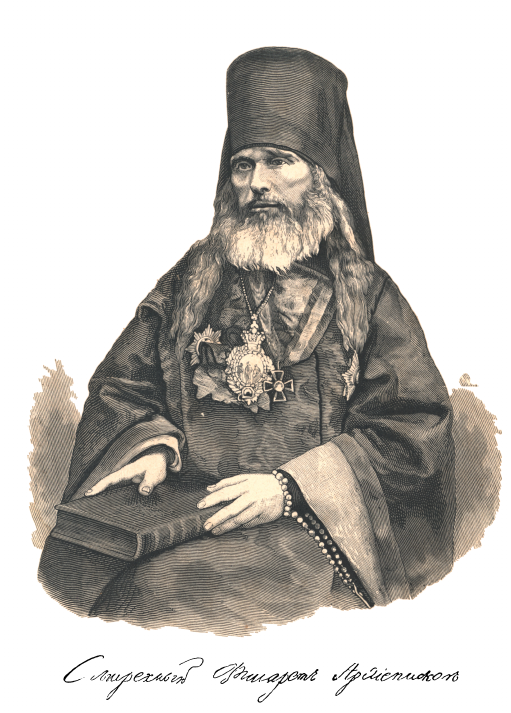
«Жития святых, со сведениями о праздниках Господских и Богородичных, и о явленных чудотворных иконах» свт. Филарета (Гумилевского), архиепископа Черниговского, – это свод, выпущенный после кончины автора петербургским книгопродавцем И. Л. Тузовым. Как пояснил издатель, многие почитатели владыки хотели иметь под одной обложкой 3 его агиографических труда: «Русские святые», «Святые южных славян» и «Святые подвижницы Восточной Церкви». Их объединили и дополнили сведениями из Четьих-Миней свт. Димитрия Ростовского и Пролога. Так появилось собрание на весь год в 12 книгах с изображениями работы академика Ф. Г. Солнцева. Январская часть открывается словом о начале гражданского года и праздником Обрезания Господня. Здесь рассказано о Богоявлении и о пророке Иоанне Предтече. Помещены жития свт. Василия Великого, прп. Феодосия Великого, мц. Татианы, прп. Антония Великого, прп. Максима Исповедника и многих других угодников Божиих – греческих, славянских и русских. Сюда вошли и сказания о явленных образах Пресвятой Богородицы: Елецкой иконе, прославленной в Чернигове, и Ватопедской иконе «Отрада», или «Утешение».
Annotation AB
"The Lives of the Saints, with information concerning the Feasts of the Lord and of the Theotokos, and concerning the wonderworking icons that have been revealed," by St. Philaret (Gumilevsky), Archbishop of Chernigov, is a collection published after the author's death by the St. Petersburg bookseller I. L. Tuzov. As the publisher explained, many venerators of the vladyka wished to have under a single cover his three hagiographical works: "Russian Saints," "Saints of the Southern Slavs," and "Holy Ascetics of the Eastern Church." They were combined and supplemented with information from the Chet'i-Minei of St. Demetrius of Rostov and the Prologue. Thus appeared a collection for the entire year in twelve books, with illustrations by Academician F. G. Solntsev.
The January part opens with a word on the beginning of the civil year and the Feast of the Circumcision of the Lord. Here is told of Theophany and of the Prophet John the Forerunner. The lives of St. Basil the Great, Venerable Theodosius the Great, Martyr Tatiana, Venerable Anthony the Great, Venerable Maximus the Confessor, and many other saints of God—Greek, Slavonic, and Russian—are included. Also included here are accounts of the revealed icons of the Most Holy Theotokos: the Yelets Icon, glorified in Chernigov, and the Vatopedi Icon "Solace," or "Consolation."
Многие любители церковно-исторических сочинений покойного Преосвященного Филарета Черниговского выражали желание иметь произведения «Русские Святые», «Святые южных Славян» и «Подвижницы Восточной Церкви» в одном своде, с присовокуплением сведений, по дням месяцев, и о не упомянутых им святых Православной Церкви по Четьим Минеям святителя Димитрия Ростовского и по Прологам. В настоящем издании сделана попытка к такому своду, причём в выборе имён святых, не упомянутых Филаретом, руководствовались Месяцесловом церковным, помещаемым при Следованной Псалтири. Для полноты свода приложены и сведения о праздниках Господских и Богородичных по труду протоиерея Дебольского: «Дни Богослужения Православной Церкви», откуда взяты дословно и сведения о многих святых.
Many lovers of the church-historical works of the late His Eminence Philaret of Chernigov have expressed the desire to have the works "Russian Saints," "Saints of the Southern Slavs," and "Ascetics of the Eastern Church" in a single compilation, with the addition of information, by day of the month, also concerning those saints of the Orthodox Church not mentioned by him, according to the Cheti-Minei of St. Demetrius of Rostov and the Prologues. In the present edition an attempt has been made at such a compilation, wherein the selection of names of saints not mentioned by Philaret was guided by the Church Menologion appended to the Sledovannaya Psaltir'. For the completeness of the compilation, information concerning the feasts of the Lord and the Theotokos has also been appended, based on the work of Archpriest Debolsky: "Days of Divine Service of the Orthodox Church," from which the information concerning many saints has also been taken verbatim.
Издание снабжено многими изображениями, поясняющими предмет рассказа и представляющими часто копии с достовернейших икон святых. Они сделаны г. академиком Ф.Г. Солнцевым и составляют собственность издателя. Издатель считает нужным предупредить, что за всякие заимствования как текста, так и рисунков из настоящего издания, сверх положенного законами о печати, он будет преследовать по закону.
The edition is furnished with many illustrations, explaining the subject of the narrative and often presenting copies of the most authentic icons of the saints. They have been made by Mr. Academician F.G. Solntsev and are the property of the publisher. The publisher considers it necessary to give notice that for any borrowings, whether of text or of illustrations, from the present edition, beyond what is stipulated by the laws on printing, he will prosecute according to law.
Вслед за настоящим предисловием помещены также и «предисловия» Преосвященного Филарета к упомянутым выше произведениям его. Эти предисловия всего лучше поясняют и пользу «Житий святых», и добросовестность их автора в трудах своих.
Immediately following this preface are also placed the "Prefaces" of His Eminence Philaret to his aforementioned works. These prefaces best explain both the benefit of the "Lives of the Saints" and the conscientiousness of their author in his labors.
Нет надобности много говорить о нужде приводить известность жизнь мужей и жён Русской Церкви, живших до гроба для славы имени Божия. Одно уважение к великому уже обязывает знакомиться и знакомить с великим.
There is no need to say much about the necessity of making known the life of men and women of the Russian Church who lived for the glory of God's name until the grave. Respect for the great alone obliges one to become acquainted with the great and to make it known.
Так прославлять святых – дело святое. Но надобно уменье совершать дело святое. «Да не будет ми лгати на святаго», повторял св. Димитрий, когда писал жития святых. Правило святое для каждого, кто касается пером или кистью до святых. Ложь в деле святом сама по себе неприлична, не у места. Она же может вредить сердцам людей. Западные легенды много повредили Церкви Западной в борьбе её с реформацией: думали возвысить святых тем, что вносили в жизнь их небывалые чудеса и деяния, а этим только оскорбляли святых и дали повод не верить в легендах и действительному.
To glorify saints in this way is a holy work. But skill is needed to accomplish a holy work. "Let me not lie about a saint," St. Demetrius would repeat when he wrote the lives of the saints. A holy rule for everyone who touches upon the saints with pen or brush. A lie in a holy matter is in itself unseemly, out of place. It can also harm the hearts of men. The Western legends greatly harmed the Western Church in its struggle with the Reformation: they thought to exalt the saints by introducing into their lives unheard-of miracles and deeds, but by this they only insulted the saints and gave cause not to believe even the genuine in the legends.
Осуждение, произнесённое св. Церковью над повестью клирика Василия о преп. Евфросине, показывает, что Православная Церковь не терпит лжи и вымыслов в повестях о святых, как скоро открывает их. Потому разборчивость в доверии к старым памятникам при описании святых более нужна, чем при описании событий гражданских.
The condemnation pronounced by the holy Church upon the tale of the cleric Basil concerning the Venerable Euphrosyne shows that the Orthodox Church does not tolerate lies and fictions in narratives about saints, as soon as it discovers them. Therefore, discernment in trusting old monuments when describing saints is more necessary than when describing civil events.
Прежние повествования о святых Русской Церкви писаны – немногими современниками, очень многие – людьми поздними, при том писаны людьми разных дарований и разного образования. Повторять все эти повести без разбора, без поверки, – грешно пред чистой совестью и стыдно перед просвещённым умом.
The former narratives about the saints of the Russian Church were written — a few by contemporaries, very many by later men, and moreover written by men of various gifts and various education. To repeat all these tales indiscriminately, without examination, without verification, is sinful before a pure conscience and shameful before an enlightened mind.
Не оскорбим мы старых повествователей, если на место позднего, не оправдываемого ничем, известия поставим известия других, более древних памятников. Это будет службой правде, которую все должны уважать.
We shall not offend the old narrators if, in place of a later account, justified by nothing, we set accounts from other, more ancient monuments. This will be a service to the truth, which all must respect.
Потому надобно соблюдать осторожность и в том, чтобы не ставить в число святых лица́, не признанного святым со стороны Церкви. В этом отношении служило для нас руководством «Описание о Российских святых, где и в котором граде – поживе и чудеса сотвори», по трём спискам его: по списку Московской духовной академии и по двум спискам Московского общества истории № 212 и 231. Полнее из них по числу лиц второй список общества, но старше и вернее по известиям список академии. Описание составлено в конце XVII в. Само по себе понятно, что это описание надобно было поверять другими памятниками, и со спокойной совестью объявляем, что почти обо всех лицах, внесённых в это описание, отысканы акты духовного управления с предписанием или известием о их почитании церковном.
Therefore, caution must also be observed in not placing among the number of saints persons not recognized as saints by the Church. In this respect, the "Description of Russian Saints, where and in which city they lived and wrought miracles," served as a guide for us, according to three copies of it: according to the copy of the Moscow Theological Academy and according to two copies of the Moscow Society of History, Nos. 212 and 231. The fuller of them in number of persons is the second copy of the Society, but the older and more reliable in information is the copy of the Academy. The Description was compiled at the end of the 17th century. It is self-evident that this Description had to be verified by other monuments, and we declare with a clear conscience that for almost all the persons included in this Description, acts of the spiritual administration have been found with a directive or notice concerning their church veneration.
В недавнее время доставлены нам из Новгорода ещё два списка «книги, обдержащей всех Российских святых». Один из них с самыми краткими описаниями той или другой личности, а иногда с одними именами – и списан в недавнее время с известного текста. Другой «написася от Рождества Христова 1718 г. июня в 20 д.», по надписи принадлежит Отенскому монастырю, и подарен «от усердствующаго на пользу всея братии, для чтения». Этот список сходен со списком Общ. ист. № 231, но не во всём. В нём видно старание о лучших выражениях и о большей верности исторической; нередко встречаются заметки: «службы нет, но есть тропарь», или есть служба, или мощи под спудом.
In recent times, two more copies of the "book containing all the Russian Saints" have been delivered to us from Novgorod. One of them has the briefest descriptions of one or another person, and sometimes only names — and was copied in recent times from a known text. The other "was written from the Nativity of Christ 1718, June 20th day," according to the inscription belongs to the Otensky Monastery, and was given "from one zealous for the benefit of the whole brotherhood, for reading." This copy is similar to the copy of the Society of History No. 231, but not in everything. In it, one sees an effort at better expressions and greater historical accuracy; notes are not infrequently encountered: "no service, but there is a troparion," or there is a service, or the relics are under a bushel.
Особенно это видно при описании святых «великого Новгорода». Например: «св. Лука положен бысть за св. Софиею: мощи же его обретены были в л. 7066 (1558) мар. 28 и принесены в соборную церковь св. Софии и положены в Мартириевой паперти... Св. Симеон архиепископ – положен в Мартириевой паперти подле Мартирия архиепископа, мощи под спудом». О Поликарпе Брянском: «преп. Поликарп, игумен Спасского монастыря, иже в Брянске, преставися в л. 7007 (1499) февр. в 23 д.». В Отенском списке предисловие говорит о святых: «от оных овы убо свидетельствованы соборне и памяти их св. Церковь праздновати прият летне и святые их мощи верху земли почивают всеми зримы: овы же под спудом почивают, обаче в чудесех просияша; памяти же их святей Церкви не предашася праздновати выну (чит. повсюду), но токмо идеже погребени суть святые их мощи. И службами овы убо почтени, овы же не почтени. Инии в чудесех преславно просияша, но малым некиим от жития их или от чудодейства признанием, обаче же и тии Богу угодиша и Тому единому усердно от души работаша и венцы почести от Него противу трудов своих восприяша.
This is especially evident in the description of the saints of "Great Novgorod." For example: "St. Luke was laid behind St. Sophia: his relics were uncovered in the year 7066 (1558) March 28 and brought to the cathedral church of St. Sophia and placed in the Martyrion porch... St. Simeon the Archbishop — laid in the Martyrion porch beside Archbishop Martyrion, relics under a bushel." Concerning Polycarp of Bryansk: "The Venerable Polycarp, abbot of the Spassky Monastery in Bryansk, reposed in the year 7007 (1499) February 23rd day." In the Otensky copy, the preface speaks of the saints: "of these, some were testified to by a council and their memory was accepted by the holy Church to be celebrated annually, and their holy relics rest above ground, visible to all: others rest under a bushel, yet they shone forth in miracles; their memory, however, was not given to the holy Church to be celebrated constantly (read: everywhere), but only where their holy relics are buried. And some are honored with services, others are not. Others shone forth gloriously in miracles, but with little recognition of their life or of their wonderworking; yet even these pleased God and served Him alone diligently from the soul and received crowns of honor from Him according to their labors.
Мы же зде и сих во едино собравше положихом ради летописных повествований, общия ради пользы благочестивым и православным христианам».
We here have gathered these also into one and placed them for the sake of chronicle narratives, for the common benefit of pious and Orthodox Christians."
Этого предисловия нет в других известных нам списках. Не сомневаемся, что найдутся и другие списки «книги о Российских святых». Но и по найденным очевидно, что эта книга считалась полезной и достойной общего употребления как в Москве, так и в Новгороде, главных центрах тогдашней Русской жизни, и отзываться о ней унизительно не будет тот, кто уважает память предков.
This preface is not found in the other copies known to us. We do not doubt that other copies of the "book about Russian Saints" will be found. But even from those found, it is evident that this book was considered useful and worthy of general use both in Moscow and in Novgorod, the main centers of Russian life at that time, and he who respects the memory of his forefathers will not speak disparagingly of it.
В отклонение грешных толков сочинитель считает нужным заметить, что о Русских святых стал он собирать сведения ещё с того самого года, как вышел «Словарь о святых, прославленных в Российской Церкви». СПб. 1836, т. е. за 20 лет прежде того, как стали выходить известные «Жития святых Российской Церкви». Недоверчивому он может показать и экземпляр словаря, переплетённый тогда же с белыми листами, а теперь уже исписанными в разные времена. С того ещё времени он собирал заметки, при чтении летописей и рукописных житий, попадавшихся в разных библиотеках.
To avert sinful interpretations, the author considers it necessary to note that he began to collect information about Russian Saints from the very year that the "Dictionary of Saints Glorified in the Russian Church" (St. Petersburg, 1836) appeared, i.e., 20 years before the well-known "Lives of the Saints of the Russian Church" began to be published. To the distrustful, he can show a copy of the dictionary, bound at that very time with blank pages, and now already written upon at various times. From that time onward, he collected notes while reading chronicles and manuscript lives that came his way in various libraries.
Относительно старинных житий надобно сказать, что некоторые из них были исправляемы и дополняемы не раз. Сочинитель не считает нужным каждый раз указывать на разные редакции того или другого жития, равно не указывает на все списки житий, какие случалось читать ему. Указания его всего чаще ограничиваются библиотеками такими, где можно легко каждому поверить слова сочинителя, – библиотеками Толстого, Румянцева, Царского. Это говорится с тем, чтобы отклонить несправедливые заключения, какие иной, пожалуй, поспешит дозволить себе не к чести своей особы. Напр. Каллистратово житие прав. Иулиании доставлено было сочинителю в списке, где, как заметно, сам же Каллистрат прибавил известие о некоторых посмертных чудесах.
Concerning the old lives, it must be said that some of them were corrected and supplemented more than once. The author does not consider it necessary to point out each time the different redactions of one or another life, nor does he point out all the copies of lives that he happened to read. His references are most often limited to such libraries where everyone can easily verify the author's words — the libraries of Tolstoy, Rumyantsev, and Tsarsky. This is said in order to avert unjust conclusions which someone, perhaps, might hasten to allow himself, not to the credit of his own person. For example, the life of the Righteous Juliana by Callistratus was delivered to the author in a copy where, as is noticeable, Callistratus himself added information about some posthumous miracles.
Сочинитель повторяет ещё раз, что не считает своего труда безгрешным. Для того, чтобы составлены были жития Русских святых в возможно совершенном виде, необходимы местные исследования о них. По этому предмету он предлагал, кому следует, – издавать древние жития (но не новые) северных святых при Петербургской академии, средней России – при Московской, южной – при Киевской, восточной – при Казанской, с тем, чтобы издания сопровождались критическими исследованиями. Вследствие сего, если не ошибаемся, при Казанской академии стали издавать древние жития. Если в других местах вместо того лучшим считают заниматься чем-нибудь другим: это дело уже не нашей совести.
The author repeats once more that he does not consider his work sinless. In order for the lives of the Russian Saints to be compiled in as perfect a form as possible, local investigations concerning them are necessary. On this subject, he proposed to those concerned — to publish the ancient lives (but not new ones) of the northern saints at the St. Petersburg Academy, of central Russia at the Moscow Academy, of the south at the Kiev Academy, of the east at the Kazan Academy, with the condition that the publications be accompanied by critical studies. As a result of this, if we are not mistaken, the Kazan Academy began to publish ancient lives. If elsewhere, instead of this, they consider it better to occupy themselves with something else: this is already a matter not for our conscience.
Из старинных житий сочинитель старался удержать все исторические черты святого или его времени. Но такие слова, каковы: «от юного возраста устранялся от детских игр», или «от юности обучашеся благочестию» и т. д. встретите почти в каждом житии, и потому ошибкой признаётся выдавать их за исторические черты, тогда как это только приёмы биографа позднего. Ошибкой считает сочинитель повторять ныне и те приёмы биографов, которые казались назидательными в своё время и которые ныне могут послужить только к соблазну. Сочинитель не считает обязательными для себя те объяснения, какие поздний биограф давал тем или другим происшествиям или его личные размышления. Житие нынешнего времени должно быть написано так, чтобы оно было поучительно и назидательно для людей нынешнего времени.
From the ancient lives, the author strove to retain all the historical features of the saint or of his time. But such phrases as: “from a young age he avoided children’s games,” or “from youth he learned piety,” and so forth, you will encounter in almost every life, and therefore it is considered an error to pass them off as historical features, when they are merely the devices of a later biographer. The author also considers it an error to repeat nowadays those devices of biographers which seemed edifying in their own time and which today can serve only as a stumbling block. The author does not consider himself bound by those explanations which a later biographer gave to various events or by his personal reflections. A life for the present time must be written so that it is instructive and edifying for the people of the present time.
В этом убеждении сочинитель некоторые известия биографов проходил молчанием и дополнял старинные сказания такими известиями, о которых нет и намёка у древних, или размышлениями, которые вызывает позднее время.
In this conviction, the author passed over in silence certain accounts of the biographers and supplemented the ancient narratives with such information as is not even hinted at by the ancients, or with reflections which a later age calls forth.
Сочинитель искренно благодарен будет за дельные указания на недостатки труда его; а за недельные только братски пожалеет об их авторе, так как они не служили бы к чести автора; за личные мнения вступать в спор, с кем бы то ни было, он не намерен. Пусть каждый поступает по своей совести, не забывая того, что все мы должны дать отчёт всемирному Судии Господу Иисусу.
The author will be sincerely grateful for well-founded indications of the shortcomings of his work; but for unfounded ones he will only feel brotherly pity for their author, since they would not redound to the author’s honor. He does not intend to enter into dispute over personal opinions with anyone whomsoever. Let each act according to his own conscience, not forgetting that we must all give account to the universal Judge, the Lord Jesus.
Все другие принадлежности полезного описания святых не считаем мы столько важными, сколько верность правде. Потому и не касаемся их здесь, хотя и старались, по мере сил, сохранять их в своём описании.
All other attributes of a useful description of the saints we do not consider as important as fidelity to the truth. Therefore we do not touch upon them here, although we have striven, to the best of our ability, to preserve them in our description.
Набожный сочинитель житий святых Российской Церкви (СПб. 1852–1859 г.) включил в своё описание нескольких святых Славян южных, но весьма немногих, не более шести. В «Афонском патерике» (СПб. 1860 г.) описаны святые Славяне, подвизавшиеся на Афоне. Самое важное издание для истории святых Славян – «Сербляк», Белград 1861 г. Издатели говорят, что они пополнили прежнее издание «Сербляка» не только синаксарями и двумя акафистами, но и новыми службами. У них полные жития святых, известные в рукописных сербляках, заменены краткими. Для их цели это нужно; но по многим причинам надобно жалеть, что не напечатаны полные жития. О святых, живших прежде XI в., нет и помина, как и в тех двух изданиях. Итак, вот пока все печатные описания святых Славян южных.
The pious author of the Lives of the Saints of the Russian Church (St. Petersburg, 1852–1859) included in his description several saints of the Southern Slavs, but very few, no more than six. In the “Athonic Patericon” (St. Petersburg, 1860) are described the Slavic saints who struggled on Mount Athos. The most important publication for the history of the Slavic saints is the “Serbljak,” Belgrade, 1861. The editors state that they have supplemented the previous edition of the “Serbljak” not only with synaxaria and two akathists, but also with new services. In their work, the full lives of the saints, known in manuscript Serbljaks, have been replaced by brief ones. For their purpose this was necessary; but for many reasons it is to be regretted that the full lives were not printed. Of saints who lived before the 11th century, there is no mention, just as in those two earlier editions. So, these are, for now, all the printed descriptions of the saints of the Southern Slavs.
Между тем святые южных Славян рождены и воспитаны одной и той же благодатью Христовой, которая воспитала святых христиан Греческих. Потому естественно, что некоторые из них также велики и дивны, как и великие Греческой Церкви. Как величие характеров, так величие благодати Божией, явившейся в святых Славянских, вполне достойны изучения. Для Славян изучение жизни святых Славян особенно нужно: в жизни святых Славян Евангельское благочестие приложено к условиям Славянской жизни, к тем условиям, которые редко встречаются для Грека и неизбежны для Славянина; святые Славянские – преимущественно руководители в жизни для христиан Славянских.
Meanwhile, the saints of the Southern Slavs were born and nurtured by the same grace of Christ which nurtured the Greek Christian saints. Hence it is natural that some of them are as great and wondrous as the great saints of the Greek Church. Both the greatness of their characters and the greatness of the grace of God manifested in the Slavic saints are fully worthy of study. For Slavs, the study of the lives of the Slavic saints is especially necessary: in the lives of the Slavic saints, evangelical piety is applied to the conditions of Slavic life, to those conditions which are rarely encountered by a Greek and are unavoidable for a Slav; the Slavic saints are preëminently guides in life for Slavic Christians.
Напр., в службе св. князю Стефану Дечанскому (Белград. 1850 г.) упоминаются Дечанские подвижники Евфимий и Нестор; но о них пока ничего более не известно. Сербляк также жалеет, что некоторые святые известны только по именам.
For example, in the service to the holy Prince Stephen of Dečani (Belgrade, 1850), the Dečani ascetics Euthymius and Nestor are mentioned; but of them nothing more is yet known. The Serbljak also laments that some saints are known only by name.
Чтобы вписать святых Славян южных сколько-нибудь удовлетворительно, кроме сведений о самих святых, требуются сведения и о гражданской и о церковной жизни южных Славян. А как мало ещё обработана и гражданская и церковная история южных Славян! Потому дозволительно думать, что не будут слишком строги в суде о недостатках предлагаемого описания.
In order to describe the saints of the Southern Slavs even somewhat satisfactorily, besides information about the saints themselves, information is also required about the civil and ecclesiastical life of the Southern Slavs. And how little the civil and ecclesiastical history of the Southern Slavs has yet been worked out! Therefore it is permissible to think that the judgment on the shortcomings of the present description will not be too severe.
«Сияет преподобных жен сословие, яже уязвившеся любовию и добротою Христа жениха своего, во след Его текоша, последующе стопам Его Божественным. Сего ради возмездие трудов своих на небесех восприимше, с лики ангельскими и преподобных веселятся, молящеся непрестанно Христу Богу нашему, еже спастися всем нам».
“The assembly of venerable women shines forth, who, wounded by the love and beauty of Christ, their Bridegroom, hastened after Him, following in His divine footsteps. Therefore, having received the reward of their labors in heaven, they rejoice with the angelic hosts and the venerable ones, praying unceasingly to Christ our God for the salvation of us all.”
«В царстве льдов, – говорит восторженный почитатель смелого путешественника по Альпам, – всё изменчиво: где вчера вы шли по снежной арке, перекинувшейся через пропасть, сегодня не можете пройти: арка рухнула и перед вами бездна... Идёте далее: от одного неверного глаза зависит ваша жизнь... Здесь всё зависит от крепости ваших мускулов, от силы вашей воли, от ловкости, от уменья невозможное сделать возможным, от сознательного мужества... Вот, перед вами отвесная стена в несколько сот футов, на которую надобно взобраться... И вы начинаете взлезать, заметив углубление в стене, за которое можно уцепиться пальцами; с невероятными усилиями, при помощи подкованных башмаков и подсаживаний, вы взобрались высоко и висите над бездною... Вот небольшой выступ. Вы укрепляете на нём верёвку, поднимаетесь на ноги, упираетесь ногою о выступ... Малейшее дрожание ваших мышц и – не только вы погибли, но погибли и те, которым вы помогаете взобраться по верёвке» и проч., и проч.
“In the kingdom of ice,” says an enthusiastic admirer of a bold traveler through the Alps, “everything is changeable: where yesterday you walked over a snow arch thrown across a chasm, today you cannot pass: the arch has collapsed and before you is an abyss... You go further: your life depends on one unsteady glance... Here everything depends on the strength of your muscles, on the power of your will, on dexterity, on the ability to make the impossible possible, on conscious courage... Before you is a sheer wall several hundred feet high, which you must climb... And you begin to ascend, having noticed a hollow in the wall by which you can grip with your fingers; with incredible effort, with the help of spiked boots and hoisting, you have climbed high and are hanging over the abyss... Here is a small ledge. You fasten a rope on it, raise yourself to your feet, brace your foot against the ledge... The slightest trembling of your muscles and—not only are you lost, but those whom you are helping to climb up the rope are lost also,” and so forth, and so forth.
То ли дело – борцы с духовной природой! Дух крепче скал каменных и изменчивее снежных гор. Там борьба из-за чего?.. Здесь – за вечную долю, за славу Того, Кто выше всего!.. В постепенном приближении всего человека к Богу, в поступательном возрастании „от силы в силу“ на пути нравственном – вот в чём заключается преимущество, отличающее человека от животного и необходимое для человека, как созданного по образу Божию. Без успехов в нравственности успех в науках – не успех желаемый, и лоск наружного образования (цивилизация) – не просвещение истинное. Это видно в опыте. По милости непризванных благодетелей человечества, народная нравственность падает, нищенство увеличивается, воровство, разбой, душегубство, разврат, кощунство, святотатство растут и – того гляди – общественная жизнь разразится страшной катастрофой...
How different it is with those who struggle with the spiritual nature! The spirit is stronger than stone cliffs and more changeable than snowy mountains. There, the struggle is for what?.. Here—for the eternal portion, for the glory of Him Who is above all!.. In the gradual approach of the whole man to God, in the progressive growth “from strength to strength” on the moral path—this is wherein lies the advantage that distinguishes man from the animal and is necessary for man, as one created in the image of God. Without progress in morality, progress in the sciences is not a desirable progress, and the veneer of external education (civilization) is not true enlightenment. This is evident in experience. By the mercy of uninvited benefactors of mankind, popular morality is falling, beggary is increasing, theft, brigandage, murder, debauchery, blasphemy, sacrilege are growing, and—look—public life is about to erupt in a terrible catastrophe...
Во Христе Иисусе нет разницы между мужчиной и женщиной, в том отношении, что для всех готова небесная помощь. Но – благодать Божия, при спасении человека, не уничтожает сил его, а только исцеляет и укрепляет. Потому остаётся и разница между мужской и женской организацией спасаемых – разница, требующая неодинаковых приёмов для спасения.
In Jesus Christ there is no difference between man and woman, in the sense that heavenly help is ready for all. But the grace of God, in the salvation of man, does not destroy his powers, but only heals and strengthens them. Therefore the difference between the male and female organization of those being saved remains—a difference requiring unequal methods for salvation.
Жития святых, чудных подвижниц Божиих, особенно могут быть полезны для дев и жён, ищущих спасения. Это – образцы, по которым они должны поверять жизнь свою и с которых должны брать уроки для частных своих состояний.
The lives of the saints, the wondrous ascetics of God, can be especially useful for maidens and women seeking salvation. They are models by which they ought to examine their own lives and from which they ought to take lessons for their particular circumstances.
Пишущему эти строки давно доставлено было, в Русском переводе с Французского, описание восточных дев и жён-пустынниц. Но только недавно довелось пересмотреть сочинение Мишель-Анж-Мареня. Главная мысль прекрасная! Есть хорошее и в её выполнении. Марень описывает жизнь отшельниц по местам подвигов их. Описание его полнее, чем сочинение предшественника его Виллефора: Les vies de saints solitaires. Amsterdam, 1714. И однако описание Мареня оказалось очень и очень неудовлетворительным. Не говорим о других недостатках, например, о недостатке отчётливости и близости к древнему тексту известий, Марень не знает весьма многих подвижниц Восточной Церкви.
The writer of these lines was long ago supplied, in a Russian translation from the French, with a description of the Eastern virgins and women-hermits. But only recently did he have the opportunity to examine the work of Michel-Ange Marin. The main idea is excellent! There is also good in its execution. Marin describes the life of the recluses according to the places of their struggles. His description is fuller than the work of his predecessor Villefore: Les vies de saints solitaires. Amsterdam, 1714. And yet Marin’s description proved to be very, very unsatisfactory. Not to speak of other shortcomings, for example, the lack of clarity and closeness to the ancient text of the accounts, Marin does not know very many ascetics of the Eastern Church.
Главный указатель на образцы подвижничества – церковная служба сырной субботы. Здесь показаны по именам великие подвижницы. В той же службе читаем ещё: «да воспоется и аще кая другая просия от жен в пощении». Потому было бы ошибкой ограничивать описание подвижниц именами, показанными в службе.
The chief index of the models of asceticism is the church service of Cheese-Fare Saturday. Here the great ascetics are shown by name. In the same service we also read: “let there be sung also whatever other woman has shone forth in fasting.”* Therefore it would be an error to limit the description of ascetics to the names shown in the service.
Лютер имел совесть кричать, что подвижничество девственное началось только с IV века. Но несомненно, что говорил он неправду, в угоду людским страстям и во вред христианству. Тем не менее, так как подвижницы, окончившие жизнь страдальческой смертью за веру, известны в Церкви с особым именем св. мучениц, – при обзоре св. подвижниц не будем мы говорить о житии подвижниц-мучениц.
Luther had the conscience to cry out that virginal asceticism began only in the 4th century. But it is beyond doubt that he spoke untruth, to gratify human passions and to the detriment of Christianity. Nevertheless, since ascetics who ended their lives by a martyr’s death for the faith are known in the Church under the special name of holy martyresses, in our survey of holy ascetics we shall not speak of the lives of the ascetic-martyresses.
В укор православию говорили, будто оно только подвиг поста и девства считает подвигом спасительным. Нет, христианское подвижничество, по разумению православия, не так тесно, как говорили не понимавшее ни православия, ни подвижничества.
To the reproach of Orthodoxy it has been said that it considers only the feat of fasting and virginity as a saving feat. No, Christian asceticism, according to the understanding of Orthodoxy, is not so narrow as those who understood neither Orthodoxy nor asceticism have said.
Обозрение св. подвижниц Востока оканчивается X веком потому, что подвиги подвижниц последующего времени скрываются в недоступных Греческих рукописях.
The survey of the holy ascetics of the East ends with the 10th century because the feats of the ascetics of the subsequent time are hidden in inaccessible Greek manuscripts.