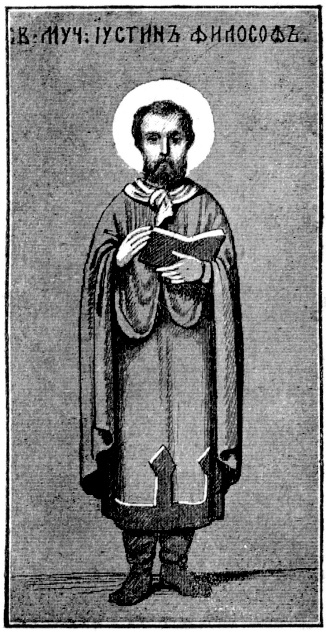
Иустин родился около 105 г. в Флавии-Неаполе (древнем Сихеме, в Палестине). Родители его были язычники, и потому он получил воспитание в среде, чуждой влиянию христианского учения, но душа его, «сама по себе христианка», как определяет знаменитый писатель Тертуллиан свойство человеческой души вообще, не удовлетворилась полученным Иустином обширным научным образованием. Языческая философия не удовлетворила души его, жаждавшей высшей истины, жаждавшей познания истинного Бога; из учения древних философских школ: 1) стоиков, утверждавших, что человек, живя для добродетели, в себе одном должен искать силу побеждать страсти и переносить тяготы житейские, – не искавших Бога и не считавших Его нужным, – Иустин ничего не мог узнать; 2) перипатетик выразил ему желание получать плату за преподавание мудрости и таким небескорыстным отношением к высокому предмету оттолкнул Иустина; 3) пифагореец, к которому обратился Иустин, потребовал от него знания музыки, астрономии, географии, как наук подготовительных для восприятия высших тайн знания, и не принял Иустина в число своих учеников, потому что ему не были известны эти науки. – Наконец, познакомившись с учением Платона, Иустин почувствовал некоторое удовлетворение: «мне нравились, – говорит он, – размышления о предметах мира невещественного; созерцание идей окрыляло мой ум; в короткое время я успел столько, что начал считать себя мудрым и надеялся вскоре созерцать Самого Бога!»
Justin was born around the year 105 in Flavia Neapolis (ancient Shechem, in Palestine). His parents were pagans, and therefore he received an upbringing in an environment foreign to the influence of Christian teaching; but his soul, "by nature Christian," as the famous writer Tertullian defines the property of the human soul in general, was not satisfied with the extensive scientific education Justin had obtained. Pagan philosophy did not satisfy his soul, which thirsted for the highest truth, which thirsted for knowledge of the true God. From the teachings of the ancient philosophical schools: 1) the Stoics, who asserted that man, living for virtue, must seek in himself alone the strength to conquer passions and bear the burdens of life—who did not seek God and did not consider Him necessary—Justin could learn nothing; 2) a Peripatetic expressed to him the desire to receive payment for teaching wisdom, and by such a mercenary attitude toward a lofty subject repelled Justin; 3) a Pythagorean, to whom Justin turned, demanded of him knowledge of music, astronomy, and geography as preparatory sciences for the reception of the higher mysteries of knowledge, and did not accept Justin among his disciples because he was not acquainted with these sciences. Finally, having become acquainted with the teaching of Plato, Justin felt some satisfaction: "I was pleased," he says, "with reflections on the subjects of the immaterial world; the contemplation of ideas gave wings to my mind; in a short time I succeeded so much that I began to consider myself wise and hoped soon to contemplate God Himself!"
Однако и в учении Платона не нашёл Иустин полного разрешения своих недоумений о Боге и судьбе человеческой; он вполне успокоился лишь тогда, когда ему пришлось услышать слово истины от последователя христианского учения. Однажды, прогуливаясь в уединённом месте на берегу моря, где он любил предаваться своим размышлениям, встретился он с неизвестным ему старцем, величаво-благообразная наружность которого внушила ему такое доверие, что он пожелал вступить с ним в разговор. Иустин сам, в одной книге своей: «Разговор с Трифоном Иудеянином», рассказывает об этой встрече и передаёт, как среди беседы их они дошли до главного предмета обычных размышлений его – Боговедения. Старец сказал языческому философу, что человек своим естественным разумом не может дойти до постижения Бога, что ни один из мудрейших языческих философов не обладает истинным познанием Бога, что истина о Боге известна только тем Боговдохновенным людям, писания которых сохраняются у христиан. – «Во времена отдалённые от нас, – открывал Иустину старец, – древнее всех философов жили мужи святые, праведные и угодные Богу, которых звали пророками. Они говорили, будучи научены Духом Святым, и предсказывали то, что ныне и сбылось. Они одни видели и возвестили людям истину; не зная страха, не ища себе славы, они говорили то, что слышали и видели, когда были исполнены Духа Святого. Писания их существуют поныне и содержат то, что должно знать истинному философу... Они прославляли Творца всего, Бога и Отца и возвещали о посланном от Него Христе, Сыне Его».
However, even in the teaching of Plato Justin did not find a complete resolution of his perplexities concerning God and human destiny; he became fully at peace only when he happened to hear the word of truth from a follower of Christian teaching. Once, while walking in a solitary place by the seashore, where he loved to give himself up to his reflections, he met an unknown elder, whose majestic and comely appearance inspired him with such trust that he desired to enter into conversation with him. Justin himself, in one of his books, "Dialogue with Trypho the Jew," relates this meeting and tells how, in the course of their conversation, they came to the main subject of his usual reflections—the knowledge of God. The elder said to the pagan philosopher that man by his natural reason cannot attain to the comprehension of God, that not one of the wisest pagan philosophers possesses true knowledge of God, that the truth about God is known only to those God-inspired men whose writings are preserved among Christians. "In times far distant from us," the elder revealed to Justin, "there lived men, holy, righteous, and pleasing to God, more ancient than all philosophers, who were called prophets. They spoke, being taught by the Holy Spirit, and foretold that which has now come to pass. They alone saw and proclaimed the truth to men; knowing no fear, seeking no glory for themselves, they spoke what they heard and saw when they were filled with the Holy Spirit. Their writings exist to this day and contain what a true philosopher ought to know... They glorified the Creator of all, God and Father, and proclaimed Christ, His Son, sent from Him."
Старец прибавил, что христиане готовы поведать истину всякому желающему, «только прежде всего, – пояснил он Иустину, – молись прилежно истинному Богу, да отверзет Он тебе двери света, ибо никто не в силах ни уведать, ни уразуметь Существа Божественного, если Сам Бог не соизволит открыть ему его. Открывает же Он всякому, ищущему Его молитвой и приближающемуся к Нему любовью»! Сказав это, старец скрылся, и с тех пор Иустин никогда не встречал его, но слова его глубоко запали в душу, жаждущую истины... Тогда, – говорит Иустин, – возгорелся во мне огонь и воспылала любовь к пророкам и к тем людям, которые были любезны Христу. Старец ушёл, а я стал размышлять о словах его; я чувствовал, что теперь-то нашёл единую истинную и спасительную философию»1. И под влиянием вновь открытого ему, увлекаясь собственным неудержимым стремлением к истине, Иустин занялся изучением св. Писания и в нём нашёл разрешение всех вопросов, томивших его. Он пожелал также познакомиться с жизнью христиан, о которых известно ему было только по нелепым слухам, ходившим о них между язычниками. С удивлением встретил он в них такие высокие добродетели, которым ничего подобного нельзя было встретить у язычников или Иудеев. Это ещё более укрепило в нём веру в новое учение и на 30-м году своей жизни он принял св. крещение и сделался ревностным христианином. Он предпринял путешествие с целью сообщать и другим воспринятое им учение; прибыв в Рим, открыл там христианское училище и все свои знания, весь ум свой посвятил на служение делу христианской истины. «Кто может возвещать истину и не возвещает, тот будет осуждён Богом», – писал он, и действовал сообразно с этими словами, увлекая многочисленных учеников своей школы своими мудрыми и красноречивыми поучениями. Нередко приходилось ему оспаривать заблуждения языческих философов и еретиков, и он с твёрдостью опровергал их изустно и письменно.
The elder added that Christians are ready to proclaim the truth to everyone who desires it, "only first of all," he explained to Justin, "pray diligently to the true God, that He may open for you the doors of light, for no one is able either to perceive or to comprehend the Divine Being unless God Himself deigns to reveal it to him. And He reveals it to everyone who seeks Him by prayer and draws near to Him by love!" Having said this, the elder disappeared, and from that time Justin never met him again; but his words sank deep into his soul, which thirsted for truth... Then, says Justin, "a fire was kindled within me, and love for the prophets and for those men who were beloved of Christ blazed up. The elder departed, and I began to reflect on his words; I felt that now I had found the one true and saving philosophy."1 And under the influence of what had been newly revealed to him, carried away by his own irrepressible striving for truth, Justin devoted himself to the study of Holy Scripture and in it found the resolution of all the questions that had tormented him. He also wished to become acquainted with the life of Christians, of whom he knew only through the absurd rumors circulating about them among the pagans. With astonishment he encountered in them such lofty virtues, to which nothing similar could be found among pagans or Jews. This further strengthened in him faith in the new teaching, and in the thirtieth year of his life he received holy Baptism and became a zealous Christian. He undertook a journey with the aim of communicating to others the teaching he had received; having arrived in Rome, he opened a Christian school there and devoted all his knowledge, all his mind, to the service of the cause of Christian truth. "Whoever can proclaim the truth and does not proclaim it will be condemned by God," he wrote, and he acted in accordance with these words, attracting numerous disciples of his school by his wise and eloquent teachings. Not infrequently he had to dispute the errors of pagan philosophers and heretics, and he firmly refuted them orally and in writing.
Когда император Антонин открыл гонение на христиан, то Иустин подал ему лично письменную «апологию», в которой он смелой твёрдо защищал Христиане. «К вам (императору, сыну его, к сенату и народу Римскому) – говорит он, – обращаюсь я с моим словом и прошением за людей из всех народов, несправедливо ненавидимых и гонимых... Вы называетесь благочестивыми и философами, блюстителями правды... Теперь окажется, таковы ли вы на самом деле. Мы предстали перед вами не с тем, чтобы льстить вам, потребовать, чтобы вы судили нас по строгом и тщательном исследовании, а не руководствовались предубеждением или угодливостью людям суеверным, не увлекались неразумным порывом или давней, утвердившеюся в вас худой молвой... Чрез это вы произнесли бы приговор только против самих себя. Что касается до нас, то мы убеждены, что ни от кого не можем потерпеть вреда, если не обличат нас в худом деле... Вы можете умерщвлять нас, но вреда нам сделать не можете».
When the Emperor Antoninus opened a persecution against Christians, Justin personally presented to him a written "Apology," in which he defended Christians with bold firmness. "To you (the emperor, his son, the senate, and the Roman people)," he says, "I address my word and petition on behalf of men from all nations, unjustly hated and persecuted... You are called pious and philosophers, guardians of justice... Now it will be seen whether you are such in reality. We have come before you not to flatter you, but to demand that you judge us after strict and careful investigation, and not be guided by prejudice or by servility to superstitious people, nor be carried away by an unreasonable impulse or by an old evil rumor that has taken root in you... By this you would pronounce sentence only against yourselves. As for us, we are convinced that we can suffer harm from no one, unless we are convicted of an evil deed... You may kill us, but you cannot harm us."
«Христиан гнали за одноимя «христианин». Но за одно имя, без прикосновенных ему дел, не осуждают и не хвалят... Нас называют безбожниками, – сознаёмся, что мы – безбожники в отношении к мнимым богам, но не в отношении к Богу истиннейшему, Отцу правды и всех добродетелей и чистому от всякого зла... Мы чтим благоговейным поклонением Его и Его Сына, а равно и Дух Пророчественный; воздаём Ему почесть словом и истиной, открыто преподавая всякому желающему поучиться то, чему сами научены.
"Christians were persecuted for the mere name 'Christian.' But for a mere name, without the deeds pertaining to it, no one is condemned or praised... We are called atheists—we confess that we are atheists with respect to the supposed gods, but not with respect to the most true God, the Father of righteousness and all virtues, and pure from all evil... We worship with reverent adoration Him and His Son, and likewise the Prophetic Spirit; we render Him honor with word and truth, openly teaching everyone who wishes to learn what we ourselves have been taught.
Мы не приносим жертв; нам передано, что Бог не нуждается в вещественных приношениях от людей, – Он, Который, как мы видим, Сам подаёт всё нам. Мы научены, убеждены и веруем, что Ему приятны только те, которые подражают Ему в Его совершенствах... Он не требует крови, и возлияний, и курений, мы славим Его по мере сил, словом молитвы и благодарения во всех приношениях наших... Данное Им для нашего пропитания мы не истребляем огнём, но употребляем для себя и для нуждающихся, а Ему возносим благодарность за то, что мы сотворены, за все средства к благосостоянию нашему, за перемены времён; Ему мы воссылаем прошения о том, чтобы нам воскреснуть для нетления, по вере в Него.
We do not offer sacrifices; we have been taught that God has no need of material offerings from men—He who, as we see, Himself supplies everything to us. We have been taught, are convinced, and believe that only those are pleasing to Him who imitate Him in His perfections... He does not require blood, libations, or incense; we glorify Him according to our strength, with the word of prayer and thanksgiving in all our offerings... What He has given for our sustenance we do not consume with fire, but use for ourselves and for the needy, and we offer up thanksgiving to Him for our creation, for all the means of our well-being, for the changes of seasons; to Him we send up petitions that we may rise again to incorruption, through faith in Him.
В нашей воле – отречься при допросах; только мы не хотим жить обманом. Мы желаем вечной и чистой жизни, мы стремимся к пребыванию с Богом.
It is in our power to deny under interrogation; only we do not wish to live by deceit. We desire eternal and pure life; we strive for abiding with God.
Когда вы слышите, что мы ожидаем царства, то напрасно полагаете, что мы говорим о каком-либо царстве земном, между тем, как мы говорим о царствовании с Богом: это ясно из того, что при допросе, мы признаёмся, что мы – христиане, хотя знаем, что нам за то предстоит смертная казнь.
When you hear that we await a kingdom, you mistakenly suppose that we speak of some earthly kingdom, whereas we speak of reigning with God: this is clear from the fact that under interrogation we confess that we are Christians, although we know that death by execution awaits us for this.
Что же касается до общественного спокойствия, мы содействуем и способствуем в том более всех людей, ибо мы веруем, что никто не может сокрыться от воли Господа, ни злодей, ни корыстолюбец, ни злоумышленник, ни праведник, а и что Господь воздаст нам по делам нашим вечное мучение или спасение; между тем, как язычники знают, что от вас, как от людей, можно скрыть преступления... Мы везде стараемся прежде всего платить подати и повинности поставленным от вас сборщикам, ибо такова заповедь Христа... Мы поклоняемся единому Богу, но в других отношениях и вам охотно служим, признавая вас царями и правителями людей и молясь о том, чтобы вы, при царской власти, были одарены и мудростью».
As for public tranquility, we promote and contribute to it more than all men, for we believe that no one can hide from the will of the Lord—neither the evildoer, nor the covetous, nor the conspirator, nor the righteous—and that the Lord will render to us according to our deeds, either eternal punishment or salvation; whereas pagans know that crimes can be hidden from you, as from men... Everywhere we strive first of all to pay taxes and duties to the collectors appointed by you, for such is the commandment of Christ... We worship the one God, but in other respects we willingly serve you as well, recognizing you as kings and rulers of men and praying that you, possessing royal authority, may also be endowed with wisdom."
В апологии Иустина подробно описано, как совершались таинства Крещения, Евхаристии, как происходило Богослужение. Об Евхаристии2 он говорит: «мы не принимаем пищу сию, как простой хлеб и вино, но мы научены и веруем, что пища эта, над которой произнесено благодарение, при посредстве молитвы слова Христа, по преложении питающая нашу кровь и плоть, есть Кровь и Плоть Самого воплотившегося Иисуса».
In Justin's Apology it is described in detail how the Mysteries of Baptism and the Eucharist were celebrated, and how Divine worship was conducted. Concerning the Eucharist2 he says: "We do not receive this food as ordinary bread and ordinary wine; but we have been taught and believe that this food, over which thanksgiving has been pronounced, through the mediation of the prayer of the word of Christ, which after the change nourishes our blood and flesh, is the Blood and Flesh of the incarnate Jesus Himself."
«В день Воскресный, называемый днём солнца, все живущие в городах и весях сходятся в одно место, – пишет Иустин. – Тут читают писания Апостолов и пророков; пресвитеры в поучении убеждают верных следовать правилам, изложенным им. Потом мы все молимся; приносят хлеб и вино, над которыми совершаются молитвы и благодарение; эти святые дары раздаются присутствующим и диаконы разносят их отсутствующим. После Богослужения братия делают приношения по силам; эти деньги употребляются на содержание и вдов, сирот, больных, узников и вообще всех нуждающихся. Мы собираемся в день Воскресный в воспоминание того, что Бог сотворил мир и что в этот день Иисус Христос воскрес из мёртвых».
"On Sunday, called the day of the sun, all who live in cities and villages gather together in one place," writes Justin. "There the writings of the Apostles and prophets are read; the presbyters in their instruction exhort the faithful to follow the rules set forth by them. Then we all pray; bread and wine are offered, over which prayers and thanksgiving are performed; these holy gifts are distributed to those present, and the deacons carry them to those who are absent. After the Divine service, the brethren make offerings according to their means; this money is used for the support of widows, orphans, the sick, prisoners, and all the needy in general. We gather on Sunday in remembrance that God created the world and that on this day Jesus Christ rose from the dead."
Апологию свою Иустин заключает следующими словами: «если всё, сказанное мной, кажется вам согласным с разумом и истиной, то уважьте; если же кажется вам пустословием, то оставьте это, как пустословие; но не подвергайте смертной казни невинных ни в чём людей, как врагов. Мы наперёд говорим вам, что не избежите будущего суда Божия, если не отстанете от неправды; мы же во всяком случае воскликнем: что Богу угодно, то пусть будет!»
Justin concludes his Apology with the following words: "If all that I have said seems to you to be in accord with reason and truth, then respect it; if it seems to you to be idle talk, then leave it as idle talk; but do not subject to the death penalty people who are innocent of any wrongdoing, as enemies. We tell you beforehand that you will not escape the future judgment of God unless you turn away from unrighteousness; but we, in any case, will cry out: 'What is pleasing to God, let that be!'"
Эта апология так подействовала на императора Антонина, что он прекратил гонение на христиан и велёл даже строго взыскивать за ложные обвинения их. Вообще, Антонин стал иначе относиться к христианам и даже сам так свидетельствует о них: «у христиан, – говорит он, – является, вследствие обвинения, готовность умереть за своего Бога; полагая жизнь свою, но не соглашаясь делать то, чего от них требуют (язычники), они выходят победителями».
This apology had such an effect on the Emperor Antoninus that he put a stop to the persecution of Christians and even ordered strict penalties for false accusations against them. In general, Antoninus began to regard Christians differently and even himself testifies of them: "Among the Christians," he says, "as a result of accusation, there appears a readiness to die for their God; laying down their lives, but not agreeing to do what is demanded of them (by the pagans), they come forth as victors."
С доброй вестью о благоприятных последствиях апологии Иустин поспешил в Азию; с словом истины он обходил в ней многие области, между прочим посетил Ефес, где имел разговор с знаменитым учёным Иудеем – Трифоном, которому доказывал истину христианской веры на основании Ветхозаветных пророчеств.
With the good news of the favorable consequences of the apology, Justin hastened to Asia; with the word of truth he traveled through many regions there, visiting, among other places, Ephesus, where he had a conversation with the famous learned Jew, Trypho, to whom he proved the truth of the Christian faith on the basis of Old Testament prophecies.
По возвращении в Рим, Иустин застал уже другого императора, Марка Аврелия, последователя учения стоиков и бывшего, вообще, под сильным влиянием языческих философов, которые способствовали к поддержанию в нём предубеждений против христиан, разразившихся новым гонением на них.
Upon his return to Rome, Justin found another emperor already there, Marcus Aurelius, a follower of the teachings of the Stoics and generally under the strong influence of pagan philosophers, who helped to maintain in him prejudices against Christians, which erupted into a new persecution against them.
В таких обстоятельствах небезопасно было для Иустина продолжать открыто учить и проповедовать истины гонимого учения, но не уклонялся он даже и от споров с покровительствуемыми императором философами. Он особенно восстал против одного из них, по имени Кресцента-циника; обличал его в заблуждениях надменного ума и в распутной жизни, чем и возбудил в нём сильнейшую к себе вражду. – Случилось в то время, что одна женщина была обращена в христианскую веру христианином, по имени Птолемеем. Птолемей, за научение вере этой женщины, был привлечён её мужем к суду Римского префекта – Уоридия и после продолжительных истязаний приговорён к смерти. Некто Люций, возмущённый такой несправедливостью, обличил префекта и был также осуждён на смерть. Третий (неизвестный по имени) христианин, бывший при этом, восстал против этой новой несправедливости и был также осуждён на казнь.
In such circumstances, it was unsafe for Justin to continue openly teaching and preaching the truths of the persecuted faith, but he did not even avoid disputes with the philosophers favored by the emperor. He especially rose up against one of them, named Crescens the Cynic; he denounced him for the errors of his arrogant mind and for his dissolute life, thereby arousing in him the strongest enmity toward himself. – It happened at that time that a certain woman was converted to the Christian faith by a Christian named Ptolemy. Ptolemy, for teaching the faith to this woman, was brought to trial before the Roman prefect, Urbicius, by her husband, and after prolonged tortures was condemned to death. A certain Lucius, outraged by such injustice, denounced the prefect and was also condemned to death. A third Christian (unknown by name), who was present at this, rose up against this new injustice and was likewise condemned to execution.
Узнав о таком неправосудии, Иустин решился подать вторую апологию новому императору, хотя и не ожидал, что она будет иметь такой же успех, как первая; он даже писал в своей апологии: «я знаю, что философы уловят меня своими ковами; ожидаю этого от Кресцента» ... Так и случилось. Апология не произвела действия на Марка Аврелия; между тем Кресцент успел оклеветать Иустина и предать его суду.
Learning of such injustice, Justin resolved to present a second apology to the new emperor, although he did not expect that it would have the same success as the first; he even wrote in his apology: "I know that the philosophers will ensnare me with their wiles; I expect this from Crescens"... And so it happened. The apology had no effect on Marcus Aurelius; meanwhile, Crescens succeeded in slandering Justin and delivering him to the court.
– Мы веруем в Бога Творца видимых и невидимых и исповедуем Господа Иисуса Христа Сына Божия, предвозвещённого пророками – Виновника и Учителя спасения, Судию всех людей, – отвечал Иустин.
– We believe in God the Creator of things visible and invisible, and we confess the Lord Jesus Christ, the Son of God, foretold by the prophets – the Author and Teacher of salvation, the Judge of all men, – answered Justin.
– Послушай, – возразил префект, – ты, который называешься учёным и думаешь, что обрёл истинную мудрость, – скажи, уверен ли ты, что взойдёшь на небо после того, тебя изобьют бичами и потом обезглавят?
– Listen, – objected the prefect, – you who call yourself learned and think that you have found true wisdom – tell me, are you certain that you will ascend to heaven after you are scourged with whips and then beheaded?
– Не только думаю, по совершенно уверен в том, так, что сомнению нет и места, – отвечал исповедник. После этих слов он был осуждён на истязания, которые перенёс с непоколебимой твёрдостью и «увенчал святую свою жизнь святым мученичеством». Это было в Риме, в 166 году.
– I not only think, but am completely certain of it, so that there is no place for doubt, – answered the Confessor. After these words he was condemned to tortures, which he endured with unshakable firmness and "crowned his holy life with holy martyrdom." This was in Rome, in the year 166.
Все древние высоко уважали св. Иустина, как знаменитейшего учителя Церкви. По словам св. Мефодия, Иустин – «муж недалёкий от Апостолов и по времени и по высоким качествам»; по отзыву Епифания – «муж святой и Боголюбивый, весьма много занимавшийся верой»; по словам Евсевия – «заслуживший общее удивление». Фотий говорит, что св. Иустин был глубокий философ христианский, а ещё более опытный в языческом любомудрии»3.
All the ancients held St. Justin in high esteem as a most renowned teacher of the Church. According to the words of St. Methodius, Justin is "a man not far from the Apostles both in time and in high qualities"; according to the testimony of Epiphanius – "a holy and God-loving man, who occupied himself very much with the faith"; according to the words of Eusebius – "one who deserved universal admiration." Photius says that St. Justin was a profound Christian philosopher, and even more experienced in pagan wisdom"3.
Из сочинений св. Иустина сохранились известными: две апологии, увещание Еллинам, о Воскресении и разговор с Трифоном.
Of the works of St. Justin, the following have been preserved and are known: two apologies, an exhortation to the Greeks, On the Resurrection, and the Dialogue with Trypho.
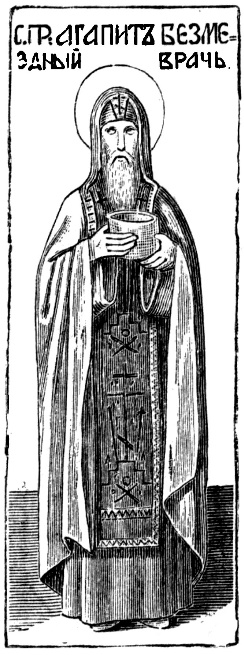
Некто из Киева, Агапит, пишет Боголюбивый Поликарп4, постригся при блаженном отце нашем Антонии. Он подражал ангельскому житию его, быв самовидцем исцелениям («исправлениям») его. Как тот великий, скрывая святость свою, лечил больных своей пищей, давая вид, что подаёт им врачебную траву, а больные становились здоровыми по его молитве; так и сей блаженный Агапит, ревнуя святому старцу, помогал больным». По этим словам, Агапит сперва подвизался в пещере, вблизи Антония, и здесь изучал высокую жизнь чудного подвижника. По дальнейшему же повествованию видим блаженного Агапита в монастырской кельи и среди братий. «Когда кто из братий заболевал, продолжает Поликарп, Агапит оставлял свою келью (красть было нечего), приходил к больному брату и служил ему: подымал и клал его, выносил на своих руках и давал ему свою пищу, – траву, которую варил. И больной становился здоровым по его молитве. Если болезнь продолжалась, – так бывало угодно Богу, чтобы усилить веру и молитву раба Своего, – блаженный Агапит неотступно оставался с больным, непрестанно молясь за него, пока Господь подавал здравие больному по его молитве. За это прозван он был врачом («лечец»). Господь даровал ему дар исцелений. И в городе было слышно, что в монастыре есть врач. Потому многие приносили к нему больных, и те становились здоровыми».
"A certain man from Kiev, Agapitus," writes the God-loving Polycarp4, "was tonsured under our blessed father Anthony. He imitated his angelic life, having been an eyewitness of his healings ('corrections'). Just as that great one, concealing his holiness, healed the sick with his own food, giving the appearance that he was giving them a medicinal herb, while the sick became healthy through his prayer; so also this blessed Agapitus, emulating the holy elder, helped the sick." According to these words, Agapitus first struggled in the cave, near Anthony, and there studied the lofty life of the wondrous ascetic. From the further narrative, however, we see the blessed Agapitus in a monastic cell and among the brethren. "When any of the brethren fell ill," Polycarp continues, "Agapitus would leave his cell (there was nothing to steal), come to the sick brother and serve him: he would lift him up and lay him down, carry him out in his own arms and give him his own food – the herb which he cooked. And the sick man would become healthy through his prayer. If the illness continued – as was pleasing to God, to strengthen the faith and prayer of His servant – the blessed Agapitus would remain unceasingly with the sick man, praying constantly for him, until the Lord granted health to the sick man through his prayer. For this he was called a physician ('lechets'). The Lord granted him the gift of healings. And it was heard in the city that there was a physician in the monastery. Therefore many brought their sick to him, and they became healthy."
Блаженный Поликарп в другом случае пишет, что в молитве, исцелившей прельщённого Никиту, участвовал и «Агапит врач»; а это было при игумене Никоне, не позже 1088 г.5. Итак известность преподобного врача началась ещё при Никоне, около 1080 г.
The blessed Polycarp writes in another place that "Agapitus the physician" also participated in the prayer that healed the deluded Nikita; and this was under the abbacy of Nikon, not later than 10885. Thus the fame of the Venerable physician began already under Nikon, around the year 1080.
Во время сего блаженного, продолжает свою повесть о враче Поликарп, был некто родом и верой Армянин. Он был искусный врач, какого прежде не бывало; ему стоило только посмотреть на больного, и он назначал день и час смерти его и слова его выполнялись в точности. Такого уже и не лечили. – Один из таких больных принесён был в Печерский монастырь; это был первый человек у князя Всеволода († 1093 г.). Армянин довёл его до нечаяния, сказав, что умрёт спустя восемь дней. – Блаженный же Агапит, дав ему траву, которой сам питался, возвратил ему здоровье. Слух о том промчался по всей Русской земле. – Армянин, снедаемый завистью, начал поносить блаженного. Он послал в монастырь приговорённого им на смерть, приказав дать ему яда, чтобы, приняв, умер в глазах Агапита. Блаженный, подав этому умирающему монастырской пищи, сотворил его здоровым и избавил осуждённого от смерти. После того иноверец вооружается против Агапита ещё сильнее: он научает своих единоверцев уморить монаха ядом. Но блаженный пил без вреда, нимало не страдая. Весть бо Господь благочестивыя избавляти от смерти (2Пет.2:9). Он сказал: «аще что и смертное испиют, не вредит их; на недужные руки возложат и здрави будут».
During the time of this blessed one, Polycarp continues his account of the physician, there was a certain man by race and faith an Armenian. He was a skilled physician, such as had never been seen before; he had only to look at a sick man, and he would appoint the day and hour of his death, and his words were fulfilled exactly. Such a one they would no longer treat. – One of these sick men was brought to the Pechersk monastery; he was the first man of Prince Vsevolod († 1093). The Armenian brought him to despair, saying that he would die after eight days. – The blessed Agapitus, giving him the herb with which he himself was nourished, restored him to health. The rumor of this spread throughout all the Russian land. – The Armenian, consumed with envy, began to revile the blessed one. He sent to the monastery a man whom he had condemned to death, ordering that poison be given to him, so that, having taken it, he would die before the eyes of Agapitus. The blessed one, giving this dying man some of the monastery's food, made him healthy and delivered the condemned man from death. After that, the man of another faith armed himself against Agapitus even more strongly: he taught his co-religionists to kill the monk with poison. But the blessed one drank it without harm, suffering not at all. For the Lord knoweth how to deliver the godly from death (2 Pet. 2:9). He said: "If they drink any deadly thing, it shall not hurt them; they shall lay hands on the sick, and they shall recover."
Сделался болен князь Владимир Мономах, тогда княживший в Чернигове. Его лечил Армянин и употреблял всё старание, все средства искусства, а болезнь не только не смягчалась, но час от часу становилась опаснее. Князь, чувствуя, что близок он к смерти, послал к Печерскому игумену Иоанну с просьбой прислать к нему Агапита врача. Если я пойду к князю, рассуждал блаженный Агапит, то должен ходить и ко всем. Человеческая слава – опасна, Не пойду за врата монастыря, чтобы не преступить обета моего. Если выгонят меня, пойду в другую сторону и опять возвращусь. Он послал князю варёное былие, приготовленное им для себя в пищу. Князь выздоровел. Исцелённый Владимир пришёл благодарить Агапита; но преподобный, опасаясь славы человеческой, скрылся. Князь отдал принесённые для Агапита дары игумену. – Потом, живо чувствуя, как многим он обязан Агапиту, приказал боярину отнести золото в келью Агапита. «Сын мой! сказал посланному преподобный, я не беру ни с кого за лечение – не за что: исцеляет Христос Господь, а не я». Посланный просил принять дары князя для его утешения и употребить по усмотрению. «Пусть так, сказал Агапит; скажи же князю, чтобы не берёг он сокровищ, – к чему они? пусть раздаёт их нищим; если не послушает меня, худо будет ему. Неблагодарности не любит Господь, избавивший его от смерти». Старец вынес золото из кельи своей и положил его у дверей, а сам скрылся. Вышел и посланный и, увидев брошенное золото, отнёс его к игумену Иоанну. – Когда все пересказано было князю, князь выполнил заповедь старца, стал щедро раздавать милостыню нищим.
Prince Vladimir Monomakh, who was then reigning in Chernigov, fell ill. An Armenian treated him and employed every effort, every means of his art, yet the illness not only did not abate, but grew more dangerous hour by hour. The prince, feeling that he was near death, sent to the Pechersk abbot John with a request to send him Agapitus the physician. "If I go to the prince," reasoned the blessed Agapitus, "I must then go to all. Human glory is dangerous. I will not go beyond the gates of the monastery, lest I transgress my vow. If they drive me out, I will go to another place and return again." He sent the prince some boiled herbs, prepared by him for his own food. The prince recovered. The healed Vladimir came to thank Agapitus; but the Venerable one, fearing human glory, hid himself. The prince gave the gifts brought for Agapitus to the abbot. — Afterwards, vividly feeling how much he owed to Agapitus, he commanded a boyar to carry gold to Agapitus's cell. "My son!" said the Venerable one to the messenger, "I take from no one for healing — there is nothing to take: Christ the Lord heals, not I." The messenger begged him to accept the prince's gifts for his consolation and to use them as he saw fit. "So be it," said Agapitus; "but tell the prince not to hoard treasures — what need of them? Let him distribute them to the poor; if he does not heed me, it will be ill for him. The Lord, who delivered him from death, loves not ingratitude." The elder carried the gold out of his cell and laid it by the doors, and himself hid away. The messenger also went out and, seeing the gold cast aside, carried it to the abbot John. — When all was recounted to the prince, the prince fulfilled the elder's commandment and began to distribute alms generously to the poor.
Наконец сделался болен сам преподобный врач. Армянин, услыхав о том, пришёл посетить больного; осмотрев его, он сказал: «чрез три дня умрёт, иначе, прибавил он, готов я сам быть монахом». Агапит сказал ему: «мне открыл Господь, что я отойду к Нему через три месяца». В это самое время принесли к Агапиту из Киева больного. Агапит встал, как бы не был больным, взял траву, которую обыкновенно употреблял в пищу, и, показав Армянину, сказал: вот моё лекарство. – Армянин посмотрев сказал: это – не из наших трав, – думая, что это – из Александрии. Преподобный улыбнулся, подал своё лекарство больному, и тот выздоровел. Потом сказал Армянину: покушай со мной моего зелья; мне нечем более угостить тебя. – Армянин отвечал: «мы в этом месяце, отец мой, четыре дня постимся, и теперь пост наш». Услышав это, блаженный спросил: «кто ты такой, какой ты веры?» Тот отвечал: ужели не слыхал ты, что я – Армянин? Блаженный сказал: «как же смел ты войти сюда и осквернить мою келью, да и ещё держать мою грешную руку? Вон, иноверный нечестивец!» Тот с стыдом ушёл. После того блаженный Агапит жил ещё, по своему предсказанию, три месяца и, немного поболев, преставился к Господу июня 1 дня; его положили в пещере преподобного Антония.
At length the Venerable physician himself fell ill. The Armenian, hearing of this, came to visit the sick man; having examined him, he said: "In three days he will die; otherwise," he added, "I am ready myself to become a monk." Agapitus said to him: "The Lord has revealed to me that I shall depart to Him in three months." At that very time a sick man was brought to Agapitus from Kiev. Agapitus rose, as though he were not ill, took the herb which he was accustomed to use for food, and, showing it to the Armenian, said: "Here is my medicine." — The Armenian, looking at it, said: "This is not of our herbs," — thinking that it was from Alexandria. The Venerable one smiled, gave his medicine to the sick man, and he recovered. Then he said to the Armenian: "Eat with me of my potion; I have nothing else with which to treat you." — The Armenian answered: "We, my father, fast four days in this month, and now is our fast." Hearing this, the blessed one asked: "Who are you, of what faith are you?" He answered: "Have you not heard that I am an Armenian?" The blessed one said: "How dared you enter here and defile my cell, and moreover hold my sinful hand? Begone, heterodox impious one!" He departed in shame. After that the blessed Agapitus lived, according to his prediction, three months more and, having been a little ill, reposed in the Lord on June 1; he was laid in the cave of the Venerable Anthony.
По смерти святого Армянин пришёл к игумену и сказал: «оставляю свою веру и хочу служить Господу иноком в святой, правой вере Греческой; блаженный Агапит, явясь, сказал мне: ты обещался принять иночество; если солжёшь, потеряешь с жизнью и душу. Верю, что явившийся – угодник Божий: я знал хорошо, – что нельзя было ему пережить трёх дней, а Господь дал ему три месяца». Игумен облёк его в иночество, и бывший Армянин в подвигах православия окончил жизнь свою».
After the death of the saint, the Armenian came to the abbot and said: "I forsake my faith and wish to serve the Lord as a monk in the holy, right faith of the Greeks; the blessed Agapitus, appearing, said to me: 'You promised to receive the monastic life; if you lie, you will lose with your life also your soul.' I believe that he who appeared is a servant of God: for I knew well that he could not survive three days, but the Lord gave him three months." The abbot clothed him in the monastic habit, and the former Armenian ended his life in the labors of Orthodoxy.
Полпкарп пишет затем: «такие-то и даже более великие дела совершены священными черноризцами. Припоминая добродетельное житие их, дивлюсь я, как доселе преданы молчанию великие исцеления св. отца нашего Антония. Если такое светило не светит по нашей небрежности, как воссияют лучи его? Разумею преподобных отцов наших Печерских. Но, как и сказал Господь, пророк не чтится в своём отечестве. Готов я написать тебе, честный архимандрит, господин Акиндин, об упомянутых отцах, и изобразить чудотворения одних, исцеления других, крепкое воздержание третьих, иных послушание, других прозорливость, о чём слышал я от своего собрата, а от моего господина, епископа Симона. Но иным кажутся невероятными мои сказания по величию дел; – а недоверие это оттого, что знают меня Поликарпа, как грешника. поскольку же твоё преподобие приказывает, я пишу, как понимаю своим умом, и сколько пособляет мне память, хотя бы не совсем удачно; пусть останется написанное нами на пользу преемникам нашим, как написал блаж. Нестор в летописце о блаж. отцах Дамиане, Иеремии, Матфии и Исаакии, и как написаны в житии св. Антония все жития их, хотя и кратко. Я скажу о черноризцах не тайно, как уже сказал об иных: если умолчу я, то и имена их не помянутся, как было до сего дни. Вот я пишу о них в 15 лето твоего игуменства, а в продолжение 160 лет доселе не было и помину о них. Ныне любовь твоя причиной того, что скрытое стало известным и память о возлюбивших Господа чтится и славится, – потому что они – угодники Его и увенчаны Им. Исполняя твою волю, державный Акиндин, пишу я, грешный Поликарп». Да помянет Господь в Царствии Своём труд блаж. Поликарпа, оставившего нам повести о великих подвижниках, к пользе чад церкви.
Polycarp then writes: "Such deeds, and even greater, have been accomplished by the sacred monks. Recalling their virtuous life, I marvel how the great healings of our holy father Anthony have until now been consigned to silence. If such a luminary does not shine through our negligence, how shall its rays shine forth? I mean our Venerable fathers of the Kiev Caves. But, as the Lord said, a prophet is not honored in his own country. I am ready to write to you, honorable archimandrite, lord Acyndinus, concerning the aforementioned fathers, and to depict the wonderworkings of some, the healings of others, the strong abstinence of yet others, the obedience of some, the clairvoyance of others, of which I have heard from my fellow brother, and from my lord, Bishop Simon. But to some my accounts seem incredible because of the greatness of the deeds; — and this disbelief is because they know me, Polycarp, as a sinner. Since, however, your reverence commands, I write as I understand with my mind, and as far as memory aids me, even if not altogether successfully; let what we have written remain for the benefit of our successors, as the blessed Nestor wrote in his chronicle concerning the blessed fathers Damian, Jeremiah, Matthew, and Isaac, and as all their lives are written in the life of St. Anthony, though briefly. I will speak of the monks not in secret, as I have already said of others: if I keep silence, then their names will not be remembered, as has been the case until this day. Behold, I write of them in the 15th year of your abbacy, whereas for 160 years until now there has been no mention of them. Now your love is the cause that what was hidden has become known, and the memory of those who loved the Lord is honored and glorified — because they are His servants and are crowned by Him. Fulfilling your will, sovereign Acyndinus, I, the sinful Polycarp, write." May the Lord remember in His Kingdom the labor of the blessed Polycarp, who left us accounts of the great ascetics, for the benefit of the children of the Church.
Кончина чудного, безмездного врача, преп. Агапита последовала не позже 1095 г., так как болезнь, после которой спустя 3 месяца умер он, случилась вслед за исцелением Мономаха, Черниговского князя, который пробыл в Чернигове до 1094 г., а Иоанн был Печерским игуменом с 1088 г.6.
The repose of the wondrous, unmercenary physician, the Venerable Agapitus, occurred no later than 1095 A.D., since the illness after which he died three months later occurred immediately after the healing of Monomakh, Prince of Chernigov, who remained in Chernigov until 1094 A.D., while John was abbot of the Kiev Caves from 1088 A.D.6.
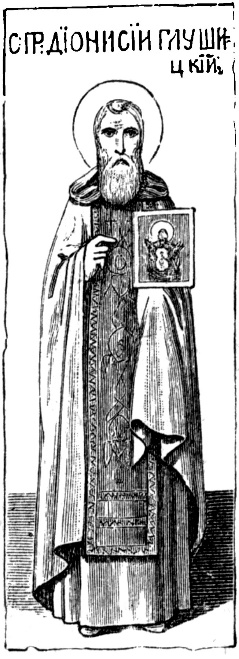
Преподобный Дионисий8 родом был из окрестностей Вологды и пострижен в обители Спасокаменской Святогорцем игуменом Дионисием; отданный под руководство духовного старца, он прожил в посте и молитвах в Каменском монастыре 9 лет.
The Venerable Dionysius8 was by birth from the environs of Vologda and was tonsured in the Spaso-Kamenny monastery by the hegumen Dionysius the Svyatogorets; being placed under the guidance of a spiritual elder, he lived in fasting and prayer in the Kamenny monastery for 9 years.
Потом обошёл он с учеником Пахомием восточную сторону Кубенского озера, ища себе безмолвного уединения. На святой Луке найдя запустевшую обитель, поставил хижину, возобновил храм св. Николая и восстановил древний общежительный монастырь. На святой Луке Дионисий удостоен священства, рукоположенный Ростовским архиепископом Григорием, в то же время, как хлопотал он о пустынном храме9. Он провёл здесь несколько лет, изнуряя себя голодом и жаждой. Жизнь его была весьма суровая, так что ученик Пахомий стал наконец тяготиться суровостью жизни. Дионисий с своей стороны желал составить общежитие для спасения многих. «Я слышал, сказал Дионисий Пахомию, что на восточной стороне Кубенского озера есть пустынное место; там желал бы я, если угодно Господу, составить общежительный монастырь; ты останься здесь – и пусть остаётся с тобой недавно пришедший к нам брат». Дионисий оставил Пахомия с миром на святой Луке, а сам удалился10.
Then he walked with his disciple Pachomius around the eastern side of Lake Kubenskoye, seeking for himself a place of silent solitude. At Svyataya Luka, finding a desolate monastery, he set up a hut, renewed the church of St. Nicholas, and restored the ancient cenobitic monastery. At Svyataya Luka Dionysius was deemed worthy of the priesthood, being ordained by Gregory, Archbishop of Rostov, at the same time as he was laboring over the desert church9. He spent several years here, exhausting himself with hunger and thirst. His life was very severe, so that his disciple Pachomius at length began to be burdened by the severity of life. Dionysius for his part desired to establish a cenobium for the salvation of many. "I have heard," said Dionysius to Pachomius, "that on the eastern side of Lake Kubenskoye there is a desert place; there I would wish, if it be pleasing to the Lord, to establish a cenobitic monastery; do you remain here — and let the brother who recently came to us remain with you." Dionysius left Pachomius in peace at Svyataya Luka, and himself departed10.
За 15 вёрст от Луки, в глухом лесу на реке Глушице, подвижник Божий поставил себе хижину, под черёмушным деревом и стал подвизаться по-прежнему. Спустя несколько времени пришёл к нему старец, и он обрадовался ему как ангелу; затем начало проходить по два и по три и селились вблизи кельи Дионисия. В 1403 г. построен был небольшой храм Покрова Пресвятые Богородицы. Князь Кубенский Димитрий присылал для того своих плотников. Григорий, архиепископ Ростовский, преподавая благословение на составление обители и создание храма, говорил старцу: «советую тебе составить общежитие, чтобы ничего не называть своим, а всё иметь общим, как жили при Апостолах»11. Преподобный выполнил совет архипастыря – и прежде всего для себя самого: следуя правилам общежития, он занимался то плотничеством, то работой швеца. Точно так для другого, более обширного, храма, построенного в 1412 г., преподобный сам писал иконы. – Он назначил послушания братиям по церкви и по монастырским работам и строго надзирал потом за соблюдением порядка. «Дети, говорил он братиям, не смущайтесь трудами пустыни. Многими скорбями надобно достигать Небесного Царствия. Для нас эти скорби – пост и лишения всякого рода. Молитва наша должна быть от чистого сердца. О милостыне к нищим будем помнить слова Спасителя: «блаженни милостивые». Он строго требовал, чтобы у инока не было никакой собственности, и чтобы без благословения настоятеля или старца ничего не делали. Один инок, вопреки уставу общежития, держал у себя в кельи 10 ногат (кожаных монет). Это открылось после его смерти. Преподобный велел выбросить ногаты вместе с телом ослушника. «Чада, говорил он, ослушание погибель». Едва могли упросить старца – разрешить виновного. Старец Антуфий без благословения пошёл ловить рыбу и наловил очень много. Дионисий велел выбросить рыбу.
Fifteen versts from Luka, in a dense forest on the river Glushitsa, the man of God set up for himself a hut under a bird-cherry tree and began to struggle as before. After some time an elder came to him, and he rejoiced at him as at an angel; then two and three at a time began to come, and they settled near Dionysius's cell. In 1403 a small church of the Protection of the Most Holy Theotokos was built. Prince Demetrius of Kubena sent his carpenters for that purpose. Gregory, Archbishop of Rostov, giving his blessing for the establishment of the monastery and the building of the church, said to the elder: "I advise you to establish a cenobium, so that nothing be called one's own, but all be held in common, as they lived in the time of the Apostles"11. The Venerable one fulfilled the counsel of the archpastor — and first of all for himself: following the rules of the cenobium, he occupied himself now with carpentry, now with the work of a tailor. Likewise, for another, more spacious church, built in 1412, the Venerable one himself painted the icons. — He assigned obediences to the brethren for the church and for the monastery labors, and afterwards strictly oversaw the keeping of order. "Children," he said to the brethren, "be not troubled by the labors of the desert. Through many afflictions must we attain the Heavenly Kingdom. For us these afflictions are fasting and deprivations of every kind. Our prayer must be from a pure heart. Concerning alms to the poor let us remember the words of the Savior: 'Blessed are the merciful.'" He strictly required that a monk have no property of his own, and that nothing be done without the blessing of the superior or an elder. One monk, contrary to the rule of the cenobium, kept in his cell 10 nogatas (leather coins). This was discovered after his death. The Venerable one ordered the nogatas to be cast out together with the body of the disobedient one. "Children," he said, "disobedience is destruction." They could scarcely entreat the elder to absolve the offender. The elder Anthuphius went without a blessing to catch fish and caught a great many. Dionysius ordered the fish to be thrown away.
Преподобный и словом, и делами учил жить в уповании на Господа. – Два вора похитили семь монастырских лошадей. Инок-эконом с великим горем объявил о том Дионисию. Авва улыбнулся и сказал: «не все ли мы странники? – Будем заботиться о том, какой ответ дать на суде. Нам велено молиться за наносящих обиду». Воры в первом же месте, где остановились, едва не сгорели сами, и лишились лошадей в пожаре. В другое время некоторые из братии думали вразумить его в излишней щедрости его к нищим. По их наставлению молодой человек явился к преподобному в виде странницы, прося пособия. Преподобный подал несколько денег. – Когда же после вечернего Богослужения рассказали ему, как было дело, – он, успокаивая смущённых, сказал: «если вы, вопреки моей воле, отнимете деньги, то вдвойне согрешите, покажете нетерпеливость в скудости и отнимете то, что дано любовью. Господь велит творить добро, сколько есть сил». Случился голод в стране, и преподобный щедрой рукой раздавал хлеб страдавшим от голода. На замечание эконома, что недостаёт запасов, отвечал: верен Сказавший нам: не пекитесь о завтрашнем дне: знает Отец Небесный, в чём имеете нужду. Он же говорит: суд без милости не сотворшим милости.
The Venerable one both by word and by deed taught to live in hope in the Lord. – Two thieves stole seven monastery horses. The monk-economist announced this to Dionysius with great grief. The abba smiled and said: “Are we not all strangers? Let us be concerned about what answer we shall give at the judgment. We are commanded to pray for those who do us wrong.” The thieves, at the very first place where they stopped, barely escaped being burned themselves, and lost the horses in the fire. At another time, some of the brethren thought to admonish him for his excessive generosity to the poor. According to their instruction, a young man appeared to the Venerable one in the guise of a female beggar, asking for assistance. The Venerable one gave some money. – When, after the evening Divine service, they told him how the matter had been, he, calming the troubled ones, said: “If you, contrary to my will, take away the money, you will sin doubly: you will show impatience in poverty and take away what was given out of love. The Lord commands us to do good as much as we are able.” A famine occurred in the land, and the Venerable one with a generous hand distributed bread to those suffering from hunger. To the remark of the economist that the stores were insufficient, he answered: Faithful is He Who said to us: Take no thought for the morrow: your Heavenly Father knoweth what things ye have need of. He also says: Judgment without mercy to him that hath showed no mercy.
Когда Глушицу стали посещать многие, любитель безмолвия удалился за 4 версты в непроходимую дебрь и у огромной сосны, оставившей и месту название Сосновца, соорудил себе келью, а потом небольшой храм во имя пустынного ангела Предтечи. Это было в 1420 г. Сюда перешли некоторые из Глушицы; но преподобный положил, чтобы Сосковец был под управлением одного настоятеля Глушицкого и само содержание получал из Глушицы. поскольку к духовному старцу приходили жёны с желанием слушать наставления его и желали бы часто слушать их, то Дионисий в 2 верстах от Покровской обители устроить женское общежитие с храмом святителя Леонтия Ростовского. В устроении и поддержании всех трёх обителей щедро помогали преподобному князья Димитрий Заозерский и Юрий Бохтюжский, особенно же последний12. Преподобный любил заниматься писанием святых икон. До нашего времени сохранились труды святых рук его: а) в Сосновце икона Знамения Богоматери с огненными серафимами и резная икона Одигитрии13. б) В Кирилло-Белозерском монастыре по описи 1668 года в иконостасе собора «образ живописный преподобного чудотворца Кирилла, а писал преподобный Дионисий Глушицкий, – ещё живу сушу чудотворцу Кириллу, в лето 6932 (1424 г.)»; в раме преподобного Кирилла образ Успения Богородицы «письмо преподобного Дионисия Глушицкого»14. в) В седьмиозерной пустыни, в 30 верстах от Кадникова, находится писанная преподобным Дионисием икона Успения Божией Матери, принесённая сюда из Глушицкой обители и с 1593 г. прославившаяся чудесами. г) В Прилуцком монастыре показывается икона преподобного Димитрия († 1392 г.), как писанная преподобным Дионисием15.
When many began to visit Glushitsa, the lover of silence withdrew 4 versts into an impenetrable thicket and, by a huge pine tree (which gave the place the name Sosnovets), built himself a cell, and afterwards a small church in the name of the angel of the desert, the Forerunner. This was in the year 1420. Some from Glushitsa moved here; but the Venerable one decreed that Sosnovets should be under the governance of one superior of Glushitsa and should receive its very maintenance from Glushitsa. Since women came to the spiritual elder desiring to hear his instructions and wished to hear them often, Dionysius, 2 versts from the Protection monastery, established a women’s cenobium with a church of St. Leontius of Rostov. In the establishment and support of all three monasteries, the Venerable one was generously aided by the princes Demetrius of Zaozerye and George of Bokhtyuga, especially the latter12. The Venerable one loved to occupy himself with the writing of holy icons. To our time have been preserved the labors of his holy hands: a) in Sosnovets, the icon of the Sign of the Mother of God with fiery seraphim and a carved icon of the Hodegetria13. b) In the Kirillo-Belozersky Monastery, according to the inventory of 1668, in the iconostasis of the cathedral, “an icon painted of the Venerable Wonderworker Cyril, and the Venerable Dionysius of Glushitsa painted it, while the Wonderworker Cyril was still alive, in the year 6932 (1424)”; on the frame of the Venerable Cyril, an icon of the Dormition of the Mother of God, “the painting of the Venerable Dionysius of Glushitsa”14. c) In the Semiozernaya Hermitage, 30 versts from Kadnikov, there is an icon of the Dormition of the Mother of God painted by the Venerable Dionysius, brought there from the Glushitsa monastery and glorified by miracles since 1593. d) In the Prilutsky Monastery, an icon of the Venerable Demetrius († 1392) is shown, as painted by the Venerable Dionysius15.
Блаженный Дионисий ревностно старался о распространении славы имени Божия. В 18 верстах от Глушицкой обители, на реке Сухоне, построен им храм во имя Воскресения Христова, с тем, дабы окрестные жители могли в нём слушать слово Божие и учиться страху Божию. Другой храм, во имя святителя Николая, построен им в селе Двинице, по просьбе бедных жителей того села, и для этого храма писал он сам иконы.
The blessed Dionysius zealously strove for the spread of the glory of the name of God. 18 versts from the Glushitsa monastery, on the River Sukhona, he built a church in the name of the Resurrection of Christ, so that the surrounding inhabitants might hear in it the word of God and learn the fear of God. Another church, in the name of St. Nicholas, he built in the village of Dvinitsa, at the request of the poor inhabitants of that village, and for this church he himself painted icons.
Известность Дионисия, как опытного духовного наставника, привлекала к нему весьма многих. Блаженный Григорий, впоследствии Пельшемский подвижник, уже тогда, как был архимандритом, пришёл к Дионисию в Сосновец и несколько годов прожил здесь, изучая жизнь духовную по наставлению и жизни Сосновецкого аввы. В Глушице и Сосновце при авве Дионисии было много иноков и между ними не мало было искренних рабов Божиих. Таков был преподобный Филипп, который потом основал пустынную обитель на реке Рабанге, где и почил (1448 г.)16.
The fame of Dionysius as an experienced spiritual guide attracted very many to him. The blessed Gregory, afterwards the ascetic of Pel’shema, even when he was already an archimandrite, came to Dionysius at Sosnovets and lived there for several years, studying the spiritual life according to the instruction and life of the Sosnovets abba. In Glushitsa and Sosnovets under Abba Dionysius there were many monks, and among them not a few were sincere servants of God. Such was the Venerable Philip, who afterwards founded a desert monastery on the River Rabanga, where he also reposed (1448)16.
Дионисий, Спасокаменский настоятель, быв Ростовским архипастырем (1418–1425 г.), отличал Глушицкого авву своей любовью, и авва не раз посещал его. Когда преемник блаженного Дионисия, архиепископ Ефрем (1427–1454 г.) обозревал обширную епархию свою, смиренный авва Дионисий вышел к нему на встречу со всеми учениками своими и принял его в обители с почестями. Учительный архипастырь преподал наставление братии, напомнил о внезапности смерти и о страшном суде Божием и, побуждая к искреннему отречению от мира, говорил: «не назвал ли Господь мертвецом привязанного к миру, когда сказал юноше: оставь мёртвых погребать своих мертвецов?» А авве игумену сказал: «храни себя и стадо, дабы мог ты сказать на суде: вот я и дети, которых дал мне Господь». Блаженный авва с любовью слушал блаженного архипастыря: «Господь послал нам тебя, пастыря и целителя», сказал авва с восторгом благоговейной души. Блаженный Ефрем утвердил духовную грамоту аввы Дионисия17.
Dionysius, the superior of Spaso-Kamenny, having been the archpastor of Rostov (1418–1425), distinguished the Glushitsa abba with his love, and the abba visited him more than once. When the successor of the blessed Dionysius, Archbishop Ephraim (1427–1454), was surveying his vast diocese, the humble Abba Dionysius went out to meet him with all his disciples and received him in the monastery with honors. The instructive archpastor gave instruction to the brethren, reminded them of the suddenness of death and of the terrible judgment of God, and, urging them to sincere renunciation of the world, said: “Did not the Lord call him who is attached to the world a dead man, when He said to the youth: Let the dead bury their dead?” And to the abba and igumen he said: “Keep watch over yourself and the flock, that you may be able to say at the judgment: Behold, I and the children whom God hath given me.” The blessed abba listened with love to the blessed archpastor: “The Lord has sent us you, a shepherd and healer,” said the abba with the rapture of a reverent soul. The blessed Ephraim confirmed the spiritual testament of Abba Dionysius17.
За 7 лет до своей кончины преподобный приготовил себе могилу и часто приходил к ней для святых размышлений о загробной жизни. Близкий к кончине, назначил он в преемника себе Амфилохия и мирно скончался 1 июня 1437 года. По словам древнего жизнеописателя, внешний вид преподобного Дионисия был таков: роста низкого и очень сухой, голова не малая, брови полукруглые, лицо длинно, щёки впалые, взор тихий, борода густая по грудь, волосы светло-русые и полуседые. Насаждённая аввой строгая жизнь долго процветала в его пустыни и после его кончины. Царь Иоанн писал: «на Глушицах обитель процветает постническими подвигами»18.
7 years before his repose, the Venerable one prepared a grave for himself and often came to it for holy meditations on the afterlife. Being near his end, he appointed Amphilochius as his successor and peacefully reposed on June 1, 1437. According to the words of the ancient biographer, the outward appearance of the Venerable Dionysius was as follows: of low stature and very lean, his head not small, his eyebrows semicircular, his face long, his cheeks sunken, his gaze gentle, his beard thick to the chest, his hair light-brown and half-gray. The strict life planted by the abba flourished long in his hermitage even after his repose. Tsar John wrote: “At Glushitsy the monastery flourishes in ascetic feats of fasting”18.
Собором 1547 г. установлено было чтить преп. Дионисия во всех церквах Русских19. Служба ему написана в 1548 г.20. Мощи его почивают под спудом в храме Сосновца, уцелевшего среди разрушений времени людей21.
By the Council of 1547 it was established to honor the Venerable Dionysius in all the churches of Russia19. A service to him was written in 154820. His relics rest under a covering (pod spudom) in the church of Sosnovets, which has survived amidst the destructions of the times of men21.
Прославленный Господом Дионисий известен по многим чудесам: он исцелял больных, выпрямлял скорченные руки, возвращал слепым зрение и немым употребление языка22.
Dionysius, glorified by the Lord, is known for many miracles: he healed the sick, straightened contracted hands, restored sight to the blind and speech to the mute22.
Считают вероятным, что эта беседа происходила за стенами Ефеса с св. Лоликарпом («Уч. об Отц. Церкви» архиеп. Фил. Черн. Ч. 1, стр. 55).
It is considered probable that this conversation took place outside the walls of Ephesus with St. Polycarp (“Teaching on the Fathers of the Church” by Archbishop Phil. of Chernigov. Part 1, p. 55).
Patericon. р. 102. Здесь же (р. 96) сказано об Агапите: «жил около 1084 года Господняго». – Более было бы точности, если бы было сказано: начал быть известным около 1084 г. сл. пр. 2.
Patericon, p. 102. Here also (p. 96) it is said of Agapitus: “he lived around the year 1084 of the Lord.” – It would be more precise if it were said: he began to be known around 1084, cf. note 2.
«Осмеливаюсь писать о пр. Дионисе, говорит инок Иринарх, как слышал я от блаж. Амфилохия, Макария и Михаила, живших при св. Дионисие. Сам я видел чудеса, совершающиеся при его гробе. В памяти учеников его сохранилась преимущественно пустынная жизнь его». Житие описано цветистым слогом. Синод. ркп. № 610. Сокращение жития в прологе.
“I dare to write about the Venerable Dionysius,” says the monk Irenarchus, “as I heard from the blessed Amphilochius, Macarius and Michael, who lived under St. Dionysius. I myself saw miracles performed at his tomb. In the memory of his disciples, his desert life has been preserved above all.” The Life is written in a florid style. Synodal manuscript No. 610. An abridgment of the Life in the Prologue.
По ркп. житию храм возобновлён в 1393 г. по благословению Рост. арх. Григория; но Григорий посвящён 14 мар. 1396 г. и скончался мая 4-го 1416 г. Итак год храма показан у Иринарха ошибочно. – Иринарх повторяет известия Паисия Ярославова (изд. в Правосл. Собеседн. 1861 г. I, 202, 203), но у Паисия не указан год построения храма.
According to the manuscript Life, the church was renewed in 1393 with the blessing of Archbishop Gregory of Rostov; but Gregory was consecrated on March 14, 1396, and reposed on May 4, 1416. Therefore the year of the church is shown erroneously by Irenarchus. – Irenarchus repeats the accounts of Paisius Yaroslavov (published in Pravoslavny Sobesednik, 1861, I, 202, 203), but Paisius does not indicate the year of the church’s construction.
Николаевский монастырь на св. Луке грамотой княгини Марии 1479 г. передан в ведение Спасо-каменного монастыря. Допол. к ист. акт. I. № 16. По ркп. описанию святых Вологодских: «преп. Пахомий на Кубенском озере начальник монастыря, чудотворец», но ни год, ни день кончины его не показаны и неизвестны.
The St. Nicholas Monastery on St. Luke was transferred by a charter of Princess Maria in 1479 to the jurisdiction of the Spaso-Kamenny Monastery. Supplements to Historical Acts, I, No. 16. According to the manuscript description of the saints of Vologda: “the Venerable Pachomius on Lake Kubenskoye, founder of the monastery, wonderworker,” but neither the year nor the day of his repose are shown and are unknown.
По ркп. житию храм освящён в 1393 г. по благословению архиеп. Григория. Но год освящения показан здесь не верно. Ист. иер. 3, 699. 700.
According to the manuscript Life, the church was consecrated in 1393 with the blessing of Archbishop Gregory. But the year of consecration is shown here incorrectly. History of the Hierarchy, 3, 699. 700.
Записки Рус. археол., стр. 39. 41. Древности Кириллова монаст., стр. 9–12. 87. 88. Чтен. общ. ист. 1859 г. к. 3.
Notes of the Russian Archaeological Society, pp. 39. 41. Antiquities of the Kirillov Monastery, pp. 9–12. 87. 88. Readings of the Society of History, 1859, book 3.
Служба у Румянцева № 397, у Царского № 563. В святцах устава XVI в. (Толстого № 100) июня 1 пр. Дионисий Глушицкий.
Service in Rumyantsev No. 397, in Tsarsky No. 563. In the saints’ calendar of the Typicon of the 16th century (Tolstoy No. 100), June 1, the Venerable Dionysius of Glushitsa.