Неделя Святой Пасхи, или Воскресения Христова
The Sunday of Holy Pascha, or of the Resurrection of Christ
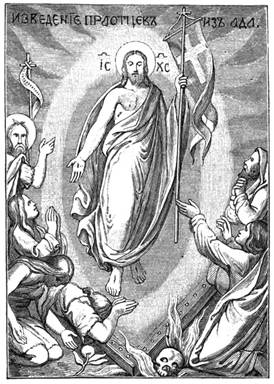
Все предосторожности, принятые первосвященниками и старейшинами народа Иудейского для охранения гроба Господня, обращены были Промыслом к славе воскресения Спасителя из мёртвых в третий день по смерти, как предсказали пророки и предрёк Сам Господь Апостолам, книжникам и старейшинам народа Иудейского и всему народу (Мф.17:22–23; Мк.10:33–34; Ин.2:19–22; Мф.27:62–63). В глубокое утро третьего дня по смерти Христовой, или в первый день недели, по восходе зари, но до полного ещё рассвета (Мф.28:1. Мк.16:2. Лк.24:1,22. Ин.20:1), произошло великое землетрясение; Ангел Господень, сшедший с небес, отвалил камень от двери гроба и сидел на нём. Зрак ангела был яко молния и одеяние его было яко снег. От страха сотрясошася стрегущии, и быша яко мертви и рассеялись (Мф.28:2,4,11). Так Господь расторг врата адовы и Своим Божественным всемогуществом воскресил своё человечество и положил основание нашему блаженному воскресению!
All the precautions taken by the chief priests and elders of the Jewish people to guard the Lord's tomb were turned by Providence to the glory of the Savior's resurrection from the dead on the third day after His death, as the prophets foretold and the Lord Himself foretold to the Apostles, the scribes, the elders of the Jewish people, and all the people (Mt. 17:22–23; Mk. 10:33–34; Jn. 2:19–22; Mt. 27:62–63). In the deep morning of the third day after Christ's death, or on the first day of the week, at the rising of dawn, but before full daylight (Mt. 28:1; Mk. 16:2; Lk. 24:1, 22; Jn. 20:1), there was a great earthquake; an Angel of the Lord, descending from heaven, rolled back the stone from the door of the tomb and sat upon it. The appearance of the angel was like lightning, and his raiment was white as snow. And for fear of him the guards were shaken and became as dead men, and they scattered (Mt. 28:2, 4, 11). Thus the Lord burst asunder the gates of hell and by His Divine omnipotence raised His humanity, laying the foundation for our blessed resurrection!
Своими многократными явлениями по воскресении Своём, в продолжение 40 дней, Господь засвидетельствовал истину Своего воскресения из мёртвых: поставиСебе жива во мнозех истинных знамениих (Деян.1:3) – перед Апостолами, иже, как сами о себе говорят они, с Ним ядохом и пихом, по воскресении Его из мертвых (Деян.10:41). «Денмичетыредесятми являлся им (Деян. I, 3). В то время Христос уже не постоянно был с Апостолами – не так, как до воскресения. Заметь, не сказал (Лука): четыредесять дней, но: денми*четыредесятми, так как Христос являлся и опять скрывался. Для чего так? Дабы возвысить мысли учеников и не допустить их обращаться с Ним по прежнему. И не без причины Он являлся им, но потому, что тщательно заботился об устроении двух вещей, – о том, чтобы поверили воскресению, и чтобы, наконец, думали о Нём выше, чем о простом человеке. Почему же Он явился не всем, а только Апостолам? Потому, что народу, не знавшему неизреченного таинства, Он показался бы привидением. Если и сами Апостолы сначала не верили, приходили в смущение и нуждались в прикосновении рукою и в (общении) трапезы, то чего следовало ожидать от народа? Поэтому-то воскресение неопровержимо доказывается чудесами, для того, чтобы оно было несомненно не только для современников, но и для всех родов последующих. В самом деле, если Он не воскрес, но пребывает умершим, то каким образом Апостолы совершали чудеса Его именем?» Поэтому-то и Сам (Христос) оставался (на земле) после воскресения сорок дней, давая видеть Себя в течение продолжительного времени, дабы (ученики) не считали видимого привидением. Да и этим Он не удовольствовался, но присовокупил ещё и трапезу, о чём далее и говорит (Лука): *с ними же и ядый (Деян.1:4). Это всегда и Апостолы поставляли свидетельством воскресения, говоря: иже с Ним ядохом и пихом (Деян.10:41). Потому и вкушал Господь пищу с Апостолами, говорит Златоуст, чтобы они не почли явления Его за призрак».
By His manifold appearances after His resurrection, over the course of 40 days, the Lord bore witness to the truth of His resurrection from the dead: He presented Himself alive by many infallible proofs (Acts 1:3) – before the Apostles, who, as they themselves say, did eat and drink with Him after His resurrection from the dead (Acts 10:41). "For forty days He appeared to them (Acts 1:3). At that time Christ was no longer constantly with the Apostles – not as before the resurrection. Note that he (Luke) did not say: forty days, but: for forty days, because Christ appeared and then again hid Himself. Why so? To elevate the minds of the disciples and not allow them to associate with Him as before. And not without reason did He appear to them, but because He diligently cared for the establishment of two things – that they might believe in the resurrection, and that they might finally think of Him as more than a mere man. Why then did He not appear to all, but only to the Apostles? Because to the people, who knew not the ineffable mystery, He would have seemed a phantom. If even the Apostles themselves at first did not believe, were troubled, and needed the touch of a hand and (the fellowship of) a meal, what was to be expected from the people? Therefore the resurrection is irrefutably proven by miracles, so that it might be certain not only for contemporaries, but for all subsequent generations. Indeed, if He did not rise, but remains dead, how did the Apostles perform miracles in His name?" Therefore Christ Himself remained (on earth) after the resurrection for forty days, allowing Himself to be seen for a prolonged time, lest (the disciples) consider what they saw a phantom. And not even with this was He satisfied, but He added also a meal, of which (Luke) further speaks: and eating with them (Acts 1:4). This the Apostles always set forth as a testimony of the resurrection, saying: who did eat and drink with Him (Acts 10:41). And therefore the Lord partook of food with the Apostles, says Chrysostom, that they might not consider His appearance a phantom."
Явления Иисуса Христа по воскресении Его можно уподобить солнечному восходу, который, начинаясь зарёй, постепенно увеличивается и достигает полноты своей. В слове Божием явления Господа воскресшего, воспоминаемые в неделю Пасхи, открыты следующие.
The appearances of Jesus Christ after His resurrection may be likened to the sunrise, which, beginning with the dawn, gradually increases and attains its fullness. In the Word of God, the appearances of the risen Lord, commemorated on the Sunday of Pascha, are revealed as follows.
Первой из членов новонасажденной Своей Церкви Глава её Иисус Христос по воскресении своём явился, как упоминают наши церковно-богослужебные книги, Пречистой Матери Своей. Так в Богослужении в неделю жен Мироносиц Церковь, обращаясь к Богоматери, воспевает: «воскресшего видевши Сына Твоего и Бога, радуйся со Апостолы, Богоблагодатная, чистая: и еже радуйся первее, яко всех радости вину восприяла еси, Богомати всенепорочная». Далее, начиная с первого дня Пасхи и до самого отдания светлого праздника, в продолжение шести недель мы постоянно слышим торжественную песнь Пресвятой Деве: «Ангел вопияше благодатней: чистая Дево, радуйся, и паки реку, радуйся: Твой Сын воскресе тридневен от гроба». Из сих песней можно заключать, что Богоматерь видела Господа и первая услышала от ангелов благовестие о воскресении Его. Исторические сказания действительно повествуют о том, что Господь по воскресении своём прежде всех явился Пречистой Матери Своей. «И первее убо, – говорит синаксарь во святую и великую Пасху, – воскресение Божией Матери познаваемо бывает, прямо седящей гроба с Магдалиной, яко же глаголет Матфей. Что говорит Матфей? В одном месте находим:бе же ту (при погребении) Мария Магдалина, и другая Мария, сидяще прямо гроба (Мф.27:61); в другом: прииде (в глубокое утро воскресения Христова) Мария Магдалина, и другая Мария, видети гроб (Мф.28:1). Какое лицо скрывается здесь под выражением:другая Мария? Синаксарь указывает в нём Пресвятую Деву, Матерь Господа, – что весьма естественно и более чем вероятно. Если бы это была не Она, то Евангелист вместо неопределённого, другая, сказал бы, какая именно Мария, во-первых потому, что здесь же, говоря о двух Мариях,, одну прямо назвал Магдалиной; во-вторых потому, что недавно повествуя о распятии Господа и упоминая о присутствующих при оном святых жёнах, святой повествователь означил каждую из них собственным её прозванием: бяху*же ту, – говорит, *и жены: в нихже бе Мария Магдалина, и Мария Иакова и Иосии мати, и мати сыну зеведеову, т. е. Саломия и иные многия. Употребивши вместо определённого выражения неопределённое – другая Мария, св. Матфей очевидно имеет намерение отличить сию Марию от всех прочих известных Марий и указать именно на ту, которую христиане могли узнать и без прямого названия и которой враги христианства не должны были знать. Впрочем, синаксарь между жёнами, приходившими на гроб и видевшими воскресение Спасителя, разумеет ту, которая названа Марией Иосифовой. Иосий был сын Иосифа, обрученника Пресв. Девы. Но чтобы воскресение не казалось сомнительным по явлению Воскресшего Матери Своей, Евангелисты глаголют, что Он первее является Магдалине Марии. Св. Димитрий Ростовский, описывая жизнь Марии Магдалины, также замечает, что первое явление Господа было Пресвятой Деве: «от Господа толь бяше любима, пишет он о Магдалине, яко первее всех – по Пречистой Матери Своей, – Господь Своим по воскресении явлением почти ю».
First among the members of His newly-planted Church, the Head, Jesus Christ, after His resurrection appeared, as our church liturgical books mention, to His Most Pure Mother. Thus in the service of the Sunday of the Myrrh-bearing Women, the Church, addressing the Mother of God, sings: "Having seen Thy Son and God risen, rejoice with the Apostles, O thou who art full of grace, pure one: and that rejoice first, as thou hast received the cause of all joy, O all-blameless Mother of God." Further, from the first day of Pascha until the very leave-taking of the bright feast, for six weeks we constantly hear the solemn hymn to the Most Holy Virgin: "The Angel cried to the Lady Full of Grace: Rejoice, O pure Virgin, and again I say, rejoice: Thy Son is risen from the grave on the third day." From these hymns it may be concluded that the Mother of God saw the Lord and first heard from the angels the glad tidings of His resurrection. Historical accounts indeed relate that the Lord, after His resurrection, appeared first of all to His Most Pure Mother. "And first," says the Synaxarion for Holy and Great Pascha, "the resurrection is made known to the Mother of God, as she sat opposite the tomb with Magdalene, as Matthew says. What does Matthew say? In one place we find: And there was there (at the burial) Mary Magdalene, and the other Mary, sitting opposite the tomb (Mt. 27:61); in another: came (in the deep morning of Christ's resurrection) Mary Magdalene, and the other Mary, to see the tomb (Mt. 28:1). What person is hidden here under the expression: the other Mary? The Synaxarion points to the Most Holy Virgin, the Mother of the Lord – which is most natural and more than probable. If it were not She, the Evangelist, instead of the indefinite other, would have said which Mary specifically, first because here, speaking of two Marys, he directly named one as Magdalene; second, because, recently narrating the Lord's crucifixion and mentioning the holy women present, the sacred writer designated each by her own appellation: And there were, he says, women: among whom was Mary Magdalene, and Mary the mother of James and Joses, and the mother of the sons of Zebedee, i.e., Salome, and many others. By using the indefinite expression the other Mary instead of a definite one, St. Matthew clearly intends to distinguish this Mary from all other known Marys and to point to that one whom Christians could recognize even without a direct name and whom the enemies of Christianity should not know. However, the Synaxarion, among the women who came to the tomb and saw the Savior's resurrection, understands her who is called Mary of Joses. Joses was the son of Joseph, the betrothed of the Most Holy Virgin. But lest the resurrection seem doubtful because of the appearance of the Risen One to His Mother, the Evangelists say that He first appears to Mary Magdalene. St. Demetrius of Rostov, describing the life of Mary Magdalene, also notes that the first appearance of the Lord was to the Most Holy Virgin: "She was so beloved of the Lord," he writes of Magdalene, "that first of all – after His Most Pure Mother – the Lord honored her with His appearance after the resurrection."
Первой после Богоматери Иисус Христос воскресший явился Марии Магдалине. По прошествии дня покоя, утром в первый день недели сия благочестивая жена вместе с другими Мироносицами пошла ко гробу Господа, чтобы помазать тело Его благовониями. Приближаясь ко гробу, Мироносицы в недоумении говорили между собой: кто отвалит нам камень от дверий гроба? Но видят, что камень, который бе велий зело, уже отвален от гроба и гроб открыт. Магдалина, думая, что тело Господа перенесено отсюда в другое место, тотчас и поспешно удаляется. Спутницы же её вошли во гроб и, не найдя тела Господа, недоумевали; тогда перед ними предстали Ангелы в блистающих ризах. Жены были в страхе и потупили взоры на землю. Что ищете Живого с мертвыми? вещали им Ангелы, – несть зде, но воста: помяните, якоже глагола вам. Приидите, видите место, идеже лежа Господь. И скоро шедгие рцыте учеником Его, яко воста от мертвых: и се варяет вы в Галилеи: тамо Его узрите (Мф.28:5–7; Мк.16:1–7; Лк.24:1–7; Ин. 20:1–2). Но Магдалина предварила своих спутниц с известием к Ап. Петру и Иоанну, что нет тела Господа во гробе. Апостолы немедленно поспешили туда и, войдя во гроб, нашли в нём одни пелены и плат, бывший на голове погребённого Спасителя, и возвратились домой.
First after the Mother of God, the risen Jesus Christ appeared to Mary Magdalene. After the day of rest, on the morning of the first day of the week, this pious woman, together with the other Myrrh-bearers, went to the Lord's tomb to anoint His body with spices. Approaching the tomb, the Myrrh-bearers said to one another in perplexity: Who shall roll away the stone from the door of the tomb? But they see that the stone, which was very great, had already been rolled away from the tomb and the tomb was open. Magdalene, thinking that the Lord's body had been moved from there to another place, immediately and hastily departed. Her companions, however, entered the tomb and, not finding the Lord's body, were perplexed; then Angels in shining garments appeared before them. The women were afraid and cast their eyes down to the ground. Why seek ye the living among the dead? the Angels said to them, He is not here, but is risen: remember how He spake unto you. Come, see the place where the Lord lay. And go quickly, and tell His disciples that He is risen from the dead: and, behold, He goeth before you into Galilee; there shall ye see Him (Mt. 28:5–7; Mk. 16:1–7; Lk. 24:1–7; Jn. 20:1–2). But Magdalene preceded her companions with the news to the Apostles Peter and John that the Lord's body was not in the tomb. The Apostles immediately hastened there and, entering the tomb, found only the linen cloths and the napkin that had been on the head of the buried Savior, and returned home.
Магдалина, пришед опять ко гробу Господа, стояла подле гроба и плакала, не зная, где найти тело Господа. В это время она, обратившись назад, видит, но не узнаёт стоящего Спасителя. Он спрашивает её: жено*, что плачеши? кого ищеши?* Мария отвечала вопрошающему, считая Его за вертоградаря: аще ты еси взял Его, повеждь ми, где еси положил Его: и аз возьму Его. «Марие!» восклицает мнимый вертоградарь. Учителю! вопиет плачущая и повергается перед воскресшим Господом (Ин.20:3–17). Это былопервое явление Воскресшего, упоминаемое в Евангелии.
Magdalene, having come again to the Lord's tomb, stood by the tomb and wept, not knowing where to find the Lord's body. At that time, turning back, she sees, but does not recognize, the Savior standing there. He asks her: Woman, why weepest thou? whom seekest thou? Mary answered the questioner, thinking Him to be the gardener: Sir, if thou have borne Him hence, tell me where thou hast laid Him, and I will take Him away. "Mary!" exclaims the supposed gardener. "Rabboni!" cries the weeping woman, and she prostrates herself before the risen Lord (Jn. 20:3–17). This was the first appearance of the Risen One mentioned in the Gospel.
Явясь по воскресении своём Марии Магдалине – одной, Господь вторично явился ей же и другим жёнам, когда они, по повелению Ангелов, со страхом и радостью великой спешили возвестить Апостолам о воскресении Господа. Воскресший встретил и приветствовал их: радуйтеся! Они приступили к Нему, ястеся*за нозе Его и поклонистеся Ему. – *Не бойтеся, сказал Он им, идите, возвестите братии Моей, да идут в Галилею, и ту Мя видят. Они возвестили Апостолам о воскресении Господа, но ученики не поверили жёнам (Мф.28:1–11; Лк.24:9–11). Как жена первая из прародителей пала в грех и услышала от Бога: умножу печали и воздыхания твоя (Быт.3:16), так жёны первые из верующих во Христа узрели Воскресшего и вкусили радость воскресения!
Having appeared after His resurrection to Mary Magdalene alone, the Lord appeared a second time to her and to the other women, when, at the command of the Angels, with fear and great joy they hastened to announce the Lord's resurrection to the Apostles. The Risen One met them and greeted them: Rejoice! They drew near to Him, held Him by the feet, and worshipped Him. – Be not afraid, He said to them, go, tell My brethren that they go into Galilee, and there shall they see Me. They announced the Lord's resurrection to the Apostles, but the disciples did not believe the women (Mt. 28:1–11; Lk. 24:9–11). As woman first among the forebears fell into sin and heard from God: I will greatly multiply thy sorrow and thy sighing (Gen. 3:16), so women first among the believers in Christ beheld the Risen One and tasted the joy of the resurrection!
Третие*явление* Иисуса Христа по воскресении, упомянутое в Евангелии, было Ап. Петру, который слезами сердечного сокрушения во время страданий и смерти Спасителя омыл своё троекратное отречение от Него. Но обстоятельства этого явления не раскрыты в Евангелии (Лк.24:34. 1Кор.15:5).
The third appearance of Jesus Christ after the resurrection, mentioned in the Gospel, was to the Apostle Peter, who with tears of heartfelt contrition during the Savior's sufferings and death washed away his threefold denial of Him. But the circumstances of this appearance are not disclosed in the Gospel (Lk. 24:34; 1 Cor. 15:5).
Четвёртое по Евангелию явление было Клеопе и другому ученику. В самый день воскресения Господня около вечера, Клеопа и другой ученик шли в селение – Эммаус, отстоящее от Иерусалима стадий на 60 (около 5 слишком вёрст), печально беседуя о недавних приключениях, бывших в Иерусалиме с Иисусом Христом. К ним приближается и продолжает с ними идти воскресший Господь; по Апостолы не узнают Его. На вопрос Господа: о чем они беседуют и от чего печальны? Клеопа, называя Иисуса Христа пророком силным в деле и слове перед Богом и всеми людьми, поведал неузнанному своему спутнику о распятии Господа и о распространившемся уже известии, что Он воскрес. Выслушав слова Клеопы,» спутник, обличив несмысленных и косных сердцем,еже веровати о всех, яже глаголати пророцы, и начав от Моисея, из всех пророков изъяснял им сказанное о Христе во всём Писании. Дошед до селения, в которое шли ученики, их Спутник дал им заметить, что хочет идти далее. Но ученики упросили Его войти с ними в дом. Здесь возлёг Он с ними и, когда приял хлеб, благословил, и, преломив, подавал им, у них отверзлись очи, и они узнали воскресшего Спасителя, и свою веру в Него исповедали своим свидетельством о Божественной силе слова Его на сердце их. Ибо, по признанию их, сердце их горело благодатным огнём, просвещавшим, согревавшим и услаждавшим их. Но Господь, явив Себя Луке и Клеопе, стал невидим. В тот же час ученики возвратились в Иерусалим и нашли собрание единонадесяти Апостолов и бывших с ними. Церковь Христова беседовала, яко воистину воста Господь. Лука и Клеопа поведали,яже быша на пути и яко Воскресший Господь познася*има в преломлении хлеба* (Лк.24:13–35).
The fourth appearance according to the Gospel was to Cleopas and another disciple. On the very day of the Lord's resurrection, toward evening, Cleopas and another disciple were going to a village—Emmaus, which is about sixty stadia (a little over five versts) from Jerusalem, sorrowfully conversing about the recent events that had taken place in Jerusalem concerning Jesus Christ. The risen Lord draws near to them and continues walking with them; but the disciples do not recognize Him. In response to the Lord's question: what are they discussing and why are they sad? Cleopas, calling Jesus Christ a prophet mighty in deed and word before God and all the people, told his unrecognized companion about the Lord's crucifixion and about the report that had already spread that He had risen. Having heard Cleopas' words, the Companion, rebuking them as foolish and slow of heart to believe all that the prophets have spoken, and beginning from Moses, from all the prophets He explained to them what was said about Christ in all the Scriptures. Having reached the village to which the disciples were going, their Companion gave them to understand that He wished to go further. But the disciples begged Him to enter the house with them. There He reclined with them, and when He took bread, blessed it, and breaking it, gave it to them, their eyes were opened, and they recognized the risen Savior, and confessed their faith in Him by their testimony of the divine power of His word upon their hearts. For, by their own admission, their hearts burned with a grace-filled fire that enlightened, warmed, and delighted them. But the Lord, having revealed Himself to Luke and Cleopas, became invisible. At that same hour the disciples returned to Jerusalem and found the assembly of the Eleven Apostles and those with them. The Church of Christ declared, that the Lord is risen indeed. Luke and Cleopas told what things were done in the way, and how the risen Lord was made known to them in the breaking of bread (Lk. 24:13–35).
Между тем как ученики беседовали о явлениях воскресшего Господа, Он Сам явился среди них в горнице, коей двери заперты были, и приветствовал: мир вам. Это былопятое явление Господа по воскресении. Ученики смутились и испугались, думая, что видят духа. Что смущени есте? и почто помышления входят в сердца ваша? говорит им Господь. Видите руце Мои и нозе Мои: яко Сам Аз есмь: осяжите Мя и видите: яко дух плоти и кости не имать, якоже Мене видите имуща. И сие рек, показа им руце и нозе и ребра Своя. Ученики обрадовались, видя Господа. Когда же от радости они ещё не верили и дивились, Он вкушает перед ними поданные Ему рыбу и мёд; отверзает Апостоламум разумети Писания; предназначает их быть свидетелями исполнения пророчеств об Нём, – свидетелями страданий, смерти и воскресения Его; обещает облечь их силой свыше для учения, тайнодействия и управления; вторично говорит им: мир вам, и под образом дуновения подаёт им Св. Духа (Лк.24:36–40; Ин.20:19–23).
Meanwhile, as the disciples were conversing about the appearances of the risen Lord, He Himself appeared among them in the upper room, whose doors were shut, and greeted them: Peace be unto you. This was the fifth appearance of the Lord after the resurrection. The disciples were troubled and frightened, thinking they saw a spirit. Why are ye troubled? and why do thoughts arise in your hearts? the Lord says to them. Behold My hands and My feet, that it is I Myself: handle Me, and see; for a spirit hath not flesh and bones, as ye see Me have. And when He had thus spoken, He showed them His hands and His feet and His side. The disciples rejoiced, seeing the Lord. But when from joy they still did not believe and marveled, He eats before them the fish and honey that were given Him; He opens the Apostles' understanding, that they might understand the Scriptures; He appoints them to be witnesses of the fulfillment of the prophecies concerning Him—witnesses of His sufferings, death, and resurrection; He promises to clothe them with power from on high for teaching, administering the mysteries, and governing; He says to them a second time: Peace be unto you, and by the image of breathing He gives them the Holy Spirit (Lk. 24:36–40; Jn. 20:19–23).
Сии пять явлений Иисуса Христа воскресшего относятся к неделе Пасхи. Итак, воскресшего Господа, в первый день воскресения Его узрели и веровали в Него Пресв. Дева Мария, жёны мироносицы и все ученики Его, кроме Ап. Фомы. По воскресении своём Господь являлся в продолжение 40 дней – многим, и однажды явился более пятистам человек (1Кор.15:6). Одной истине свойственно иметь таких и стольких свидетелей!
These five appearances of the risen Jesus Christ belong to the Sunday of Pascha. Thus, on the first day of His resurrection, the risen Lord was seen and believed in by the Most Holy Virgin Mary, the Myrrh-bearing women, and all His disciples, except the Apostle Thomas. After His resurrection, the Lord appeared for forty days—to many, and once He appeared to more than five hundred persons (1 Cor. 15:6). Only one truth can have such and so many witnesses!
Воспоминанию славного воскресения Иисуса Христа из мёртвых посвящён Церковью светлый праздник Пасхи. Пасха наша, по словам Писания, есть Сам Господь наш Иисус Христос Своим пречистым и всесвятым Телом и Кровью (1Кор.5:7). Слово Пасха – есть Еврейское, значит прехождение*и избавление. Ибо первоначально праздновала Пасху Церковь Ветхозаветная в память того, что ангел, посланный от Бога погубить Египетских первенцев, *прешёл мимо жилищ Евреев и тем избавил их от смерти и рабства Египетского (Исх.12:23–27). Равно и для христиан Пасха значит прехождение со Христом, избавление и преведение Им верующих от смерти к вечноблаженной жизни. «Великая и священная Пасха, говорит Св. Григорий Богослов, называется у Евреев Пасхой на их языке, где слово сие значит прехождение – исторически по причине прехождения и переселения Израильтян из Египта в Хананею, а духовно по причине прехождения и восхождения от дольнего к горнему». Бл. Августин пишет: «слово Пасха есть Еврейское и значит прехождение от смерти к жизни, как говорит и Сам Господь: яко слушаяй словесе Моего и веруяй Пославшему Мя имать живот вечный: и на суд не приидет, но прейдет от смерти в живот (Ин.5:24). И в другом месте Евангелист Иоанн, изъясняя Пасху, говорит, что Господь совершил Пасху с учениками Своими,яко прииде Ему час, да прейдет от мира сего ко Отцу (Ин.13:1). Итак, прехождение от настоящей смертной жизни в иную бессмертную и блаженную прославляется в страдании и воскресении Господа». Также и в священных песнопениях Церкви говорится: «Пасха, Господня Пасха, от смерти бо к жизни и от земли к небеси Христос Бог наспреведе, победныя поющия. Смерти празднуем умерщвление, адово разрушение, иного жития вечного начало». В синаксаре на Пасху говорится: «Пасха преведение толкуется. Она есть день, в который Бог в начале превел мир из небытия в бытие; день, в который Бог, преведши Израильтян сквозь Чермное море, исхитил от рук фараоновых; – в который, сошед с небеси, вселился во утробу Девы, и ныне, исхитив род человеческий из ада, возвёл и привёл на небеса к древнему достоянию нетления»,
The bright feast of Pascha is dedicated by the Church to the commemoration of the glorious resurrection of Jesus Christ from the dead. Christ our passover, according to the words of Scripture, is our Lord Jesus Christ Himself, by His most pure and all-holy Body and Blood (1 Cor. 5:7). The word Pascha is Hebrew, meaning passing over and deliverance. For originally the Old Testament Church celebrated Pascha in memory of the fact that the angel, sent from God to destroy the Egyptian firstborn, passed over the dwellings of the Hebrews and thereby delivered them from death and Egyptian bondage (Ex. 12:23–27). Likewise for Christians, Pascha signifies a passing over with Christ, deliverance and a leading over by Him of believers from death to eternal blessed life. "The great and sacred Pascha," says St. Gregory the Theologian, "is called by the Hebrews Pascha in their language, where this word means passing over—historically, because of the passing over and migration of the Israelites from Egypt to Canaan, and spiritually, because of the passing over and ascent from things below to things above." Blessed Augustine writes: "The word Pascha is Hebrew and means a passing over from death to life, as the Lord Himself says: He that heareth My word, and believeth on Him that sent Me, hath everlasting life, and shall not come into condemnation; but is passed from death unto life (Jn. 5:24). And in another place the Evangelist John, explaining Pascha, says that the Lord celebrated the Passover with His disciples, when His hour was come that He should depart out of this world unto the Father (Jn. 13:1). Thus, the passing over from this present mortal life to another immortal and blessed life is glorified in the suffering and resurrection of the Lord." Likewise, in the sacred hymns of the Church it is said: "Pascha, the Lord's Pascha! For from death to life, and from earth to heaven, Christ God hath brought us over, who sing the song of victory. We celebrate the mortification of death, the destruction of Hades, and the beginning of another eternal life." In the Synaxarion for Pascha it is said: "Pascha is interpreted as a bringing over. It is the day on which God in the beginning brought the world from non-being into being; the day on which God, having brought the Israelites through the Red Sea, snatched them from the hands of Pharaoh;—the day on which, having descended from heaven, He dwelt in the womb of the Virgin, and now, having snatched the human race from Hades, He raised and brought it to the heavens, to the ancient inheritance of incorruption."
Поелику Иисус Христос, наша Пасха, прешел и нас превел и избавил от смерти к блаженной жизни Своею смертью и воскресением, то Пасхой называли иногда неделю Страстную и Светлую, – неделю страданий – Пасхой крестной (πάσχα σταυϱώσιμον), неделю воскресения – Пасхой воскресной (πάσχα ἀναστάσιμον). По церковному расположению недель и ныне между седмицами Страстной и Светлой находится один воскресный день; поэтому сии седмицы доселе составляют как бы одну неделю, которая, начинаясь воспоминанием страданий и смерти Христа, оканчивается торжеством воскресения Его и называется Великой. В этом смысле великая и святая неделя Пасхи, т. е. неделя страданий и воскресения Христа, между прочими неделями церковного года есть то же, что день воскресный между прочими днями седмицы. В смысле же обыкновенном, под именем Пасхи издревле разумеется собственно Светлая неделя воскресения Христова. «Во святую и великую неделю Пасхи празднуем самое живоносное воскресение Господа и Бога и Спаса нашего Иисуса Христа», говорится в синаксаре в неделю Пасхи, согласно с Апостольскими Постановлениями.
Since Jesus Christ, our Pascha, passed over and brought us over and delivered us from death to blessed life by His death and resurrection, Pascha was sometimes used to refer to both Passion Week and Bright Week—the week of sufferings as the Pascha of the Cross (πάσχα σταυϱώσιμον), and the week of resurrection as the Pascha of the Resurrection (πάσχα ἀναστάσιμον). According to the Church's arrangement of weeks, even now between the weeks of Passion and Bright Week there is one Sunday; therefore these weeks still constitute, as it were, one week, which, beginning with the commemoration of Christ's sufferings and death, ends with the triumph of His resurrection and is called Great. In this sense, the great and holy week of Pascha, i.e., the week of Christ's sufferings and resurrection, is among the other weeks of the Church year what the Lord's Day is among the other days of the week. In the ordinary sense, however, by the name of Pascha has been understood from ancient times specifically the Bright Week of Christ's resurrection. "On the holy and great Sunday of Pascha we celebrate the life-giving resurrection itself of the Lord and God and Savior of us, Jesus Christ," it is said in the Synaxarion for the Sunday of Pascha, in accordance with the Apostolic Constitutions.
Пасха Ветхозаветная была прообразовавшем христианской. Народ Богоизбранный праздновал Пасху в память избавления своего из Египта, закалая в жертву агнца непорочного, не имевшего никаких телесных недостатков (Исх.13:5): И так мы празднуем Пасху в воспоминание искупления рода человеческого страданием, смертью и воскресениемагнца непорочна и пречиста Христа (1Пет.1:19), Который есть агнец Божий, вземляй грехи мира и невинно закланный за нас (Ин.1:29), и есть собственно пасха наша (1Кор.5:7). Древний Израиль праздновал Пасху в память избавления своего от рабства Египетского: новый Израиль торжествует Пасху в воспоминание своего избавления от рабства диаволу и греху. Пасха прообразовательная состояла в ядении плоти пасхального агнца: наша Пасха состоит во вкушении агнца Божия – Его пречистого Тела и Крови. Не сокрушая костей – ели древле прообразовательного Пасхального агнца (Исх.12:10): и у агнца Божия – Христа не пребиша голений (Ин.19:33–36). Избавленные от тяжкого ига Египтян смертью и первенцев их, потомки Авраама шли через пустыню в обетованную землю, кипящую мёдом и млеком: христиане – духовные потомки отца верующих, искупленные драгоценной Кровию Христа, должны тещи через пустыню мира сего к вечному небесному наследию.
The Old Testament Pascha was a type of the Christian Pascha. The chosen people of God celebrated the Passover in memory of their deliverance from Egypt, slaughtering as a sacrifice a lamb without blemish, having no bodily defects (Ex. 13:5): So we celebrate Pascha in remembrance of the redemption of the human race through the suffering, death, and resurrection of the Lamb without blemish and without spot, Christ (1 Pet. 1:19), Who is the Lamb of God, which taketh away the sin of the world and was innocently slain for us (Jn. 1:29), and is truly our passover (1 Cor. 5:7). Ancient Israel celebrated the Passover in memory of its deliverance from bondage to Egypt: the new Israel celebrates Pascha in memory of its deliverance from bondage to the devil and sin. The typological Pascha consisted in eating the flesh of the paschal lamb: our Pascha consists in partaking of the Lamb of God—His most pure Body and Blood. They did not break the bones of the typological paschal lamb of old (Ex. 12:10): and of the Lamb of God—Christ they brake not His legs (Jn. 19:33–36). Delivered from the heavy yoke of the Egyptians by the death of their firstborn, the descendants of Abraham went through the wilderness to the promised land, flowing with honey and milk: Christians—spiritual descendants of the father of believers, redeemed by the precious Blood of Christ, must run through the wilderness of this world to the eternal heavenly inheritance.