Исполняя закон Ветхозаветного общественного Богослужения (Исх.23:17) и творя волю пославшего Его Отца, Иисус Христос во дни Своей земной жизни ходил на праздник Ветхозаветной Пасхи в Иерусалим. Четыре Пасхи объемлют время Евангельской спасительной проповеди, которую начал Он после крещения Своего и продолжал до Своего вознесения, Так Иисус Христос шёл в Иерусалим и на праздник последней Своей Пасхи, несмотря на то, что Божественная слава учения и чудес Его, распространившаяся уже повсюду в земле обетованной, сильно вооружила против Него завистливых старейшин Иудейских, которые давно замышляли и старались предать Его смерти. Последнее путешествие Иисуса и Христа на Пасху ещё более явило и увеличило Его Божественную славу, а равно усилило зависть и ненависть к Нему книжников. Первое событие при этом путешествии, особенно прославившее Господа и умножившее против Него злобу синедриона Иудейского, было воскрешение Лазаря четверодневного, совершенное Господом при стечении многочисленного народа и обратившее многих к вере во Иисуса Христа (Ин.11:45). Лазарь был Еврей и фарисей, сын Симона фарисея (Мф.26:6), родом из Вифании. Господь часто во дни Своей земной жизни заходил в дом Лазаря, которого с сёстрами его Он любил и называл другом Своим (Ин.11:3,5,11). Господь допустил его умереть, да прославится Сын Божий и да веруют Его ученики (Ин.11:4,15). Услышав о воскрешении Лазаря, Иудейские первосвященники и старейшины говорили о Иисусе Христе: что сотворим; яко Человек Сей многа знамения творит. Аще оставим Его тако, вси уверуют в Него: и приидут Римляне и возмут место и язык наш (Ин.11:47–48). Архиерей Каиафа дал синедриону совет, послуживший пророчеством о спасительной силе крестной смерти Иисуса Христа:вы не весте ничесоже: ни помышляете, яко уне есть нам, да един человек умрет за люди, а не весь язык погибнет (Ин.11:49–50). С того дня положили непременно убить Иисуса Христа, обнародовав повеление взять Его, где только увидят (Ин.11:53). Воскрешение Лазаря так озлобило книжников и первосвященников, что они решили убить не только Воскресителя, но и воскрешённого (Ин.12:10). Лазарь удалился на остров Кипр, где впоследствии он поставлен был от Апостолов епископом, Богоматерь даровала ему омофор, сделанный Её руками. Жил Лазарь по воскрешении 30 лет и хранил строгое воздержание. Вторично преставился он в Кипре. В IX веке Византийский император Лев Философ перенёс мощи праведного Лазаря из Кипра в Константинополь.
Fulfilling the law of the Old Testament public worship (Ex. 23:17) and doing the will of the Father Who sent Him, Jesus Christ, during the days of His earthly life, went to Jerusalem for the feast of the Old Testament Passover. Four Passovers encompass the time of the Gospel's saving preaching, which He began after His baptism and continued until His ascension. Thus Jesus Christ also went to Jerusalem for the feast of His last Passover, despite the fact that the divine glory of His teaching and miracles, which had already spread everywhere in the promised land, had strongly armed against Him the envious elders of the Jews, who had long plotted and striven to put Him to death. This last journey of Jesus Christ to the Passover still more manifested and increased His divine glory, and likewise increased the envy and hatred of the scribes toward Him. The first event during this journey, which especially glorified the Lord and increased the malice of the Jewish Sanhedrin against Him, was the raising of the four-day-dead Lazarus, accomplished by the Lord in the presence of a great multitude of people and turning many to faith in Jesus Christ (Jn. 11:45). Lazarus was a Jew and a Pharisee, the son of Simon the Pharisee (Mt. 26:6), by birth from Bethany. The Lord often visited the house of Lazarus during the days of His earthly life; He loved him and his sisters and called him His friend (Jn. 11:3,5,11). The Lord allowed him to die, that the Son of God might be glorified and that His disciples might believe (Jn. 11:4,15). Hearing of the raising of Lazarus, the Jewish chief priests and elders said of Jesus Christ: What do we? for this Man doeth many miracles. If we let Him thus alone, all men will believe on Him: and the Romans shall come and take away both our place and nation (Jn. 11:47–48). The high priest Caiaphas gave the Sanhedrin counsel which served as a prophecy of the saving power of the death of Jesus Christ on the cross: Ye know nothing at all, nor consider that it is expedient for us, that one man should die for the people, and that the whole nation perish not (Jn. 11:49–50). From that day they resolved to kill Jesus Christ without fail, publishing a command to take Him wherever they might see Him (Jn. 11:53). The raising of Lazarus so embittered the scribes and chief priests that they resolved to kill not only the Resurrector, but also the resurrected one (Jn. 12:10). Lazarus withdrew to the island of Cyprus, where he was later appointed bishop by the Apostles; the Mother of God bestowed upon him an omophorion made by Her own hands. Lazarus lived for thirty years after his resurrection and kept strict abstinence. He reposed a second time in Cyprus. In the ninth century, the Byzantine Emperor Leo the Philosopher translated the relics of the righteous Lazarus from Cyprus to Constantinople.
Православная Церковь, по окончании Четыредесятницы, вступая в неделю страданий и смерти Господа, начинает свои священные воспоминания с Лазарева воскрешения, послужившего началом решительного восстания Иудейского совета для погубления Спасителя и даже Лазаря.
The Orthodox Church, upon the conclusion of the Forty Days, entering into the week of the Lord's sufferings and death, begins its sacred commemorations with the raising of Lazarus, which served as the beginning of the decisive uprising of the Jewish council for the destruction of the Savior and even of Lazarus.
Воскрешение Лазаря Церковь воспоминает с древних времён христианских. Отцы Церкви IV века св. Амфилохий, епископ Иконийский, св. Иоанн Златоустый, бл. Августин и другие оставили нам свои поучения, произнесённые ими в Лазареву субботу. «Сегодня, говорит св. Златоуст, Лазарь, воскрешённый из мёртвых, уничтожил для нас многие и различные соблазны». В VII веке св. Андрей Критский написал также беседу на четверодневного Лазаря и канон, ныне поемый Церковью. В VIII веке Косма Маиумский и Иоанн Дамаскин предали Церкви также каноны на день Лазарева воскрешения, ныне поемые Церковью. В конце IX века император Византийский, Лев Философ, перенесши мощи св. праведного Лазаря от Кипра в Константинополь, составил на день воскрешения его некоторые из священных песнопений, ныне употребляемых св. Церковью.
The Church has commemorated the raising of Lazarus from ancient Christian times. The Fathers of the Church of the fourth century—St. Amphilochius, Bishop of Iconium; St. John Chrysostom; Blessed Augustine; and others—have left us their homilies, which they delivered on Lazarus Saturday. "Today," says St. Chrysostom, "Lazarus, raised from the dead, has destroyed for us many and various temptations." In the seventh century, St. Andrew of Crete also wrote a discourse on the four-day-dead Lazarus and a canon, now sung by the Church. In the eighth century, Cosmas of Maiuma and John of Damascus also gave to the Church canons for the day of Lazarus's raising, now sung by the Church. At the end of the ninth century, the Byzantine Emperor, Leo the Philosopher, having translated the relics of St. righteous Lazarus from Cyprus to Constantinople, composed for the day of his raising some of the sacred hymns now used by the Holy Church.
По гласу Церкви воскрешением Лазаря Иисус Христос хотел, между прочим, показать в Себе Бога и человека, уверить учеников Своих в будущем своём воскресении, всех – в общем воскресении мёртвых, – грешникам явить образ духовного воскресения. Действительно в лице своём Господь Иисус Христос явил при гробе Лазаря очевиднейшим образом Божество и человечество. Как Бог всеведущий, Он возвестил ученикам Своим о смерти Лазаря, не быв уведомлён об этом. Господь приходит в Вифанию; Марфа и Мария, сёстры умершего Лазаря, и другие всенародно исповедуют Иисуса Христа всемогущим и Сыном Божиим. Господи, говорит Марфа, аще бы Ты зде был, не бы брат мой умерл. Но и ныне вем, яко елика аще просити от Бога, даст Тебе Бог. Ей, Господи: аз веровах, яко Ты еси Христос, Сын Божий, Иже в мир грядый. Тоже произносит и Мария, падши к ногам Спасителя. Равно и другие Иудеи говорят об Нём между собой: виждь, како любляше Его; не можаше ли Сей отверзый очи слепому, сотворити, да и сей не умрет. Тогда и Сам Иисус Христос всенародно нарекает Себя жизнодавцем.Воскреснет брат твой, говорит Он в утешение Марфы: Аз есмь воскрешение и живот: веруяй в Мя, аще и умрет, оживет. И всяк живый и веруяй в Мя не умрет во веки. Наконец, как истинный Бог Иисус Христос после краткой молитвы ко Отцу Небесному всемогущим словом Своим воскрешает Лазаря на четвёртый день по смерти его. «Тебе, Владыко, всех Царю, вся возможна, говорит Церковь: глас Твой разрушил адово царствие, и слово власти Твоея восставило из гроба четверодневного, и Лазарь бысть спасительное прообразование пакибытия».
According to the voice of the Church, by the raising of Lazarus Jesus Christ wished, among other things, to show in Himself God and man, to assure His disciples of His own future resurrection, and all men of the general resurrection of the dead—and to show sinners an image of spiritual resurrection. Indeed, in His person, the Lord Jesus Christ manifested at the tomb of Lazarus in the most evident manner both His divinity and His humanity. As the all-knowing God, He announced to His disciples the death of Lazarus, not having been informed of it. The Lord comes to Bethany; Martha and Mary, the sisters of the deceased Lazarus, and others publicly confess Jesus Christ as almighty and the Son of God. Lord, says Martha, if Thou hadst been here, my brother had not died. But I know, that even now, whatsoever Thou wilt ask of God, God will give it Thee. Yea, Lord: I believe that Thou art the Christ, the Son of God, which should come into the world. Mary also says the same, falling at the feet of the Savior. Likewise, other Jews say among themselves of Him: Behold how He loved him! Could not this Man, which opened the eyes of the blind, have caused that even this man should not have died? Then Jesus Christ Himself publicly calls Himself the Life-giver. Thy brother shall rise again, He says to comfort Martha: I am the Resurrection, and the Life: he that believeth in Me, though he were dead, yet shall he live. And whosoever liveth and believeth in Me shall never die. Finally, as true God, Jesus Christ, after a brief prayer to the Heavenly Father, raises Lazarus by His almighty word on the fourth day after his death. "To Thee, O Sovereign Lord, King of all, all things are possible," says the Church: "Thy voice destroyed the kingdom of hades, and the word of Thy power raised up from the grave him that was four days dead, and Lazarus became a saving prefiguration of the new creation."
Как истинный человек Иисус Христос, пришед в Вифанию, где жил и умер Лазарь, и видя сестру умершего друга Своего плачущую и пришедших с нею плачущих, Он возмутися Сам, прослезися, и яко неведущий спросил:где положисте его? Так Господь предстал гробу Лазареву, «уверяя нам два существа Своя», говорит Церковь. Якоже человек вопрошал: где погребеся, и якоже Бог воскресил четверодневного».
As true man, Jesus Christ, coming to Bethany, where Lazarus lived and died, and seeing the sister of His deceased friend weeping and those who came with her weeping, He groaned in the spirit, and was troubled, and wept, and as one not knowing, asked: Where have ye laid him? Thus the Lord stood before the tomb of Lazarus, "assuring us of His two natures," says the Church. "As man He asked: where is he buried? and as God He raised up the four-day-dead one."
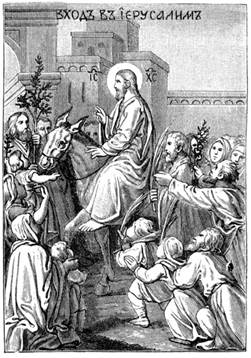
Так начинается синаксарь в неделю Ваий. После воскрешения Лазаря второе событие при последнем путешествии Иисуса Христа на Пасху, прославившее Господа и предварившее Его страдания и смерть, был царскийвход Господа в Иерусалим. Этот вход называется царским, согласно с пророчествами и Евангелием, где грядущий в Иерусалим Иисус Христос называется Царём: се, Царь твой грядет тебе кроток (Зах.9:9; Мф.21:5), и вход Его был истинно царский. И перед входом, и при самом входе своём Иисус Христос являет, что Ему совершенно известно то, что предстоит Ему в Иерусалиме, и что шествие Его сюда на страдания и смерть добровольны. Перед входом и особенно при самом входе Иисуса Христа в Иерусалим Спасителю оказывается всеобщее почти служение и преданность, яко Царю и Господу. За шесть дней до Пасхи Господь приходит в Вифанию и возлежит на вечери в дому Лазаря, на которой между прочими находился сам Лазарь, Марфа служила Иисусу Христу, а Мария помазала главу и ноги Его нардовой мастью. Иуда Искариотский жалел о сей трате, благовидностью попечения о нищих прикрывая свои намерения татя; но Иисус Христос, добровольно шедший на смерть, предрёк, что это действие Марии есть приготовление Его к погребению. В следующее после вечерни утро, в день настоящего Вербного Воскресения, Господь совершает торжественный Царский вход Свой в Иерусалим (Ин.12:1–18). Приблизившись к горе Елеонской, Иисус Христос повелевает двум ученикам Своим идти в селение и привести оттуда осля и жребя, и аще кто вама ренет: почто отрешаема их? отвечать: Господь требует. Равно и владелец, совершенно покорный велению Его, беспрекословно дозволяет ученикам исполнить волю Господа. Затем следует покорное служение Господу осляти и жребяти,на неже никто от человек вседе. Далее добровольное и царское шествие Господа представляется в полном царском величии. Множайшии народи постилаху ризы своя по пути: друзии же резаху ветви от древ и постилаху по пути. Народи же предходящии Ему и вследствующий зваху, глаголюще: осанна Сыну Давидову. Благословен грядый во имя Господне, Дар Израилев, осанна в вышних. Господь входит в Иерусалиме в церковь, и здесь Его царская власть является в безропотной покорности Ему продающих и купующих, кои по воле Его тотчас удаляются из храма. Царский вход Иисуса Христа запечатлевается всемогущей Его властью над законами природы: приступиша к нему хромий и слепии в церкви, и исцели их. Так всё повиновалось и служило Иисусу Христу при последнем Его входе в Иерусалим, как своему Творцу, Господу и Царю. Одни книжники среди общего торжества Сына Давидова, видя Его Божественные чудеса, негодоваша (Мф.21:15), яко мир по Нем идет (Ин.12:19).
Thus begins the synaxarion for the Sunday of the Palms. After the raising of Lazarus, the second event during the last journey of Jesus Christ to the Passover, which glorified the Lord and preceded His sufferings and death, was the royal entry of the Lord into Jerusalem. This entry is called royal, according to the prophecies and the Gospel, where Jesus Christ coming into Jerusalem is called King: Behold, thy King cometh unto thee, meek (Zech. 9:9; Mt. 21:5), and His entry was truly royal. Both before the entry and at the entry itself, Jesus Christ shows that what awaits Him in Jerusalem is perfectly known to Him, and that His procession here to suffering and death is voluntary. Before the entry, and especially at the very entry of Jesus Christ into Jerusalem, almost universal service and devotion is shown to the Savior, as to King and Lord. Six days before the Passover, the Lord comes to Bethany and reclines at supper in the house of Lazarus, at which, among others, Lazarus himself was present; Martha served Jesus Christ, and Mary anointed His head and feet with spikenard. Judas Iscariot regretted this expenditure, covering his thievish intentions with the appearance of care for the poor; but Jesus Christ, going voluntarily to death, foretold that this act of Mary was His preparation for burial. On the following morning after the supper, on the day of the present Palm Sunday, the Lord makes His solemn Royal Entry into Jerusalem (Jn. 12:1–18). Drawing near to the Mount of Olives, Jesus Christ commands two of His disciples to go into the village and bring from there an ass and a colt, and if any man say ought unto you, why do ye loose them? to answer: The Lord hath need of them. Likewise, the owner, completely obedient to His command, without objection allows the disciples to fulfill the Lord's will. Then follows the obedient service to the Lord of the ass and the colt, whereon yet never man sat. Further, the voluntary and royal procession of the Lord is presented in full royal majesty. A very great multitude spread their garments in the way; others cut down branches from the trees, and strawed them in the way. And the multitudes that went before, and that followed, cried, saying, Hosanna to the Son of David: Blessed is He that cometh in the name of the Lord; the Gift of Israel; Hosanna in the highest. The Lord enters into the temple in Jerusalem, and here His royal power is manifested in the uncomplaining obedience to Him of those who sold and bought, who, by His will, immediately depart from the temple. The royal entry of Jesus Christ is sealed by His almighty power over the laws of nature: And the blind and the lame came to Him in the temple; and He healed them. Thus everything obeyed and served Jesus Christ at His last entry into Jerusalem, as its Creator, Lord, and King. Only the scribes, amidst the universal triumph of the Son of David, seeing His divine miracles, were sore displeased (Mt. 21:15), for the world is gone after Him (Jn. 12:19).
Царский вход Иисуса Христа был вместе и кроткий: се, Царь твой грядет тебе кроток. Ничто не отличает Его от народа, путешествующего в Иерусалим, кроме того, что Он благоволил воссесть на жребя осла, покрытого скудными одеждами учеников. Но се точно Царь твой грядет. Ибо весь народ, Его сопровождающий, исполнясь чувством благоговения к Нему, вдруг, единодушно изъявляет Ему почесть, достойную царя. Се, Царь твой; только Он идёт не с тем, чтоб воцариться на престоле земном и земными же благами обогатить народ: се, Царь твой грядет тебе кроток и спасаяй: идёт, неся спасение вечное, если примешь Его верой. Сей кроткий Царь готов принять и Иерусалим и всех чад его под своё отеческое покровительство, и всем Иудеям даровать мир истинный. Видев град, Он плакася о нем, глаголя, яко аще бы разумел и ты, в день сей твой, еже к миру твоему: ныне же скрыся от очию твоею (Лк.19:41–42).
The royal entry of Jesus Christ was at the same time a meek one: Behold, thy King cometh unto thee, meek. Nothing distinguishes Him from the people journeying to Jerusalem, except that He deigned to sit upon the foal of an ass, covered with the scanty garments of the disciples. But behold truly thy King cometh. For all the people accompanying Him, filled with a feeling of reverence for Him, suddenly and with one accord show Him honor worthy of a king. Behold, thy King; only He comes not to reign upon an earthly throne and to enrich the people with earthly goods: Behold, thy King cometh unto thee, meek, and bringing salvation: He comes, bringing eternal salvation, if thou receive Him by faith. This meek King is ready to receive both Jerusalem and all her children under His fatherly protection, and to grant true peace to all the Jews. And when He saw the city, He wept over it, saying, If thou hadst known, even thou, at least in this thy day, the things which belong unto thy peace! but now they are hid from thine eyes (Lk. 19:41–42).
Торжественный и кроткий вход Иисуса Христа в Иерусалим был новым побуждением для ослеплённых завистью и злобой книжников и старейшин народа Иудейского – ускорить погубление Мессии. Негодуя на Него за Его чудеса, и за то, что отроки возглашали Ему: осанна сыну Давидову (Мф.21:1–17), фарисеи говорили: видите, се, мир по Нем идет (Ин.12:19).
The solemn and meek entry of Jesus Christ into Jerusalem was a new incentive for the scribes and elders of the Jewish people, blinded by envy and malice, to hasten the destruction of the Messiah. Indignant at Him for His miracles, and because the children cried out to Him: Hosanna to the Son of David (Mt. 21:1–17), the Pharisees said: Behold, the world hath gone after Him (Jn. 12:19).
Благоговея к Царскому входу в Иерусалим, Церковь в первые времена христианства установила праздник Ваий, положенный в числе дванадесятых. Событие входа Господа в Иерусалим было радостно для первоначальной Апостольской Церкви, члены коей, видя это событие, начаша, радующеся, хвалити Бога гласом велиим о всех силах, яже видеша (Лк.19:37). В III веке Мефодий, епископ Тирский или Патарский, в этот праздник говорил поучение, сохранившееся до наших времён. В ΙV веке св. Амвросий Медиоланский, св. Иоанн Златоуст, Епифаний Кипрский, в V веке св. Прокл, архиепископ Константинопольский, в день входа Господа в Иерусалим говорили также поучения.
Revering the royal entry into Jerusalem, the Church in the early times of Christianity established the Feast of the Palms, placed among the Twelve Great Feasts. The event of the Lord’s entry into Jerusalem was joyful for the primitive Apostolic Church, whose members, seeing this event, began to rejoice and praise God with a loud voice for all the mighty works that they had seen (Lk. 19:37). In the third century, Methodius, Bishop of Tyre or Patara, delivered a homily on this feast, which has been preserved to our times. In the fourth century, St. Ambrose of Milan, St. John Chrysostom, Epiphanius of Cyprus, and in the fifth century, St. Proclus, Archbishop of Constantinople, also delivered homilies on the day of the Lord’s entry into Jerusalem.
Св. Амвросий Медиоланский в слове на неделю Ваий говорил: «здесь, прежде всего, надобно заметить день, в который вошёл Иисус Христос в Иерусалим. Это был десятый день месяца, в который избирался агнец пасхальный, которого Израильтяне закалали в четырнадцатый день месяца; следовательно, Христос, истинный Агнец, Который должен был принять распятие в пятницу, вошёл в Иерусалим в тот день, в который избирался прообразовательный агнец. Далее св. Церковь, – сия нежная мать наша, велит и нам, по примеру встретивших тогда Иисуса Христа, постилать Ему по пути одежды и резать ветви древесные, – только духовным образом. Ныне ослицу заменяет всякая праведная душа: на ней Господь ныне входит в Иерусалим тогда, когда, обитая в душах наших, возбуждает в них отвращение от мира и любовь к небесному отечеству. Одежды по пути вы постилаете перед Господом тогда, когда, уготовляя Господу путь к вам, усмиряете тела ваши воздержанием; а ветви от дерев приимете, если, возлюбив добродетели святых, уготовите Господу путь к вам; ибо что иное были Авраам, Иосиф, Давид и прочие праведники, как не плодоносные древа Церкви Божией? Посему, если вы хотите достигнуть вечного спасения, то научитесь у Авраама послушанию, у Иосифа целомудрию, у Давида смирению; и поскольку финик есть знамение победы, то тогда мы правильно будем держать в руках финиковые ветви, когда, воспевая победные песни, будем стараться победить диавола добродетельной жизнью; потому что тот напрасно держит в руках финиковые ветви, кого лестью одолевает диавол».
St. Ambrose of Milan, in a sermon for the Feast of the Palms, said: “Here, first of all, we must note the day on which Jesus Christ entered Jerusalem. It was the tenth day of the month, on which the paschal lamb was chosen, which the Israelites slaughtered on the fourteenth day of the month; consequently, Christ, the true Lamb, Who was to be crucified on Friday, entered Jerusalem on the day on which the figurative lamb was chosen. Further, Holy Church—our tender mother—commands us also, following the example of those who then met Jesus Christ, to spread garments before Him along the way and to cut branches of trees—only in a spiritual manner. Now the ass is replaced by every righteous soul: on it the Lord now enters Jerusalem when, dwelling in our souls, He arouses in them aversion to the world and love for the heavenly fatherland. You spread garments before the Lord along the way when, preparing the way of the Lord to you, you subdue your bodies by abstinence; and you receive branches from the trees if, having loved the virtues of the saints, you prepare the way of the Lord to you; for what else were Abraham, Joseph, David, and the other righteous ones, if not fruitful trees of the Church of God? Therefore, if you wish to attain eternal salvation, learn from Abraham obedience, from Joseph chastity, from David humility; and since the palm is a sign of victory, then we shall rightly hold palm branches in our hands when, singing songs of victory, we strive to conquer the devil by a virtuous life; for he holds palm branches in his hands in vain whom the devil overcomes by flattery.”
Св. Златоуст говорит о входе Господа в Иерусалим: «через ослёнка означается Церковь и народ новый, который был некогда нечист, но после того, как воссел на нём Иисус Христос, соделался чистым. Заметь же, какая точность во всём прообразовании. Ученики отвязывают подъяремников: – и Иудеи и мы призваны в новоблагодатную Церковь через Апостолов. Наша блаженная славная участь и в Иудеях возбудила ревность; осел идёт позади ослёнка. И действительно, после того как Иисус Христос усвоит Себе язычников, тогда и Иудеи, по своей ревности, приидут к Нему, – что ясно показывает Апостол Павел, говоря:яко ослепление от части Израилевы бысть,дондеже исполнение языков внидет: и тако весь Израиль спасется. В противном случае не нужно говорить пророку так подробно о возрасте осла. Видно отсюда и то, что Апостолы приведут язычников без труда. И действительно, как никто не препятствовал Апостолам, когда они повели оных животных, так никто не мог остановить их в призвании язычников, когда они их уловляли проповедью. Далее – Христос садится не на нагого ослёнка, но на покрытого одеждами Апостолов: это значит, что Апостолы, принимая что-либо от усердия язычников, и своё всё отдают им, как говорит Павел: аз же в слабость иждиву, и иждивен буду по душах ваших (2Кор.12:15). Но обрати внимание и на послушание ослёнка: как он, вовсе не обученный и не знавши ещё узды, не помчался быстро, а пошёл тихо и спокойно. И это служило предзнаменованием будущего, выражая покорность язычников и скорую их перемену к благоустроенной жизни. Всё это совершилось словом: отрешивша приведита Ми; и беспорядочное пришло в благоустройство, и нечистое сделалось чистым».
St. Chrysostom speaks of the Lord’s entry into Jerusalem: “By the foal is signified the Church and the new people, who were once unclean, but after Jesus Christ sat upon it, became clean. Observe, too, what precision there is in all the foreshadowing. The disciples loose the tethered animals:—both the Jews and we are called into the new-covenant Church through the Apostles. Our blessed and glorious lot aroused zeal even in the Jews; the ass goes behind the foal. And indeed, after Jesus Christ has made the Gentiles His own, then the Jews also, through their zeal, will come to Him—which the Apostle Paul clearly shows, saying: that blindness in part is happened to Israel, until the fulness of the Gentiles be come in. And so all Israel shall be saved. Otherwise, the prophet would not need to speak so precisely about the age of the ass. It is also evident from this that the Apostles would lead the Gentiles without difficulty. And indeed, just as no one hindered the Apostles when they led those animals, so no one could stop them in calling the Gentiles when they caught them by preaching. Further—Christ sits not on the bare foal, but on one covered with the garments of the Apostles: this means that the Apostles, receiving something from the zeal of the Gentiles, give them all that is theirs, as Paul says: And I will very gladly spend and be spent for you (2 Cor. 12:15). But note also the obedience of the foal: how it, completely untrained and not yet knowing the bridle, did not rush swiftly, but went quietly and calmly. And this served as a foreshadowing of the future, expressing the submission of the Gentiles and their quick change to a well-ordered life. All this was accomplished by the word: Loose him, and bring him unto Me; and the disorderly came into good order, and the unclean became clean.”
Св. Епифаний Кипрский в праздник Ваий беседовал к своим слушателям: «для чего Христос, ходив прежде всего пешком, ныне, и только ныне, воссел на животное? Дабы показать, что Он вознесётся на крест и прославится на нём. Что знаменует противоположная весь? – строптивое расположение духа выгнанного из рая человека, к коему Христос послал двух учеников, т. е. два завета – Ветхий и Новый. Кого означает ослица? – без сомнения синагогу, которая под тяжким бременем влекла жизнь, и на хребте которой когда-нибудь воссядет Христос. Кого означает ослёнок? – необузданный языческий народ, на которого никто не садился, т. е. ни закон, ни страх, ни Ангел, ни пророк, ни Писание, но только един Бог Слово, Который был в Вифлееме в одних с бессловесными яслях, чтобы, освободив нас от бессловесия, соделать Богословами. Что означает отрешение ослёнка? – освобождение от идолослужения и прекращение идольских жертвоприношений. Кого знаменовали не дававшие отвязать ослёнка? – Иудеев и демонов. В ознаменование чего дети постилали одежду? – в ознаменование и совлечения ветхого человека, обнажения и запустения синагоги. Кого означали Богословствовавшие дети? – без сомнения верный народ Церкви, поколение Христово. Кого матери их? – купель крещения, в коей верующие возрождаются. Кого образуют ветви маслиничного дерева? – милосердые души; дорога знаменует тот путь, на котором приобретаются добродетели, совлекающие с нас ветхого человека. Что значат финиковые ветви? – Чистые души праведников, которые как финики процветают и как кедры в Ливане умножаются, насаждённые в дому Господнем; также победу над адом и свободу от власти их, что доставил победитель Христос. Кого означали предшествовавшие? – праведных пророков; а последствовавшие – Апостолов и язычников, уверовавших после них, град же знаменовал вышний Иерусалим; святилище – Царство Небесное, из коего Христос изгнал Иудеев, как недостойных. Вот как мы должны смотреть на праздник сей и представлять себе таинство, которое совершил Господь».
St. Epiphanius of Cyprus, on the Feast of Palms, discoursed to his listeners: “Why did Christ, Who had previously walked on foot, now, and only now, sit upon an animal? To show that He would be lifted up on the cross and glorified upon it. What does the opposite village signify?—the stubborn disposition of the man cast out of paradise, to whom Christ sent two disciples, that is, the two testaments—the Old and the New. Whom does the ass represent?—undoubtedly the synagogue, which dragged out life under a heavy burden, and on whose back Christ would one day sit. Whom does the foal represent?—the untamed Gentile people, on whom no one had sat, that is, neither the law, nor fear, nor an Angel, nor a prophet, nor Scripture, but only the one God the Word, Who was in Bethlehem in the same manger with the dumb beasts, so that, freeing us from dumbness, He might make us theologians. What does the loosing of the foal mean?—deliverance from idolatry and the cessation of idolatrous sacrifices. Whom did those who would not allow the foal to be loosed represent?—the Jews and the demons. What did the children spreading their garments signify?—the putting off of the old man, the stripping and desolation of the synagogue. Whom did the children who sang theology represent?—undoubtedly the faithful people of the Church, the generation of Christ. Whom did their mothers represent?—the font of baptism, in which believers are reborn. What do the branches of the olive tree represent?—merciful souls; the road signifies the path on which virtues are acquired, which strip from us the old man. What do the palm branches mean?—The pure souls of the righteous, who flourish like the palm tree and increase like the cedars in Lebanon, planted in the house of the Lord; also the victory over Hades and freedom from their power, which Christ the Victor bestowed. Whom did those who went before represent?—the righteous prophets; and those who followed—the Apostles and the Gentiles who believed after them; the city signified the heavenly Jerusalem; the sanctuary—the Kingdom of Heaven, from which Christ cast out the Jews as unworthy. This is how we should regard this feast and represent to ourselves the mystery which the Lord accomplished.”
В VII веке св. Андрей Критский, в VIII Косьма Маиумский, Иоанн Дамаскин, в IX Феодор и Иосиф Студиты, император Лев Философ, Феофан, в XIV Никифор Ксанфопул написали священные песнопения и сказания, кои ныне Православная Церковь совершает для прославления входа в Иерусалим.
In the seventh century, St. Andrew of Crete; in the eighth, Cosmas of Maiuma, John of Damascus; in the ninth, Theodore and Joseph the Studites, the Emperor Leo the Philosopher, Theophanes; in the fourteenth, Nikephoros Xanthopoulos—wrote sacred hymns and narratives, which the Orthodox Church now performs for the glorification of the Entry into Jerusalem.